
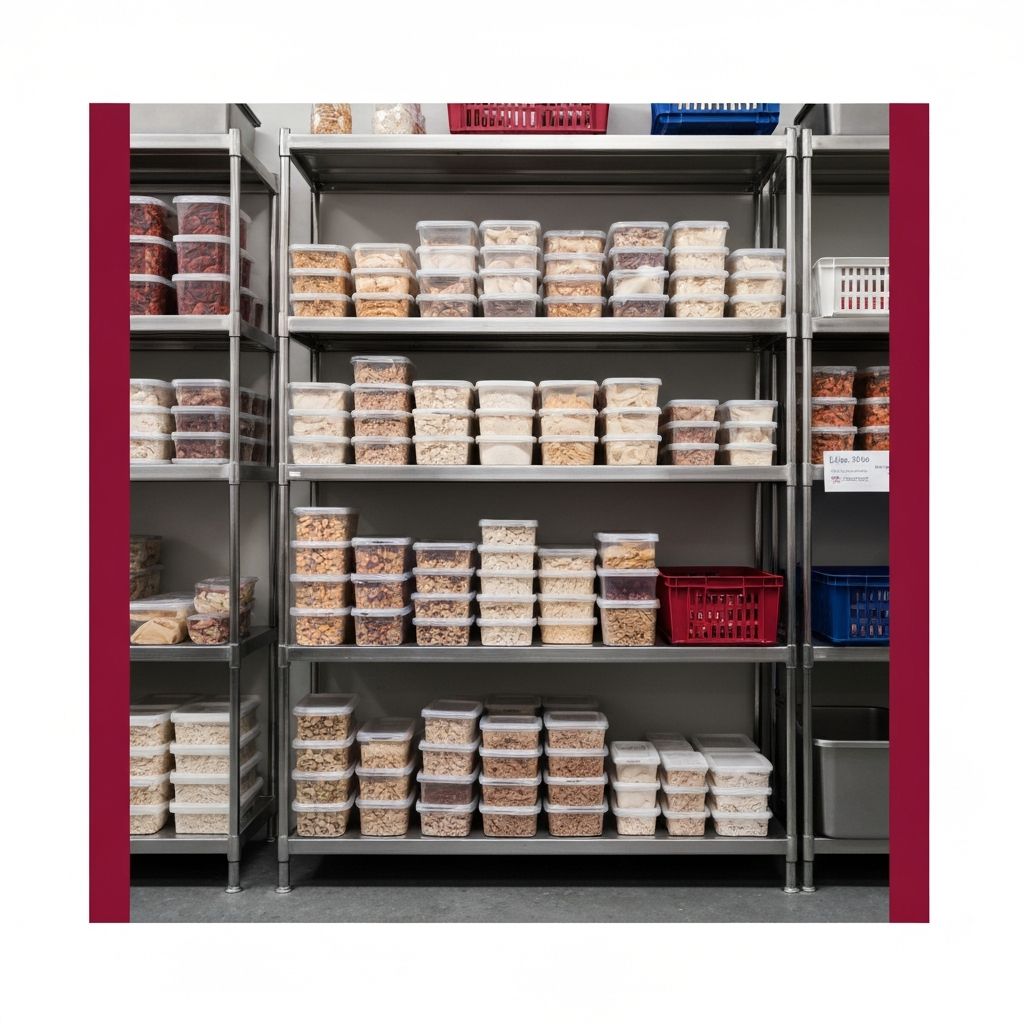
The Six-Inch Rule: Why It Matters
In the world of food safety, seemingly small details can have enormous implications for public health. One such detail that is frequently tested on food handler certification exams and regularly inspected by health departments is the minimum distance food must be stored from the floor. The answer, according to most food safety codes in the United States, is six inches. Food should be stored at least six inches (approximately 15 centimeters) off the floor to ensure it remains safe, clean, and free from contamination.
This requirement is not arbitrary. It is based on decades of food safety research and practical experience in commercial food service environments. The six-inch rule applies to all food items, including dry goods, canned goods, fresh produce, and refrigerated and frozen products. It is a cornerstone of proper food storage practices and is enforced by health departments, the FDA Food Code, and various state and local food safety regulations across the country.
Why Food Must Be Kept Off the Floor
Storing food directly on the floor creates multiple contamination risks that can compromise food safety and lead to foodborne illness outbreaks. Understanding these risks helps food service professionals appreciate the importance of the six-inch rule and maintain consistent compliance. The primary risks of floor-level food storage include pest contamination, water damage, physical contamination, and chemical contamination.
Floors in food storage areas are among the most contaminated surfaces in any facility. Despite regular cleaning and sanitizing, floors accumulate bacteria, dirt, debris, and residues from foot traffic, spills, and cleaning chemicals. When food is stored directly on the floor, it comes into direct contact with these contaminants or is exposed to them through packaging that may not be fully sealed. Even in the cleanest facilities, floors harbor significantly more microorganisms than elevated storage surfaces.
Pest Prevention and the Six-Inch Rule
One of the primary reasons for the six-inch storage requirement is pest prevention. Rodents, insects, and other pests tend to travel along floor edges and baseboards. By elevating food at least six inches off the floor, you create a buffer zone that makes it more difficult for pests to access food supplies. This elevated storage also makes it easier to detect signs of pest activity, such as droppings, gnaw marks, or nesting materials, during routine inspections.
The six-inch clearance also facilitates effective pest control measures. Pest management professionals need access to floor areas and baseboards to place traps, bait stations, and monitoring devices. When food is stored on the floor, it obstructs these pest control activities and creates hiding spots for pests. Elevated storage allows for thorough pest management and easier monitoring of pest activity in storage areas.
Water Damage and Flood Protection
Commercial kitchens and food storage areas are susceptible to water incidents, including plumbing leaks, condensation, flooding from weather events, and water from floor cleaning and sanitizing activities. When food is stored on the floor, even minor water events can contaminate food products, damage packaging, and create conditions favorable for mold and bacterial growth.
The six-inch elevation provides a critical buffer against minor water incidents. While six inches of clearance will not protect food from major flooding, it is sufficient to keep food safe from the most common water hazards encountered in food service environments, such as mopping water, minor pipe leaks, and condensation drips. In areas prone to flooding or significant water events, health departments may recommend even greater elevation distances.
Proper Food Storage Methods and Equipment
Achieving the six-inch minimum clearance requires appropriate storage equipment. Wire shelving units are the most commonly used storage solution in commercial food service operations. These shelving units are available in various sizes and configurations, with the bottom shelf typically set at six inches or higher from the floor. Wire shelving offers the added advantage of allowing air circulation around stored food products, which helps maintain consistent temperatures and prevents moisture buildup.
Dunnage racks are another popular option, especially for heavy items like cases of canned goods, bags of flour, or bulk produce. These low-profile platforms are specifically designed to elevate food off the floor while supporting heavy loads. Dunnage racks are typically made of food-grade plastic or metal and are available in various sizes to accommodate different storage needs. When using dunnage racks, ensure they are at least six inches high and are made of materials that are easy to clean and sanitize.
Pallets, while commonly used in warehouses and receiving areas, should be used with caution in food storage. Wooden pallets can harbor pests, absorb moisture, and are difficult to clean and sanitize effectively. If pallets must be used, food-grade plastic pallets are preferred over wooden ones. Regardless of the pallet material, food stored on pallets must still maintain the six-inch minimum clearance from the floor.
Additional Food Storage Guidelines
While the six-inch rule is one of the most well-known food storage requirements, it is part of a broader set of food storage best practices. Food should also be stored away from walls, with a recommended clearance of at least two inches to allow for air circulation and pest inspection. Raw foods should be stored separately from ready-to-eat foods, with raw meats, poultry, and seafood stored on lower shelves to prevent cross-contamination from drips.
All food in storage should be properly labeled with the product name and either the date received or a use-by date. First In, First Out (FIFO) rotation should be practiced consistently, meaning older products are placed at the front of shelves and used before newer products. Chemicals, cleaning supplies, and non-food items must never be stored above or near food items to prevent chemical contamination.
Temperature control is another critical aspect of food storage. Dry storage areas should be maintained between 50 and 70 degrees Fahrenheit (10 to 21 degrees Celsius) with a relative humidity of 50 to 60 percent. Refrigerated storage should be maintained at 41 degrees Fahrenheit (5 degrees Celsius) or below, while frozen storage should be maintained at 0 degrees Fahrenheit (-18 degrees Celsius) or below. Regular temperature monitoring with calibrated thermometers is essential for ensuring food safety.
Compliance and Inspection Considerations
Health department inspectors specifically check for floor storage violations during routine inspections. A food storage violation can result in point deductions on your inspection score, required corrective actions, follow-up inspections, and in severe or repeated cases, fines or temporary closure. Maintaining consistent compliance with the six-inch rule is relatively easy with proper equipment and staff training, and it demonstrates a commitment to food safety that reflects positively on your establishment.
Staff training on proper food storage practices should be part of every food service employee's onboarding process and should be reinforced through regular refresher training sessions. Post visual reminders in storage areas about the six-inch rule and other storage requirements. Conduct regular self-inspections to identify and correct any storage violations before they are found by health department inspectors. By making proper food storage a habitual part of daily operations, the six-inch rule becomes second nature for all team members.
