
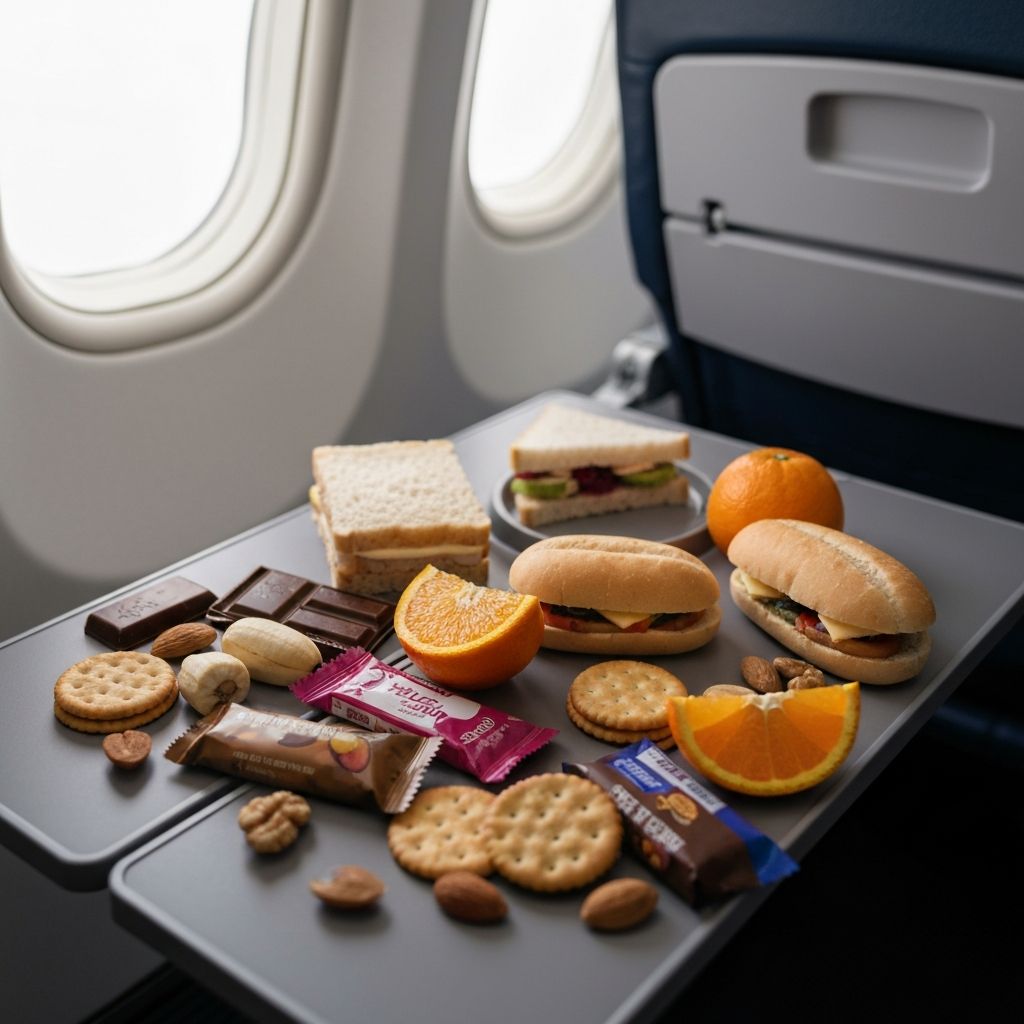
Yes, You Can Bring Food on a Plane
Whether you are a frequent flyer tired of overpriced airport food, a parent needing reliable snacks for young travelers, or someone with dietary restrictions who cannot depend on in-flight meal options, the ability to bring your own food on a plane is a valuable and often underutilized option. The good news is that airlines and security agencies generally welcome passengers bringing food aboard aircraft, with only a few specific restrictions that are easy to navigate once you understand the rules.
Bringing your own food on a flight offers numerous advantages. It saves money, since airport and in-flight food prices are notoriously inflated, often two to three times what you would pay at a regular grocery store or restaurant. It gives you control over your nutrition, allowing you to eat foods that meet your dietary needs, allergies, or preferences rather than being limited to whatever the airline or airport vendors happen to offer. And for longer flights, having your own food ensures you have sustenance available whenever you need it, rather than waiting for meal service that may or may not accommodate your schedule or tastes.
That said, there are important distinctions between what you can bring through security versus what you can bring on the actual airplane, between domestic and international travel rules, and between carry-on and checked baggage. This comprehensive guide covers all of these scenarios to ensure you can fly with confidence and a full stomach.
Domestic Flight Food Rules in the United States
For flights within the United States, the rules for bringing food are relatively straightforward and permissive. The Transportation Security Administration handles security screening at US airports and has clear guidelines about what food items are permitted through checkpoints.
Solid foods are welcome. You can bring virtually any solid food item through TSA security and onto your flight. This includes sandwiches, wraps, salads without dressing, baked goods, fruit, vegetables, candy, chips, crackers, nuts, protein bars, beef jerky, cheese blocks, deli meats, sushi, pizza, fried chicken, and essentially any food that maintains its shape and is not pourable. There are no quantity limits on solid food in carry-on bags.
Liquids and gels follow the 3-1-1 rule. Food items that are liquid, pourable, spreadable, or gel-like must comply with the TSA's 3-1-1 rule: containers of 3.4 ounces or less, all fitting in one quart-sized clear bag, one bag per passenger. This affects soups, sauces, yogurt, hummus, peanut butter, salad dressing, jams, and beverages. You can purchase liquid food items at the airport after clearing security without any size restrictions.
Frozen items are allowed if frozen solid. Frozen meals, ice packs, and frozen gel packs are permitted through security as long as they are completely frozen at the time of screening. Any partially melted items may be treated as liquids and subjected to the 3-1-1 rule.
What About International Flights
International travel introduces additional layers of food regulations that go beyond airport security concerns. While TSA rules govern what you can bring through the security checkpoint, customs and agricultural regulations at your destination determine what food you can bring into another country.
Most countries restrict the importation of fresh fruits, vegetables, meat, dairy products, eggs, and plant materials to prevent the introduction of pests, diseases, and invasive species. These restrictions are enforced by agricultural inspection agencies and can vary dramatically from country to country.
Australia and New Zealand have some of the strictest food importation rules in the world. Fresh produce, meat, dairy, eggs, seeds, and many processed foods are prohibited or require declaration and inspection. Failure to declare food items can result in substantial fines.
European Union countries restrict meat, dairy, and animal products from non-EU countries. Travelers entering the EU from the United States, for example, cannot bring fresh or processed meat, milk, cheese, or other animal-derived products in most circumstances.
The United States restricts incoming travelers from bringing fresh fruits, vegetables, meat, and plant products from most other countries. All food items must be declared on your customs form, and agricultural inspectors may confiscate items deemed to pose a risk to US agriculture.
The safest approach for international travel is to consume any fresh food before landing, declare everything honestly on your customs form, and rely on shelf-stable, commercially packaged products that are less likely to cause issues. Sealed, commercially processed foods like chips, candy, granola bars, and canned goods generally pass through customs without problems, though they still must be declared.
Airline-Specific Food Policies
While security agencies determine what food you can bring through the checkpoint, individual airlines set their own policies about what you can consume on board the aircraft. Most airlines are accommodating about passengers bringing and eating their own food, but there are some nuances worth knowing.
Most domestic airlines in the United States fully welcome passengers bringing their own food aboard. With the reduction of complimentary meal service on shorter flights, airlines actually expect passengers to bring food or purchase it at the airport. Some airlines even provide napkins and utensils upon request for passengers eating their own meals.
Budget carriers generally have no restrictions on bringing outside food, though they may prohibit consuming food purchased from competing vendors on board. This policy is rarely enforced for food items, though it is more commonly applied to alcoholic beverages.
International carriers that offer full meal service may prefer that passengers eat the provided meals but rarely restrict personal food items. On long-haul flights where multiple meals are served, having your own snacks between meal services is common and accepted.
One important consideration is food allergies on flights. If a fellow passenger has a severe nut allergy, the flight crew may ask passengers to refrain from eating nut products. While this request is not legally binding, it is a reasonable courtesy that could prevent a life-threatening reaction in the confined air cabin environment. Some airlines have formal policies about nut-free zones or nut-free flights that may restrict your food choices.
Best Foods to Bring on a Plane
Not all foods travel well at 35,000 feet. Altitude, pressure changes, and the confined cabin environment all affect how food tastes, smells, and behaves during a flight. Here are the best categories of food to bring on a plane for an optimal experience.
Wraps and cold sandwiches are ideal plane food. They are compact, easy to eat in a cramped seat, and do not require utensils. Wrap your sandwiches tightly in foil or wax paper for the neatest eating experience. Avoid sandwiches with excessive condiments or juicy ingredients that could drip or leak.
Cut fruits and vegetables like apple slices, grapes, carrots, celery, and cherry tomatoes are refreshing, hydrating, and healthy. The dry cabin air can be dehydrating, and water-rich fruits help combat this while providing natural energy.
Trail mix, nuts, and dried fruit are the quintessential travel snacks. They are calorie-dense, do not spoil easily, take up minimal space, and provide sustained energy. Create your own custom mix with your favorite nuts, seeds, dried fruits, and a few chocolate chips for the perfect balance of salty, sweet, and nutritious.
Protein bars and granola bars are compact, shelf-stable, and provide quick energy. They are perfect for early morning flights when you skip breakfast or for bridging the gap between meals on long travel days.
Cheese and crackers make an elegant and satisfying airplane snack. Hard cheeses like cheddar, gouda, and Parmesan travel well at room temperature for several hours and pair perfectly with crackers, dried fruit, and nuts for a simple charcuterie-style spread.
Foods to Avoid Bringing on a Plane
While almost any food is technically allowed on a plane, some foods are better left on the ground out of consideration for your fellow passengers and for practical reasons.
Strong-smelling foods should be avoided whenever possible. Fish, certain cheeses, garlic-heavy dishes, curries, and heavily spiced foods can fill the entire cabin with their aroma, which is inescapable at 35,000 feet. What smells delicious to you may be overwhelming or nauseating to the person in the next seat, especially if they are prone to motion sickness.
Messy foods that drip, crumble excessively, or require cutting are impractical in the limited space of an airplane seat. Avoid soups, heavily sauced dishes, tacos, overloaded burritos, and anything that requires more than one utensil to eat comfortably.
Foods that expand or react to altitude changes can cause problems. Sealed containers with trapped air may pop open or leak as cabin pressure changes during ascent and descent. Open containers slightly before takeoff to equalize pressure, and avoid carbonated beverages in sealed containers that could fizz over when opened at altitude.
By following these guidelines and understanding the rules, you can travel with confidence knowing that your food choices will make your journey more comfortable, affordable, and enjoyable. Pack smart, be considerate of fellow travelers, and enjoy your in-flight meal.
