
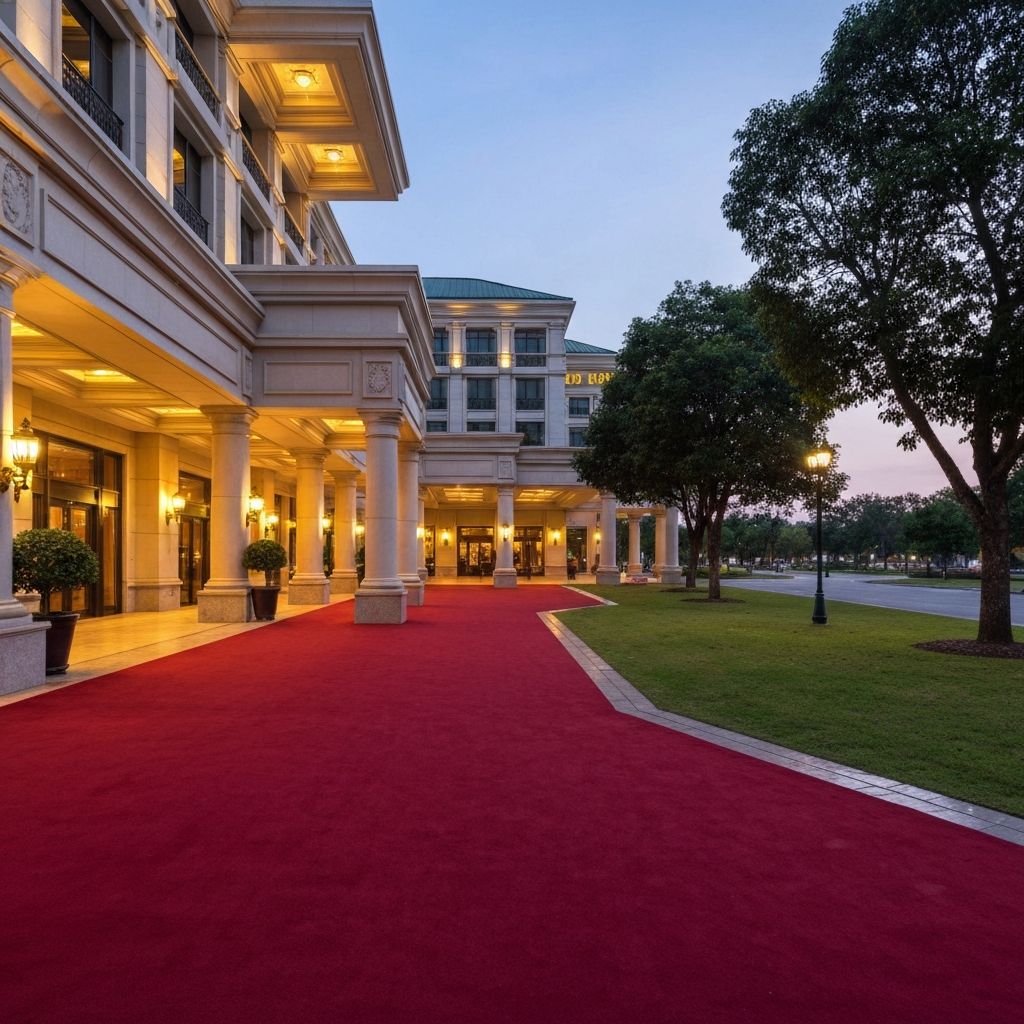
The Quick Answer: No, Paris Hilton Does Not Own Hilton Hotels
It is one of the most frequently asked questions about the intersection of celebrity culture and the business world: does Paris Hilton own Hilton Hotels? The answer is no. Paris Hilton does not own, operate, or control Hilton Hotels and Resorts. While she is indeed a member of the famous Hilton family that founded the iconic hotel chain, the company has long since passed out of family control and is now a publicly traded corporation owned by thousands of shareholders. Understanding how this separation occurred requires a journey through the fascinating history of one of the world's most recognizable hospitality brands.
The confusion is entirely understandable. Paris Hilton carries one of the most famous surnames in business history, and for much of the early 2000s, she was the most visible person bearing that name. Many people naturally assumed that her lifestyle, wealth, and celebrity status were directly funded by hotel profits. The reality, however, is far more complex and involves decades of corporate transactions, family estate decisions, and the evolution of a private family business into a global public corporation.
The Founding of the Hilton Hotel Empire
To understand the relationship between Paris Hilton and Hilton Hotels, we need to start at the very beginning with her great-grandfather, Conrad Nicholson Hilton. Born in 1887 in San Antonio, New Mexico Territory, Conrad Hilton would go on to build one of the most successful hotel empires in history, fundamentally transforming the hospitality industry in the process.
Conrad Hilton purchased his first hotel, the Mobley Hotel, in Cisco, Texas, in 1919. The oil boom in Texas had created enormous demand for accommodations, and Hilton recognized the opportunity. Over the next several decades, he acquired and built hotels across the United States, developing a reputation for operational excellence, luxurious amenities, and strategic acquisitions. By the 1940s, the Hilton Hotels Corporation had become the first coast-to-coast hotel chain in the United States.
Conrad Hilton's ambitions extended beyond American borders. In 1949, he opened the Caribe Hilton in San Juan, Puerto Rico, marking the beginning of the company's international expansion. Throughout the 1950s and 1960s, Hilton Hotels opened properties in major cities around the world, from London and Berlin to Tokyo and Cairo. The Hilton name became synonymous with luxury, reliability, and American hospitality on a global scale.
At its peak under Conrad Hilton's leadership, the company owned or operated some of the most prestigious properties in the world, including the Waldorf Astoria in New York, the Palmer House in Chicago, and the Hilton Hawaiian Village in Honolulu. Conrad Hilton was not just building hotels; he was creating a brand that would outlive him by generations.
How the Hilton Family Lost Control
The story of how the Hilton family's control over the hotel chain diminished is a complex tale of corporate transactions, inheritance decisions, and the inevitable dilution that occurs when a private family business becomes a public corporation.
Conrad Hilton took his company public in the 1940s, listing Hilton Hotels Corporation on the New York Stock Exchange. This decision brought in outside investors and diluted the family's ownership stake, though Conrad retained a controlling interest and continued to run the company as chairman and president for decades.
When Conrad Hilton passed away in 1979 at the age of 91, his will contained a surprise that would have lasting implications for the family's wealth and connection to the hotel business. Rather than leaving the bulk of his estate, including his Hilton Hotels stock, to his family, Conrad bequeathed the majority of his fortune to the Conrad N. Hilton Foundation, a charitable organization he had established in 1944. This decision was reportedly influenced by Conrad's deeply held Catholic faith and his belief that great wealth carried a responsibility to serve humanity.
Conrad's son, Barron Hilton, who was Paris Hilton's grandfather, contested the will and eventually reached a settlement that allowed him to retain a significant portion of Hilton Hotels stock while honoring his father's charitable intentions. Barron went on to serve as chairman and president of Hilton Hotels Corporation, continuing the family's involvement in the business for several more decades.
However, the family's direct ownership of the hotel chain effectively ended in 2007 when the Blackstone Group, a major private equity firm, acquired Hilton Hotels Corporation for approximately 26 billion dollars. This leveraged buyout took the company private and removed it entirely from family control. In 2013, Hilton Worldwide Holdings went public again through one of the largest initial public offerings in history, but by this point, the Hilton family held no significant operational or ownership role in the company.
Where Paris Hilton Fits in the Family Tree
Paris Whitney Hilton was born on February 17, 1981, in New York City. She is the daughter of Richard Howard Hilton, a businessman and real estate developer, and Kathy Hilton, a former actress and socialite. Richard Hilton is the son of Barron Hilton, making Paris the granddaughter of Barron and the great-granddaughter of Conrad Hilton, the founder of Hilton Hotels.
While Paris grew up surrounded by wealth and privilege associated with the Hilton name, her family's actual financial connection to the hotel business was already significantly diminished by the time she rose to fame. Her grandfather Barron Hilton announced in 2007 that he would pledge 97 percent of his estate, valued at approximately 4.5 billion dollars, to the Conrad N. Hilton Foundation, following through on the charitable vision his father had established. This decision meant that the vast majority of the Hilton family hotel fortune would go to charity rather than being passed down to future generations, including Paris and her siblings.
Reports from the mid-2000s indicated that Barron Hilton intended to limit the inheritance for each of his grandchildren, though the exact amounts were never publicly confirmed. Regardless of the specific figures, it is clear that Paris Hilton's wealth is not primarily derived from hotel ownership or hotel profits but from her own extensive business ventures and career.
What Paris Hilton Actually Does Today
Far from relying on family hotel money, Paris Hilton has built an impressive and diverse business empire in her own right. While her early fame came from reality television, socialite status, and tabloid coverage, she has transformed that visibility into a legitimate and highly profitable business career.
Paris Hilton's brand empire includes a remarkably successful fragrance line that has generated over 4 billion dollars in revenue since its launch. She has released more than 30 fragrances, making her one of the most successful celebrity perfume entrepreneurs in history. This achievement alone would be noteworthy for any business figure, regardless of their family background.
She has also built significant businesses in fashion, with handbag and accessory lines sold in stores worldwide, consumer electronics, entertainment, and media. Her DJ career has earned her millions of dollars in appearance fees at top nightclubs and music festivals around the world. She has authored books, produced and starred in multiple television shows, and launched a successful cooking show that showcased a different side of her personality.
More recently, Paris Hilton has become an advocate for institutional reform, using her platform and personal experiences to push for legislation protecting young people in residential treatment facilities. She has testified before Congress and state legislatures, demonstrating a commitment to social causes that goes well beyond her public image as a socialite and entertainer.
In the technology and digital space, Paris Hilton has been an early adopter and advocate for NFTs and blockchain technology, launching successful digital art collections and exploring new frontiers in the creator economy. She has also invested in multiple startups and technology companies, building a portfolio that reflects both business acumen and forward-thinking vision.
The Hilton Hotels Brand Today
Meanwhile, Hilton Hotels and Resorts has evolved into one of the largest and most successful hospitality companies in the world, operating entirely independently of the Hilton family. As of recent years, Hilton Worldwide Holdings operates a portfolio of over 7,000 properties across more than 120 countries, encompassing 22 distinct brands ranging from luxury offerings like Waldorf Astoria and Conrad Hotels to mid-market brands like Hampton by Hilton and Hilton Garden Inn.
The company is led by professional management and governed by a board of directors, with shares traded on the New York Stock Exchange under the ticker symbol HLT. The Hilton family does not hold any board seats or executive positions within the company, and their direct financial interest in the company, if any remains, would be negligible relative to the total market capitalization.
So while the Hilton name continues to grace thousands of hotels worldwide, the family that originally built the empire has long since moved on to other ventures, philanthropic endeavors, and individual careers. Paris Hilton may carry the most famous name in hospitality, but her empire is entirely her own creation, built on personal branding, business savvy, and relentless entrepreneurial energy rather than hotel room keys.
