
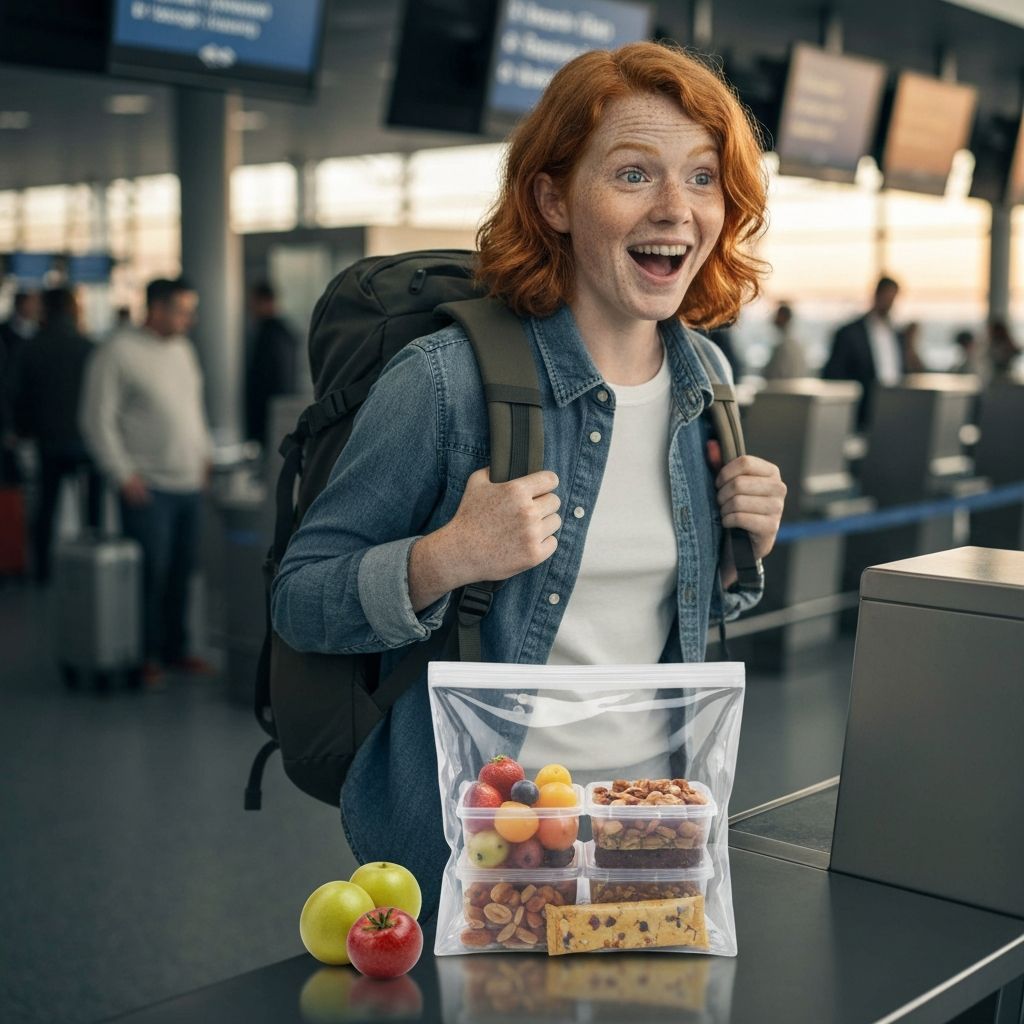
The Short Answer: Yes, With Some Important Rules
One of the most common questions travelers ask before heading to the airport is whether they can bring food through the Transportation Security Administration (TSA) security checkpoint. The good news is that the TSA generally allows solid food items in both carry-on and checked bags. However, the rules become more nuanced when it comes to liquids, gels, spreads, and certain food preparations that fall under the TSA's 3-1-1 liquids rule. Understanding these distinctions before you pack can save you time, frustration, and the disappointment of having your carefully prepared meal confiscated at the security line.
The TSA's primary mission is aviation security, not food regulation. Their screening procedures focus on identifying potential threats, not policing your lunch. That said, certain food items can trigger additional screening, and foods that resemble prohibited items in X-ray imaging may require manual inspection. By understanding the rules and packing strategically, you can breeze through security with your snacks and meals intact.
It is worth noting that TSA rules apply specifically to the security screening process at United States airports. Once you clear security, you are free to purchase any food or beverage available in the terminal, regardless of liquid volume. Additionally, if you are traveling internationally, be aware that customs and agriculture regulations at your destination may restrict certain food items from being brought into the country, even if the TSA allowed them through security.
Solid Foods: Almost Always Allowed
The TSA permits virtually all solid food items to pass through security in your carry-on luggage. Solid foods are defined as items that maintain their shape and are not pourable. This category encompasses a wide range of common travel foods and meals.
Sandwiches and wraps of all varieties are welcome through TSA checkpoints. Whether you have made a simple peanut butter sandwich, a loaded club wrap, or an elaborate panini, solid sandwiches pass through security without issue. You can wrap them in foil, place them in containers, or pack them in resealable bags.
Fruits and vegetables in their whole or cut form are permitted. Whole apples, bananas, oranges, carrots, celery sticks, and sliced bell peppers all fall under the solid food category and are excellent healthy travel snacks. Cut fruit packed in containers without excess liquid is fine, but fruit cups submerged in juice or syrup fall under the liquid rules.
Baked goods including bread, muffins, cookies, brownies, cakes, and pastries are all allowed through security. Even elaborate decorated cakes can pass through, though they may trigger additional screening if the TSA agent needs to verify the contents.
Snack foods like chips, crackers, pretzels, nuts, trail mix, granola bars, protein bars, dried fruit, beef jerky, and popcorn are all perfectly fine. These shelf-stable snacks are ideal travel companions and never cause issues at security.
Cooked meals including rice dishes, pasta, grilled chicken, roasted vegetables, and other prepared foods in containers are permitted as long as they are primarily solid. A container of fried rice or a plate of chicken and vegetables will pass through without problems.
The 3-1-1 Liquids Rule and Food
The aspect of TSA food rules that causes the most confusion is how the 3-1-1 liquids rule applies to food items. The 3-1-1 rule states that liquids, gels, aerosols, creams, and pastes in carry-on bags must be in containers of 3.4 ounces (100 milliliters) or less, all fitting in a single quart-sized clear plastic bag, with one bag per passenger.
This rule applies to food items that are liquid or have a liquid consistency. Soups, stews, and broths are considered liquids and must comply with the 3-1-1 rule. A thermos of homemade chicken soup will not make it through security unless it is in a container of 3.4 ounces or less. Sauces, dressings, and dips including ketchup, mustard, salad dressing, salsa, guacamole, and hummus are all classified as liquids or gels and must follow the 3-1-1 restrictions.
Peanut butter and other nut butters are classified as spreadable items and fall under the liquids rule. This surprises many travelers, but from the TSA's perspective, if you can spread it or pour it, it qualifies as a liquid or gel. A full jar of peanut butter will be confiscated, but travel-sized packets under 3.4 ounces are fine.
Yogurt, pudding, and similar creamy foods are considered gels and must comply with the 3-1-1 rule. Individual serving cups that hold 3.4 ounces or less are permitted, but larger containers will not pass through screening.
Jams, jellies, and honey are classified as gels or liquids and are subject to the same restrictions. Small packets and travel-sized containers are your best option for bringing these items through security.
Beverages of all types, including water, juice, coffee, and smoothies, must follow the 3-1-1 rule. You can bring an empty water bottle through security and fill it at a water fountain or refilling station on the other side. Many airports now have filtered water bottle filling stations specifically for this purpose.
Special Categories and Exceptions
The TSA makes specific exceptions for certain food items that might otherwise fall under the liquids rule, particularly for passengers traveling with infants, children, or medical needs.
Baby food, breast milk, and infant formula are exempt from the 3-1-1 rule. Parents and caregivers may bring reasonable quantities of these items through security in quantities exceeding 3.4 ounces. These items should be declared to the TSA officer at the beginning of the screening process and will be subject to additional inspection, which may include opening containers and testing the contents. You do not need to be traveling with the child to bring breast milk through security.
Medications in liquid form are also exempt from the standard liquids restrictions. Medically necessary liquids, including liquid nutrition supplements prescribed by a doctor, can exceed the 3.4-ounce limit. Inform the TSA officer and present any relevant documentation.
Ice and ice packs present an interesting case. Frozen ice packs, gel packs, and ice are permitted through security as long as they are completely frozen solid at the time of screening. If they have started to melt and there is any liquid, slushy, or partially melted content, they are subject to the 3-1-1 rule. This is important for travelers who want to keep perishable foods cold during their journey. Using a well-insulated cooler bag and freezing your ice packs thoroughly the night before can help ensure they remain solid through the security line.
Frozen foods are generally permitted as long as they remain frozen solid at the time of screening. A frozen casserole, frozen meat, or frozen prepared meal can pass through security if it is completely solid. However, if any portion has begun to thaw and there is liquid present, the liquid portion may be subject to the 3-1-1 rule.
Tips for Packing Food for Air Travel
Strategic packing can make your airport food experience smooth and stress-free. Here are practical tips for bringing food through TSA without delays or confiscations.
Pack your food in clear containers or clear resealable bags whenever possible. TSA agents can see what is inside without needing to open the container, which speeds up the screening process. If you use opaque containers, be prepared for them to be opened and inspected.
Keep your food items easily accessible in your carry-on bag. The TSA recommends placing food in a separate bin during X-ray screening, similar to how you handle electronics and liquids. Having your food organized and easy to remove reduces delays and makes the process faster for everyone.
Separate any liquid or gel food items and place them in your quart-sized liquids bag alongside your toiletries. If you are bringing travel-sized hummus, dressing packets, or other liquid foods, treating them like any other liquid item prevents confusion at the checkpoint.
Consider the odor of your food, especially on long flights where you will be in a confined space with other passengers. Strong-smelling foods like certain cheeses, fish, and heavily spiced dishes, while perfectly legal to bring through security, may not make you popular with your seatmates. Mild, low-odor foods are generally the most courteous choice for airplane dining.
If you are traveling with perishable items, invest in a quality insulated lunch bag and use frozen gel packs to maintain safe temperatures. Food safety experts recommend keeping perishable foods below 40 degrees Fahrenheit. Pack your cooler efficiently with frozen items on the bottom and around the sides, and keep the cooler closed as much as possible during your journey.
International Travel Food Considerations
While the TSA handles security screening within the United States, international travelers need to be aware of additional food restrictions imposed by customs and agricultural agencies at their destination. Many countries have strict rules about importing food products, particularly fresh produce, meat, dairy, and plants, to protect their agricultural industries from pests and diseases.
The United States Customs and Border Protection agency, for example, restricts the importation of many fresh fruits, vegetables, meats, and plant products from other countries. Similar restrictions exist in the European Union, Australia, New Zealand, Japan, and many other nations. Failing to declare food items at customs can result in fines, confiscation, and delays. Always research your destination's food importation rules before packing food for an international trip, and declare all food items honestly on your customs declaration form.
