
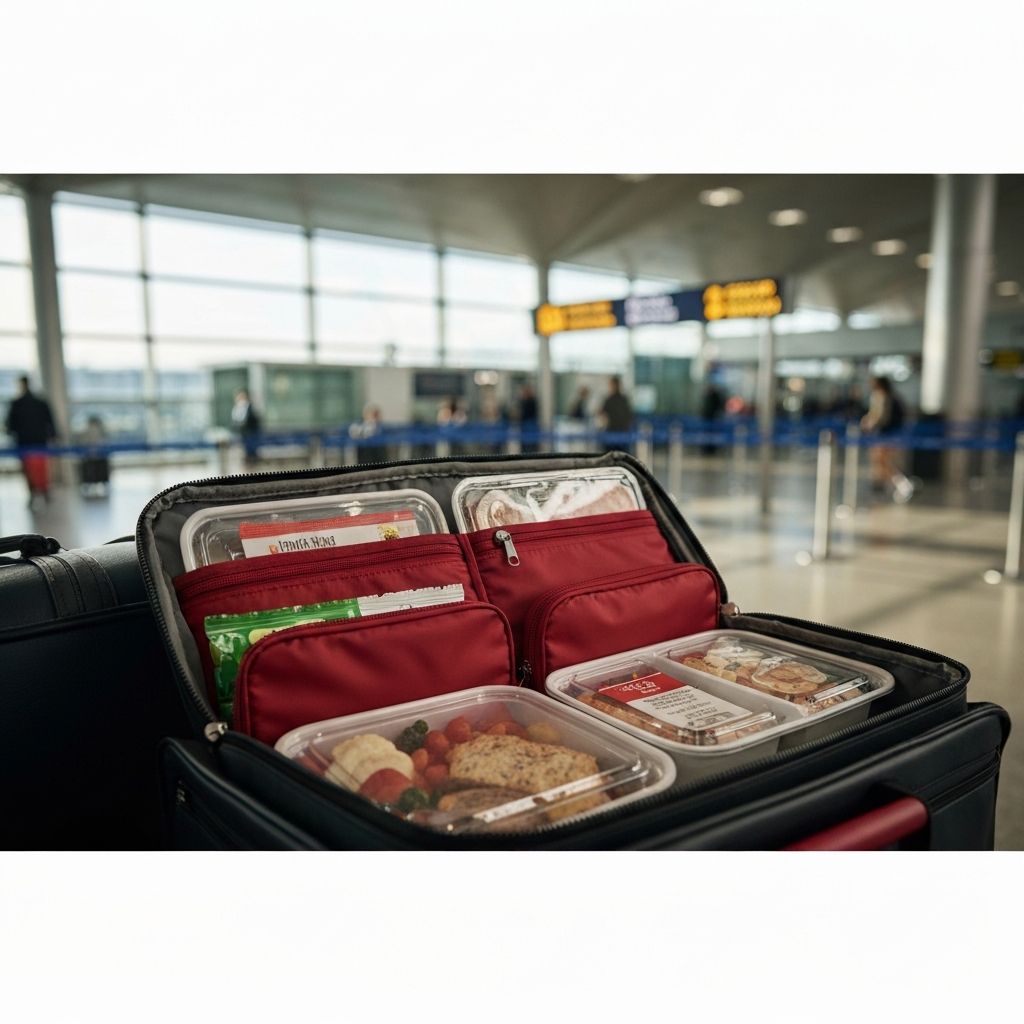
TSA Food Rules for Carry-On Luggage
The Transportation Security Administration allows passengers to bring most types of food through airport security checkpoints and onto airplanes in their carry-on luggage. However, the rules differ depending on whether the food is solid or liquid, and understanding these distinctions is essential for a smooth security experience. The general principle is simple: solid foods are almost always permitted in carry-on bags, while liquid, gel, and spreadable foods are subject to the same 3-1-1 rule that applies to all liquids.
Solid foods that are permitted through TSA checkpoints include sandwiches, wraps, fruits, vegetables, chips, crackers, cookies, candy, granola bars, nuts, dried fruit, beef jerky, pizza, burgers, burritos, and virtually any other solid food item you can think of. You can bring as much solid food as you want in your carry-on bag, as long as it fits within the size restrictions for carry-on luggage. There is no limit on the quantity of solid food items.
The Liquid Food Rule
Where things get more complicated is with liquid and semi-liquid foods. Under the TSA 3-1-1 rule, any liquid, gel, cream, paste, or aerosol must be in containers of 3.4 ounces or 100 milliliters or less, and all containers must fit in a single quart-sized clear plastic bag. This rule applies to food items like soup, salsa, salad dressing, hummus, peanut butter, yogurt, pudding, jam, jelly, honey, syrup, and sauces.
If you want to bring any of these liquid or semi-liquid foods in your carry-on, they must comply with the 3-1-1 rule. This means you can bring a small container of hummus as long as it is 3.4 ounces or less, but you cannot bring a full-sized tub. The same applies to dips, spreads, and sauces. If you have larger quantities of these items, they must be packed in your checked luggage instead.
There are some notable exceptions to the liquid rule for food items. Baby food, breast milk, and formula are permitted in reasonable quantities exceeding 3.4 ounces and do not need to fit in the quart-sized bag. These items should be declared to the TSA officer at the checkpoint for inspection. Ice packs used to keep food cold are permitted as long as they are completely frozen when you go through security. If they are partially melted or slushy, they are considered liquids and must comply with the 3-1-1 rule.
Foods That Are Restricted or Prohibited
While most solid foods are allowed, there are some specific items that can cause issues at security checkpoints. Large quantities of powders, including flour, sugar, and protein powder, may require additional screening if they exceed 12 ounces in your carry-on. The TSA recommends packing large quantities of powdered foods in checked luggage to avoid delays.
Alcoholic beverages have their own set of rules. You can bring mini bottles of alcohol through security as long as they are 3.4 ounces or less and fit in your quart-sized liquids bag. However, FAA regulations prohibit passengers from consuming their own alcohol on the plane, and any alcohol over 140 proof is completely prohibited in both carry-on and checked luggage.
Canned foods present an interesting gray area. While the food inside a can may be solid, cans often contain liquid that can trigger additional screening. The TSA allows canned foods in carry-on bags, but they may require extra inspection. To avoid delays, consider packing canned items in your checked luggage or transferring the contents to a container that TSA agents can easily inspect.
International Travel Food Restrictions
When traveling internationally, food restrictions become significantly more complex. Most countries have strict rules about what food items can be brought across their borders, primarily to prevent the introduction of agricultural pests and diseases. The United States, Australia, New Zealand, and many European countries are particularly strict about importing fresh fruits, vegetables, meats, dairy products, and seeds.
When returning to the United States from abroad, you must declare all food items to U.S. Customs and Border Protection. Fresh fruits, vegetables, and meats from most countries are prohibited, though some exceptions exist for commercially packaged and processed foods. Failure to declare food items can result in fines of up to 10000 dollars, even if the items are ultimately permitted.
Tips for Traveling with Food
To make traveling with food as smooth as possible, pack solid foods in clear containers or resealable bags so TSA agents can easily identify them during screening. Keep food items easily accessible in your carry-on so you can quickly remove them if asked. Avoid packing food items that look suspicious on X-ray machines, such as large blocks of cheese, thick sauces in opaque containers, or dense baked goods wrapped in foil. Label homemade foods clearly and be prepared to explain what they are if asked. For long flights, consider packing meals in insulated lunch bags with frozen gel packs to keep perishable items fresh and safe to eat throughout your journey.
