
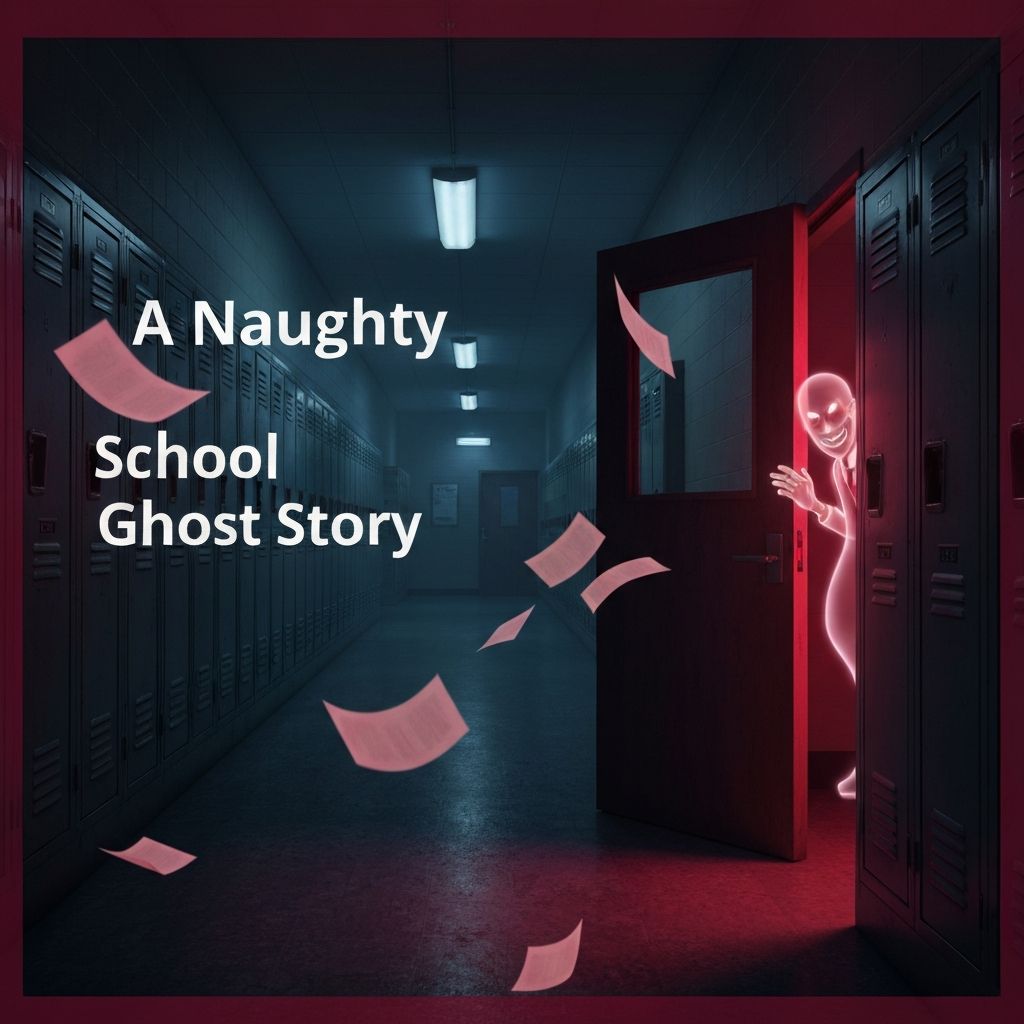
The Legend Behind the Naughty School Ghost
Every school has its share of legends, but few are as entertaining and spine-tingling as the tale of a naughty school ghost. These stories have been passed down through generations of students, growing more elaborate with each retelling. The concept of a mischievous spirit haunting the hallways of an educational institution strikes a unique balance between humor and horror, making it one of the most beloved genres of ghost stories among young audiences.
The origins of school ghost stories often trace back to real events or local folklore. Perhaps an old building with creaky floors and dim corridors inspired the first whispers of a spectral presence. Over time, the ghost transformed from a simple haunting into a character with personality, one that plays pranks on unsuspecting students and teachers alike. This evolution reflects our fascination with the supernatural and our desire to find excitement in everyday settings.
Setting the Scene: The Haunted School
Imagine a school building that has stood for over a century. Its walls are covered in ivy, and the paint on the window frames has long since peeled away. The hallways echo with the footsteps of students during the day, but at night, different sounds emerge. Doors creak open on their own, lockers slam shut without warning, and a faint giggling can be heard from the third-floor bathroom that nobody uses anymore.
The school in our story is Westbrook Academy, a fictional institution nestled in a small town surrounded by dense forests. The main building was constructed in the early 1900s, and several additions have been made over the decades. The oldest wing, known as the Heritage Hall, is where most of the ghostly activity is reported. Students avoid this area after dark, and even some teachers have admitted to feeling uneasy when working late in their Heritage Hall offices.
The atmosphere of the school plays a crucial role in the story. The combination of old architecture, poor lighting, and the natural creepiness of empty classrooms at night creates the perfect backdrop for supernatural mischief. Every shadow seems to move, and every sound carries an extra weight of mystery.
Meet the Ghost: A Prankster from the Past
The ghost of Westbrook Academy is no ordinary specter. Known affectionately as "Nicky" by the students, this spirit is believed to be a former student who attended the school in the 1940s. According to the legend, Nicky was the class clown, always pulling pranks and making everyone laugh. One fateful day, while attempting an elaborate prank involving the school bell tower, Nicky had an accident and was never seen again.
But Nicky's spirit never left the school. Instead of haunting the halls with menace, Nicky continued doing what they did best: causing harmless chaos. Desks would be rearranged overnight, chalk would appear on the blackboard spelling out jokes, and the school PA system would occasionally play music from the 1940s with no one at the controls.
What makes Nicky unique among ghost stories is the personality. This is not a vengeful spirit or a tormented soul. Nicky is simply a prankster who refuses to stop having fun, even in the afterlife. This characterization makes the story more accessible and less frightening, which is why it resonates so well with school-age audiences.
The Most Famous Pranks
Over the decades, Nicky has been credited with numerous pranks that have become part of Westbrook Academy's folklore. One of the most famous incidents occurred during the 1978 graduation ceremony when all the chairs in the auditorium were found facing the wrong direction just minutes before the event. Despite a thorough investigation, no culprit was ever found, and the custodians swore that the chairs were properly arranged the night before.
Another legendary prank involved the school cafeteria. In 1995, every salt shaker in the cafeteria was filled with sugar and every sugar container was filled with salt. The switch was discovered only after dozens of students and teachers had already seasoned their food. The kitchen staff had locked the cafeteria the previous evening, and security cameras showed no one entering during the night.
Perhaps the most elaborate prank attributed to Nicky was the Great Library Reorganization of 2003. The school librarian arrived one morning to find that every book in the library had been rearranged in reverse alphabetical order. The task would have taken a team of people several hours, yet the security system showed no signs of entry. The librarian, a longtime employee who was familiar with the Nicky legend, simply shook her head and began the arduous task of putting everything back.
Why We Love School Ghost Stories
School ghost stories serve an important social function. They create a shared mythology among students, providing a sense of community and belonging. When a new student arrives at a school with a ghost story, learning about the ghost becomes a rite of passage, an initiation into the school's culture.
These stories also help students process their fears in a safe environment. By laughing at a ghost who plays pranks rather than one who threatens harm, young people can explore their anxieties about the unknown without becoming overwhelmed. The school setting makes the supernatural feel more manageable because it is a familiar, everyday environment.
From a literary perspective, the naughty school ghost trope is a subversion of the traditional horror narrative. Instead of building toward a terrifying climax, these stories build toward a punchline. The tension is still present, but the resolution is humorous rather than horrifying. This structure makes the stories highly repeatable and shareable, which is why they persist across generations.
How to Write Your Own School Ghost Story
If you are inspired to create your own naughty school ghost story, there are several elements to consider. First, establish your setting in detail. The more vivid and specific your school environment, the more real the ghost will feel. Describe the hallways, the classrooms, the sounds, and the smells. Make your reader feel as though they are walking through the school themselves.
Next, give your ghost a backstory and a personality. The best ghost characters are ones with motivations and quirks. Why does your ghost haunt the school? What was their life like before they became a spirit? What kind of pranks do they enjoy? The more detailed your ghost's character, the more engaging your story will be.
Finally, structure your story around specific incidents or pranks. Each prank should escalate in complexity and humor, building toward a climax that ties all the threads together. Consider ending your story with a twist that reframes everything the reader has learned, or with an open ending that suggests the ghost is still out there, planning their next move.
The Enduring Appeal of Ghost Stories in Education
Ghost stories have long been used as educational tools. They teach narrative structure, build vocabulary, and encourage creative thinking. In many cultures, ghost stories are an important part of oral tradition, passed down from elders to children as a way of preserving history and cultural values.
In the context of a school, ghost stories take on additional significance. They can be used to teach students about local history, architecture, and even science. Why do old buildings creak? What causes lights to flicker? How do sounds travel through empty hallways? By investigating the phenomena described in ghost stories, students can develop critical thinking skills while engaging with a narrative that captures their imagination.
The naughty school ghost story, in particular, encourages a healthy relationship with fear. It teaches young people that not everything unknown is threatening and that humor can be a powerful tool for coping with uncertainty. These are valuable lessons that extend far beyond the walls of any haunted school.
