
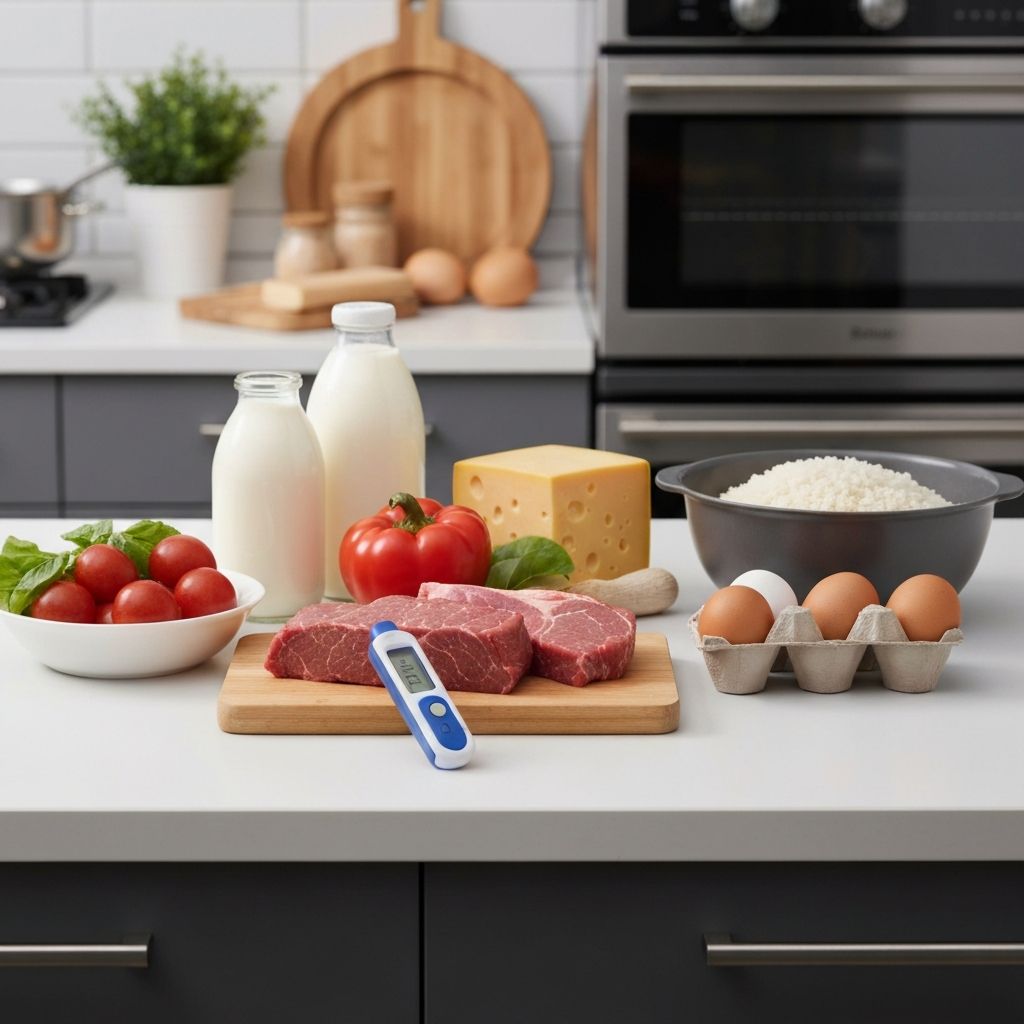
What Are TCS Foods?
TCS stands for Time/Temperature Control for Safety, a food safety classification that identifies foods requiring careful temperature monitoring to prevent the growth of harmful microorganisms. These foods provide the ideal conditions for bacterial growth: they are moist, contain protein, and have a neutral to slightly acidic pH. Without proper temperature control, TCS foods can become dangerous breeding grounds for pathogens that cause foodborne illness.
The concept of TCS foods, formerly known as PHF (Potentially Hazardous Foods), is a cornerstone of food safety management in commercial kitchens, food processing facilities, and anywhere food is prepared and served. Understanding which foods fall into this category is essential for anyone involved in food preparation, from professional chefs to home cooks.
The Danger Zone: Understanding Temperature Requirements
The "danger zone" for TCS foods is between 41 degrees Fahrenheit (5 degrees Celsius) and 135 degrees Fahrenheit (57 degrees Celsius). Within this temperature range, bacteria can multiply rapidly, potentially doubling in number every 20 minutes under optimal conditions. A single bacterium can multiply to over one million in just six hours under favorable conditions.
To keep TCS foods safe, they must be kept below 41 degrees Fahrenheit (cold holding) or above 135 degrees Fahrenheit (hot holding). When food is in the danger zone, the clock starts ticking. According to food safety guidelines, TCS foods should not remain in the danger zone for more than four hours total, including time spent during preparation, cooking, serving, and cooling.
This four-hour rule is cumulative, meaning the total time a food spends in the danger zone throughout its entire handling lifecycle counts toward the limit. Once the four-hour limit is reached, the food must be discarded regardless of how it looks, smells, or tastes, because many dangerous bacteria do not cause observable changes in food.
Common TCS Foods: Animal-Based Products
Animal-based products comprise some of the most common TCS foods. Raw and cooked meats, including beef, pork, lamb, and game meats, are all TCS foods. These proteins provide an ideal environment for bacteria like Salmonella, E. coli, and Clostridium perfringens, all of which can cause serious foodborne illness.
Poultry, including chicken, turkey, duck, and other fowl, is particularly susceptible to bacterial contamination and is one of the highest-risk TCS foods. Salmonella is frequently associated with raw poultry, and thorough cooking to an internal temperature of 165 degrees Fahrenheit is essential for safety.
Fish and shellfish are also TCS foods that require careful temperature control. Raw seafood carries risks of Vibrio, Listeria, and parasitic infections. Shellfish like oysters, clams, and mussels are filter feeders that can accumulate bacteria and toxins from their environment, making proper handling and storage especially critical.
Eggs and egg products are another important category of TCS foods. Raw eggs can harbor Salmonella, and egg-based dishes like custards, meringues, and hollandaise sauce require careful temperature management. Pasteurized eggs and egg products reduce but do not eliminate the need for temperature control.
Dairy Products as TCS Foods
Milk and dairy products are classic TCS foods that have been recognized as requiring careful temperature management since the development of pasteurization in the 19th century. Milk, cream, butter, yogurt, cheese, and ice cream all fall into the TCS category, though the specific risks vary by product.
Soft cheeses like brie, camembert, and queso fresco are particularly high-risk because their moisture content and pH create favorable conditions for Listeria monocytogenes, a bacterium that is especially dangerous for pregnant women, elderly individuals, and immunocompromised persons. Hard, aged cheeses carry lower risk due to their lower moisture content and longer aging process.
Milk-based sauces, custards, and puddings are high-risk TCS foods that require prompt refrigeration after preparation. Dairy-based desserts like cheesecake, cream pies, and mousse must be stored at proper temperatures and consumed within appropriate timeframes to prevent bacterial growth.
Plant-Based TCS Foods
While animal products are the most commonly cited TCS foods, several plant-based items also require time and temperature control. Cooked rice is a surprising entry on this list, but it is a well-documented source of Bacillus cereus, a bacterium that produces heat-resistant spores. Cooked rice left at room temperature allows these spores to germinate and produce toxins that can cause vomiting and diarrhea.
Cooked vegetables and beans become TCS foods once they are heat-treated. The cooking process eliminates many competing microorganisms, paradoxically making the food more susceptible to rapid pathogen growth if it enters the danger zone. Cooked potatoes, cooked pasta, and refried beans all require careful temperature management.
Tofu and other soy-based proteins are TCS foods due to their high protein and moisture content. Cut fruits and vegetables, particularly cut melons, cut tomatoes, and cut leafy greens, are also classified as TCS foods because cutting through the protective outer skin exposes the moist, nutrient-rich interior to potential contamination.
Sprouts, including alfalfa, bean, and radish sprouts, are considered TCS foods and carry particular risk because the warm, moist conditions required for sprouting are also ideal for bacterial growth. Sprout-associated outbreaks of Salmonella and E. coli have been well documented.
Foods That Are NOT Considered TCS
Understanding which foods do not require time and temperature control helps clarify the concept by contrast. Dry goods like flour, sugar, dried pasta, crackers, and cereals are not TCS foods because their low moisture content does not support rapid bacterial growth.
Uncut whole fruits and vegetables with intact skins are generally not TCS foods. The skin provides a natural barrier against contamination. However, once cut, these items become TCS foods. This distinction is important in food service operations where pre-cut produce is commonly used.
Foods with very high sugar or salt content, such as jams, jellies, hard candies, and heavily salted items, are typically not TCS foods. The high osmotic pressure created by sugar or salt inhibits microbial growth. Similarly, foods with very low pH (high acidity), such as vinegar, most pickled products, and some fermented foods, are generally not classified as TCS foods.
Proper Handling of TCS Foods
Safe handling of TCS foods requires attention at every stage of the food chain, from receiving and storage to preparation, cooking, serving, cooling, and reheating. At receiving, TCS foods should be checked for proper temperature and immediately transferred to appropriate storage.
During preparation, TCS foods should be removed from refrigeration only in quantities that can be processed within a reasonable time. The less time food spends in the danger zone, the safer it is. Using separate cutting boards, utensils, and preparation areas for raw and ready-to-eat foods prevents cross-contamination.
Cooking TCS foods to proper internal temperatures is essential for killing pathogenic bacteria. Different foods have different minimum cooking temperatures: 165 degrees Fahrenheit for poultry and reheated leftovers, 155 degrees Fahrenheit for ground meats, and 145 degrees Fahrenheit for whole cuts of meat, fish, and eggs.
Cooling TCS foods safely requires moving from 135 degrees to 70 degrees Fahrenheit within two hours, and from 70 degrees to 41 degrees within an additional four hours. Techniques for rapid cooling include dividing food into smaller portions, using ice baths, and using blast chillers. Proper cooling is one of the most frequently violated food safety practices and a common cause of foodborne illness outbreaks.
Why TCS Food Safety Matters
The Centers for Disease Control and Prevention estimates that 48 million people in the United States get sick from foodborne illness each year, resulting in 128,000 hospitalizations and 3,000 deaths. Many of these illnesses are directly linked to improper handling of TCS foods, making temperature control one of the most critical factors in preventing foodborne disease.
For food service professionals, understanding TCS foods is not just a matter of best practice; it is a legal requirement. Health departments regularly inspect food establishments for proper temperature control, and violations can result in citations, fines, and even closure. Food handler certifications universally include TCS food management as a core component of their curricula.
