
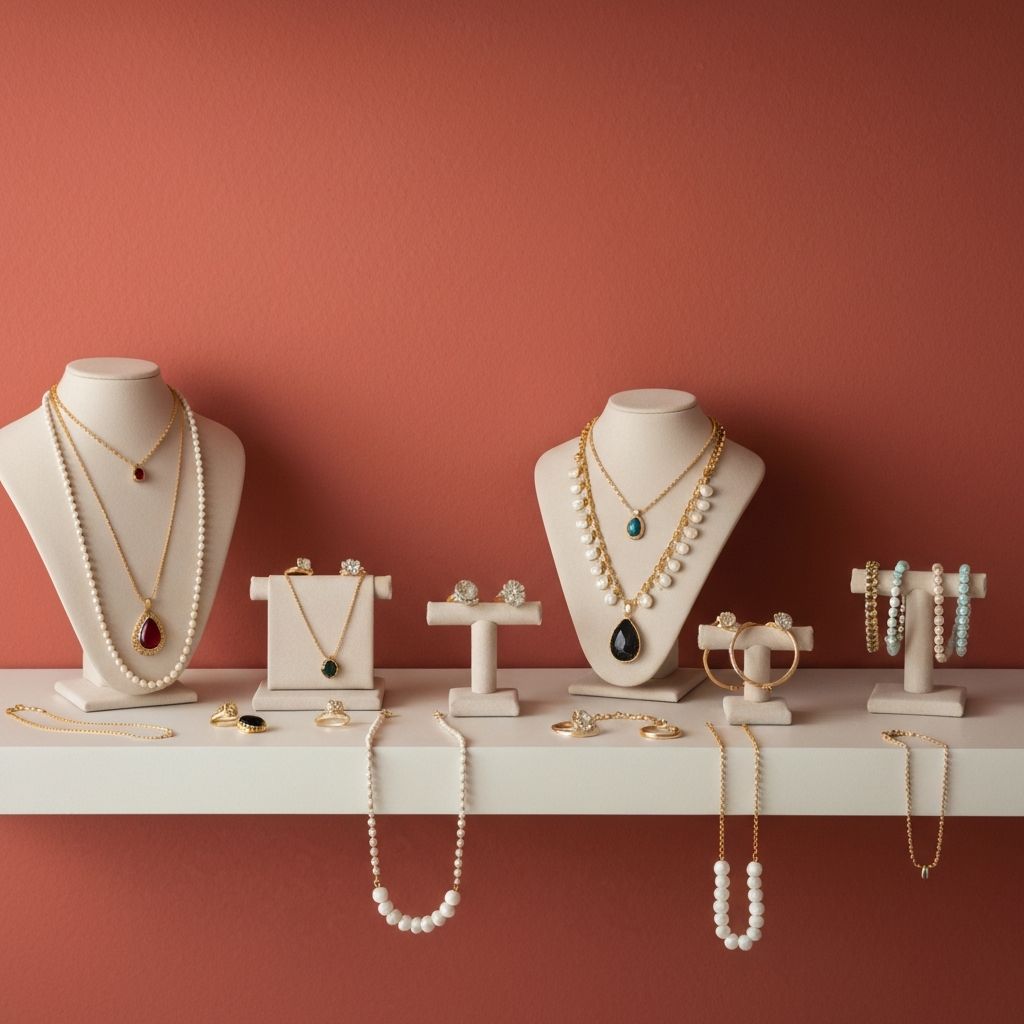
Defining Costume Jewelry
Costume jewelry, also known as fashion jewelry or imitation jewelry, refers to decorative accessories that are made from less expensive materials than fine jewelry. Unlike fine jewelry, which is crafted from precious metals like gold, silver, and platinum and set with genuine gemstones, costume jewelry uses base metals, glass, plastic, synthetic stones, and other affordable materials to create beautiful and fashionable pieces.
The term costume jewelry originated from the theatrical world, where actors needed jewelry to complement their costumes without the expense and risk of using real gems and precious metals on stage. Over time, this practical approach to accessorizing evolved into a legitimate fashion category that allows people of all budgets to express their personal style through jewelry. Today, costume jewelry ranges from inexpensive mass-produced pieces to high-end designer creations that can be quite valuable.
The History of Costume Jewelry
The history of costume jewelry stretches back centuries, but it truly came into its own during the 18th century when advances in glass-making technology made it possible to create convincing imitations of precious gemstones. Georgian-era paste jewelry, made from leaded glass cut and polished to mimic diamonds, was so well-crafted that it was worn by royalty alongside their genuine pieces.
The golden age of costume jewelry arrived in the 1920s and 1930s, when iconic designers like Coco Chanel revolutionized fashion by openly wearing and promoting costume jewelry. Chanel famously declared that it was vulgar to wear only real gems and mixed costume pieces with fine jewelry, making it socially acceptable for fashionable women to do the same. This era saw the rise of legendary costume jewelry houses like Trifari, Miriam Haskell, and Eisenberg, whose vintage pieces are now highly collectible.
The mid-20th century brought even greater innovation and popularity to costume jewelry. Companies like Monet, Napier, and Sarah Coventry made stylish jewelry accessible to middle-class consumers through department stores and home sales parties. The 1950s and 1960s produced some of the most recognizable and collectible costume jewelry designs, characterized by bold rhinestone brooches, statement necklaces, and colorful enamel pieces that perfectly complemented the fashion of the era.
Materials Used in Costume Jewelry
Costume jewelry employs a wide variety of materials to achieve its decorative effects. Base metals such as brass, copper, nickel, aluminum, and pewter form the structural foundation of most pieces. These metals are often plated with gold, silver, or rhodium to give them the appearance of precious metals. Gold-plated, gold-filled, and vermeil (gold over sterling silver) pieces offer a more luxurious look at a fraction of the cost of solid gold.
Glass has been one of the most important materials in costume jewelry throughout its history. Rhinestones, which are glass stones backed with metallic foil to enhance their sparkle, have been a staple of costume jewelry since the 18th century. Swarovski crystals, produced by the Austrian company founded in 1895, are considered the finest glass crystals available and are used in high-end costume jewelry. Czech glass beads, Murano glass, and lampwork beads are other popular glass elements.
Modern costume jewelry also incorporates materials like acrylic, resin, lucite, wood, leather, fabric, ceramic, and shell. Synthetic gemstones, including cubic zirconia and laboratory-created stones, offer the look of genuine gems at a minimal cost. Semi-precious stones like turquoise, amethyst, and agate are sometimes used in higher-end costume jewelry, blurring the line between fashion and fine jewelry.
Costume Jewelry vs. Fine Jewelry
Understanding the differences between costume and fine jewelry helps consumers make informed purchasing decisions. Fine jewelry is defined by its use of precious metals (gold, silver, platinum) and genuine gemstones (diamonds, rubies, sapphires, emeralds). These materials have inherent value based on their rarity and are typically accompanied by certifications of quality and authenticity.
Costume jewelry, while less expensive, offers advantages that fine jewelry cannot. It allows wearers to follow fashion trends without making a significant financial investment. If a particular style goes out of fashion, the financial loss is minimal. Costume jewelry also enables people to build larger, more diverse collections and to experiment with bold, statement-making designs that they might hesitate to invest in with fine jewelry.
Durability is one area where fine jewelry has a clear advantage. Precious metals resist tarnishing and corrosion, while base metals used in costume jewelry can tarnish, turn green, or cause skin reactions in some people. However, proper care and storage can significantly extend the life of costume jewelry pieces, and many vintage pieces from the mid-20th century remain in excellent condition decades later.
Building a Costume Jewelry Collection
Building a thoughtful costume jewelry collection is both an enjoyable hobby and a way to enhance your personal style. Start with versatile basics: a pair of classic stud earrings, a simple chain necklace, a tennis bracelet, and a cocktail ring. These foundational pieces can be mixed and matched with virtually any outfit and provide a polished look for everyday wear.
Once you have your basics, explore statement pieces that reflect your personality and lifestyle. Bold chandelier earrings, layered necklaces, stackable bangles, and oversized cocktail rings can transform a simple outfit into something extraordinary. Look for pieces that complement your existing wardrobe in terms of color, style, and proportion. Quality costume jewelry should feel substantial in your hand and have secure clasps and settings.
For those interested in vintage costume jewelry, estate sales, antique shops, and online marketplaces offer treasure troves of beautiful pieces. Research the hallmarks and signatures of desirable brands like Trifari, Weiss, Schreiner, Juliana, and Haskell. Vintage costume jewelry can appreciate in value over time, making it both a fashion choice and a potential investment. Join collector groups and attend jewelry shows to learn from experienced collectors and discover rare finds.
Caring for Your Costume Jewelry
Proper care is essential for maintaining the beauty and longevity of costume jewelry. Store pieces individually in soft pouches or lined jewelry boxes to prevent scratching and tangling. Keep costume jewelry away from moisture, as water can tarnish metals and damage glued-in stones. Remove costume jewelry before swimming, showering, exercising, or applying perfume, lotions, or hairspray.
Clean costume jewelry gently using a soft, dry cloth to remove fingerprints and surface dirt. For more thorough cleaning, use a slightly damp cloth with a tiny amount of mild soap, being careful not to submerge the piece or get water into settings where stones are glued rather than set. Never use ultrasonic cleaners, steam cleaners, or harsh chemical cleaners on costume jewelry, as these can damage plating, loosen stones, and destroy adhesives.
If a piece of costume jewelry begins to tarnish, a gentle polish with a jewelry polishing cloth can often restore its shine. For gold-plated pieces, avoid abrasive polishing, which can wear through the thin gold layer. If stones become loose, use a small amount of jewelry adhesive to secure them. With proper care, quality costume jewelry can last for decades and continue to bring joy and style to your wardrobe for years to come.
