
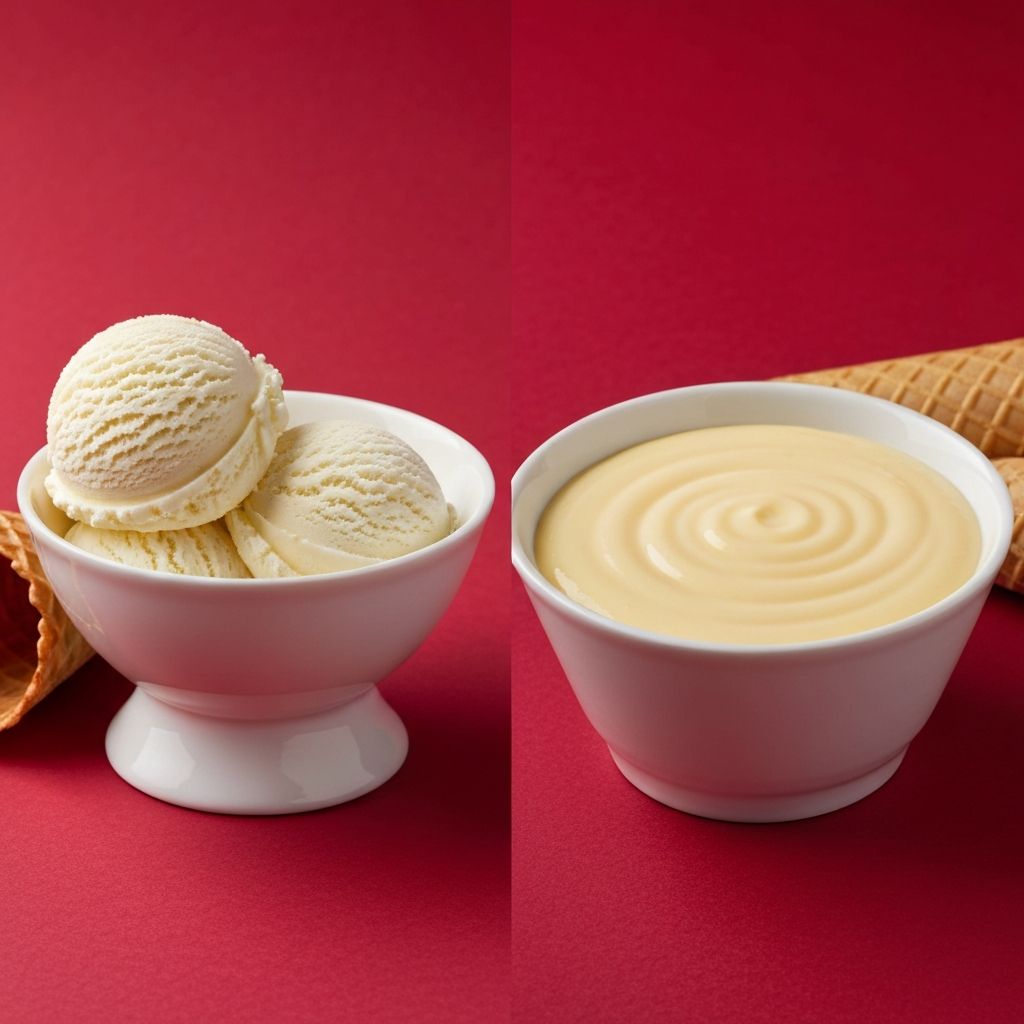
A Tale of Two Frozen Treats
Ice cream and custard are two of the world's most beloved frozen desserts, and while they may look similar at first glance, they are distinct products with important differences in ingredients, texture, preparation method, and even legal definitions. Whether you are a casual dessert lover trying to understand what you are eating or a home cook deciding which to make, understanding these differences can deepen your appreciation for both treats and help you choose the right one for any occasion.
The confusion between ice cream and custard is understandable because they share many common ingredients and are served in similar ways. Both are frozen, creamy, sweet, and available in a wide variety of flavors. However, the presence or absence of one key ingredient, along with differences in how they are made and served, sets them apart in meaningful ways that affect everything from taste and texture to nutritional content and shelf stability.
The Key Ingredient Difference: Egg Yolks
The primary difference between ice cream and custard comes down to egg yolks. According to the United States Food and Drug Administration, frozen custard must contain at least 1.4 percent egg yolk by weight. This is the single most important legal and culinary distinction between the two products. Ice cream, by contrast, may contain egg yolks but is not required to, and many commercial ice cream brands contain no egg yolks at all.
Egg yolks play a crucial role in custard's distinctive characteristics. The fat in egg yolks contributes to a richer, more luxurious mouthfeel than most ice creams achieve. The proteins in egg yolks act as emulsifiers, helping to bind the fat and water in the mixture and creating a smoother, more stable product. The lecithin in egg yolks also helps prevent the formation of large ice crystals, which is one reason frozen custard has such a distinctively silky texture.
Both ice cream and frozen custard must contain at least 10 percent milkfat by weight to meet FDA standards. Many premium ice creams actually exceed this minimum, with some containing 16 to 20 percent milkfat. Frozen custard similarly tends to have a higher fat content than the minimum, making it one of the richest and most indulgent frozen desserts available.
Texture and Consistency Differences
The texture difference between ice cream and custard is one of the first things you will notice when tasting them side by side. Frozen custard has a denser, creamier, and silkier texture than most ice creams. This is due to a combination of the egg yolks and the way custard is churned and served.
Frozen custard is typically churned at a lower speed and with less air incorporated than ice cream. The amount of air whipped into a frozen dessert during churning is called overrun, and it has a significant impact on texture and density. Ice cream can have an overrun of up to 100 percent, meaning that the finished product is half air by volume. Frozen custard, by contrast, typically has an overrun of around 15 to 30 percent, resulting in a much denser product that feels heavier and more substantial on the palate.
This lower overrun is one of the reasons frozen custard tastes richer than ice cream even when the fat content is similar. Because there is less air in the product, you get more actual frozen dessert per spoonful, which translates to a more intense flavor and creamier mouthfeel. The trade-off is that custard tends to melt faster than ice cream because the denser product absorbs heat more readily, and there is less insulating air to slow the melting process.
How Each Is Made
The preparation methods for ice cream and custard differ in important ways, particularly in the base preparation and serving temperature. Ice cream base is typically made by combining cream, milk, and sugar, heating the mixture to dissolve the sugar, and then cooling it before churning in an ice cream maker. Some ice cream recipes include egg yolks, which are cooked into a custard base before churning, but many modern ice cream recipes skip the eggs entirely.
Frozen custard base always includes egg yolks, which must be carefully tempered and cooked to create a smooth, thick custard before churning. The eggs are typically heated to at least 160 degrees Fahrenheit to ensure food safety, while being stirred constantly to prevent scrambling. This custard base is then cooled and churned in a machine that is specifically designed for frozen custard production.
One of the most distinctive aspects of traditional frozen custard is that it is served fresh from the machine, usually within minutes of being churned. Many frozen custard shops, particularly those in the Midwest where the treat originated, churn custard throughout the day and serve it at a slightly warmer temperature than typical ice cream. This warmer serving temperature, combined with the fresh preparation, contributes to frozen custard's exceptionally smooth and creamy texture.
Flavor and Serving Traditions
While both ice cream and custard are available in a wide range of flavors, there are some traditions and tendencies that distinguish them. Frozen custard shops typically offer a smaller rotation of flavors, often with vanilla and chocolate available daily and a rotating flavor of the day that changes regularly. This contrasts with ice cream shops, which may offer dozens of flavors simultaneously.
The richer, denser base of frozen custard means that flavors tend to be more intense and concentrated than in ice cream. A vanilla frozen custard, for example, often has a more pronounced vanilla flavor than vanilla ice cream because there is less air to dilute the taste. This richness also means that frozen custard can be more satisfying in smaller portions, which is worth considering if you are watching your calorie intake.
Frozen custard is traditionally served in a dish or on a cone, often with mix-ins like hot fudge, caramel, nuts, or candy pieces blended in to order. The concrete, which is a thick blend of frozen custard and mix-ins served in a cup, is a signature offering at many custard shops and is thick enough to be served upside down without falling out of the cup. Ice cream shops tend to offer a wider variety of toppings and serving options, including sundaes, milkshakes, floats, and pre-packed pints.
Nutritional Comparison
When comparing the nutritional profiles of ice cream and frozen custard, the differences are relatively modest but worth noting. A typical half-cup serving of vanilla frozen custard contains approximately 200 to 250 calories, 12 to 15 grams of fat, 20 to 25 grams of sugar, and 4 to 5 grams of protein. A comparable serving of premium vanilla ice cream contains approximately 180 to 270 calories, 10 to 18 grams of fat, 18 to 24 grams of sugar, and 3 to 4 grams of protein.
The egg yolks in frozen custard contribute additional nutrients that are not typically found in ice cream. These include vitamin A, vitamin D, vitamin B12, iron, and choline, an essential nutrient that is important for brain health and liver function. Egg yolks also contain beneficial omega-3 fatty acids, particularly if the eggs come from pasture-raised chickens.
However, the egg yolks also contribute additional cholesterol to frozen custard. A half-cup serving of frozen custard may contain 80 to 120 milligrams of cholesterol, compared to 40 to 70 milligrams in a comparable serving of ice cream. For most healthy individuals, dietary cholesterol has a minimal impact on blood cholesterol levels, but it may be a consideration for people with specific health conditions or dietary restrictions.
Which One Should You Choose?
Choosing between ice cream and custard ultimately comes down to personal preference and what you are looking for in a frozen dessert. If you prioritize richness, creaminess, and density, frozen custard is likely to be your preferred choice. Its egg yolk-enriched base and low overrun create a luxuriously smooth product that feels like a true indulgence with every bite.
If you prefer a lighter, airier texture, or if you want a wider variety of flavors and options, ice cream may be more to your liking. Ice cream's higher overrun creates a softer, more scoopable product that many people find refreshing, particularly on hot days. The vast range of commercially available ice cream flavors, from classic vanilla to adventurous options like lavender honey or salted caramel pretzel, also gives ice cream an edge in terms of variety.
Of course, there is no rule that says you have to choose one over the other. Both ice cream and custard are delicious treats that can be enjoyed as part of a balanced diet. The best frozen dessert is the one that brings you the most joy, whether that is a scoop of freshly churned frozen custard from a local shop or a bowl of your favorite ice cream at home on a Friday night.
