
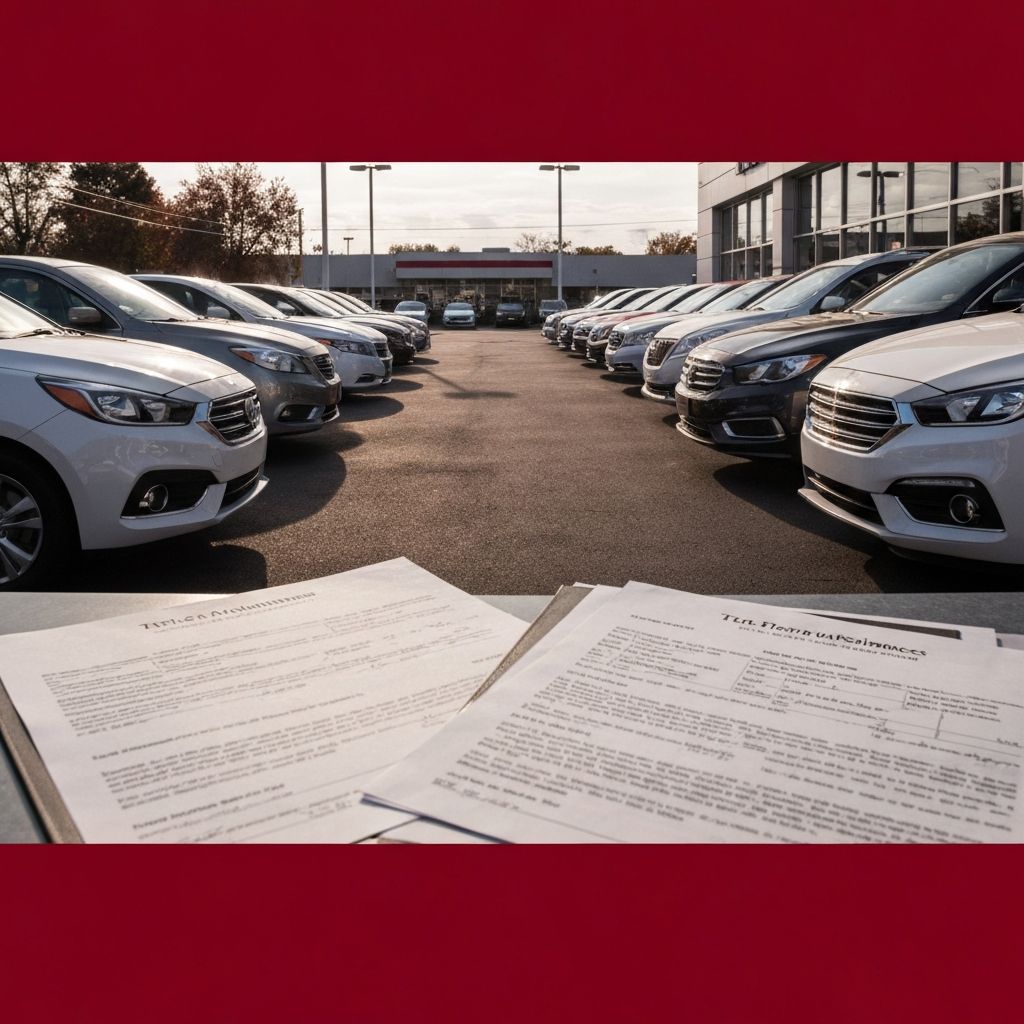
Understanding Branded Titles
When you purchase a vehicle, the title document serves as legal proof of ownership. Most vehicles carry a "clean" title, which means the car has never been declared a total loss by an insurance company or suffered damage significant enough to trigger a special designation. A branded title, on the other hand, is a title that has been permanently marked with a specific designation indicating that the vehicle has a history of significant damage, theft recovery, flood exposure, or other serious issues.
Branded titles exist to protect consumers by providing transparency about a vehicle's history. Without title branding, a car that had been totaled in a severe accident, repaired, and put back on the road could be sold to an unsuspecting buyer who might never know about its troubled past. The branding system ensures that this information follows the vehicle throughout its life, regardless of how many times it changes hands.
Types of Branded Titles
There are several types of branded titles, each indicating a different type of history. The most common is the "salvage" title, which is issued when an insurance company declares a vehicle a total loss. This typically happens when the cost of repairing the vehicle exceeds a certain percentage of its market value, usually 75 to 90 percent depending on the state. A salvage-titled vehicle may have been damaged by a collision, flood, fire, vandalism, or other event severe enough that the insurance company determined it was not economically worth repairing.
A "rebuilt" title (sometimes called "rebuilt salvage" or "reconstructed") is issued when a previously salvage-titled vehicle has been repaired and passed a state inspection certifying that it is roadworthy. This is the most common branded title you'll encounter on the used car market because salvage-titled vehicles cannot legally be driven on public roads in most states until they've been repaired, inspected, and issued a rebuilt title.
A "flood" title is specifically designated for vehicles that have sustained significant water damage. Flood-titled vehicles are particularly concerning because water damage can cause long-term problems that may not be immediately apparent, including corrosion of electrical components, mold growth in hidden areas, and weakening of structural elements. After major flooding events like hurricanes, thousands of flood-damaged vehicles enter the used car market, making the flood title designation especially important.
Other branded title types include "lemon" titles for vehicles repurchased by the manufacturer under lemon law provisions, "theft recovery" titles for stolen vehicles that were recovered after the insurance claim was settled, "dismantled" titles for vehicles that have been taken apart for parts, and "junk" titles for vehicles that have been deemed fit only for scrap.
How a Vehicle Gets a Branded Title
The process of title branding typically begins with an insurance claim. When a vehicle is involved in a serious accident, flood, or other damaging event, the owner files a claim with their insurance company. The insurance company's adjusters evaluate the damage and compare the estimated repair cost to the vehicle's current market value. If the repair cost exceeds the state's threshold percentage of the vehicle's value, the insurance company declares the vehicle a total loss.
Once a vehicle is declared a total loss, the insurance company pays the owner the vehicle's pre-damage market value (minus any deductible) and takes possession of the vehicle. The insurance company then applies for a salvage title from the state's Department of Motor Vehicles, permanently branding the vehicle's title. The salvage-titled vehicle is typically sold at auction to salvage yards, rebuilders, or individuals who specialize in repairing damaged vehicles.
If the vehicle is repaired, the rebuilder must apply for a rebuilt title. This process varies by state but generally requires documentation of the repairs performed, receipts for parts used, and a physical inspection by a state-authorized inspector. The inspector verifies that the vehicle has been properly repaired, that all safety systems are functional, and that no stolen parts were used in the reconstruction. If the vehicle passes inspection, a rebuilt title is issued.
Impact on Vehicle Value
A branded title has a significant and permanent impact on a vehicle's resale value. Industry studies consistently show that vehicles with branded titles sell for 20 to 40 percent less than comparable vehicles with clean titles, even when the branded-title vehicle has been thoroughly and professionally repaired. This depreciation reflects the inherent uncertainty about the vehicle's history, potential hidden damage, and the difficulty of obtaining certain types of insurance coverage.
The degree of value reduction depends on several factors, including the type of brand (a rebuilt title is generally less stigmatized than a salvage or flood title), the severity of the original damage, the quality of repairs, and the make and model of the vehicle. High-value luxury and sports cars tend to experience larger absolute depreciation from title branding, while the percentage reduction is relatively consistent across vehicle types.
This value reduction creates both risks and opportunities for buyers. The risk is obvious: you're purchasing a vehicle with a troubled history that may harbor hidden problems. The opportunity is that if you do your due diligence and find a branded-title vehicle that has been genuinely well-repaired, you can acquire a vehicle for significantly less than you'd pay for a clean-titled equivalent. Many budget-conscious buyers deliberately seek out rebuilt-title vehicles for this reason.
Risks of Buying a Branded-Title Vehicle
The primary risk of buying a branded-title vehicle is that some damage may not be immediately apparent but could cause problems in the future. Structural damage is a particular concern because even skilled repair work may not fully restore the vehicle's original crash-worthiness. A car that was designed to crumple in specific ways during a collision may not respond the same way after frame or structural repairs, potentially compromising occupant safety in a subsequent accident.
Electrical problems are another common issue, especially with flood-damaged vehicles. Modern vehicles contain miles of wiring and dozens of electronic control modules, and water intrusion can cause corrosion and shorts that may not manifest until months or years after the damage occurred. A vehicle that appears to function normally at the time of purchase may develop mysterious electrical gremlins as corroded connections gradually fail.
Insurance complications represent another significant risk. Some insurance companies will not write comprehensive or collision coverage for vehicles with branded titles, and those that do may offer only actual cash value coverage at higher premiums. This means that if your branded-title vehicle is subsequently damaged, your insurance payout may be significantly less than what you'd receive for a clean-titled vehicle of the same make, model, and year.
Financing can also be challenging. Many banks and credit unions will not finance the purchase of a branded-title vehicle, or they may require a larger down payment and charge a higher interest rate. If you need financing to purchase a vehicle, a branded title can significantly limit your options and increase your borrowing costs.
How to Evaluate a Branded-Title Vehicle
If you're considering purchasing a branded-title vehicle, thorough evaluation is essential. Start by obtaining a comprehensive vehicle history report from services like Carfax or AutoCheck. These reports will show the vehicle's title history, including the specific type of brand, the date it was branded, and the reported reason (collision, flood, theft, etc.). The report may also show repair records, mileage history, and other relevant information.
A pre-purchase inspection by an independent, qualified mechanic is absolutely critical when buying a branded-title vehicle. This is not the time to rely on a visual inspection or the seller's assurances. A thorough inspection should include checking for frame damage using a frame measuring system, inspecting all structural components and welds, testing all electrical systems, examining the underside of the vehicle for evidence of flood damage or improper repairs, and performing a comprehensive road test.
Ask the seller for complete documentation of the repairs that were performed. Reputable rebuilders will have receipts for all parts used, photographs documenting the repair process, and records of the state inspection that resulted in the rebuilt title being issued. If the seller cannot provide this documentation, proceed with extreme caution.
State Variations in Title Branding Laws
Title branding laws vary significantly from state to state, which creates both confusion and opportunities for fraud. The threshold at which a vehicle receives a salvage title ranges from 75 percent of the vehicle's value in some states to 100 percent in others. Some states have additional branded title categories that others don't recognize, and the inspection requirements for obtaining a rebuilt title vary widely in rigor.
This patchwork of state laws has given rise to the practice of "title washing," in which unscrupulous sellers move a branded-title vehicle to a state with less stringent title branding laws in an attempt to obtain a clean title. While this practice is illegal, it does occur, and it's one reason why obtaining a comprehensive vehicle history report is so important. A vehicle history report can reveal title records from multiple states and flag potential title washing.
Making an Informed Decision
Buying a branded-title vehicle isn't inherently good or bad; it's a decision that requires careful evaluation of the specific vehicle, the nature and extent of the original damage, the quality of repairs, and your own risk tolerance and budget constraints. Some branded-title vehicles are genuinely good values that have been professionally repaired and will provide years of reliable service. Others are ticking time bombs held together by substandard repairs and hiding serious problems beneath a fresh coat of paint.
The key is to approach any branded-title purchase with your eyes open, armed with as much information as possible, and with the guidance of qualified professionals. Never skip the vehicle history report, always get an independent inspection, and don't let a low price override your judgment about the vehicle's condition and history.
Conclusion: Knowledge Is Your Best Protection
Branded titles serve an important consumer protection function by ensuring transparency about a vehicle's history. Whether you're buying or selling a branded-title vehicle, understanding what these designations mean, how they affect value and insurability, and what risks they represent is essential for making informed decisions. By doing your homework, getting professional inspections, and maintaining realistic expectations, you can navigate the branded-title market with confidence.
