
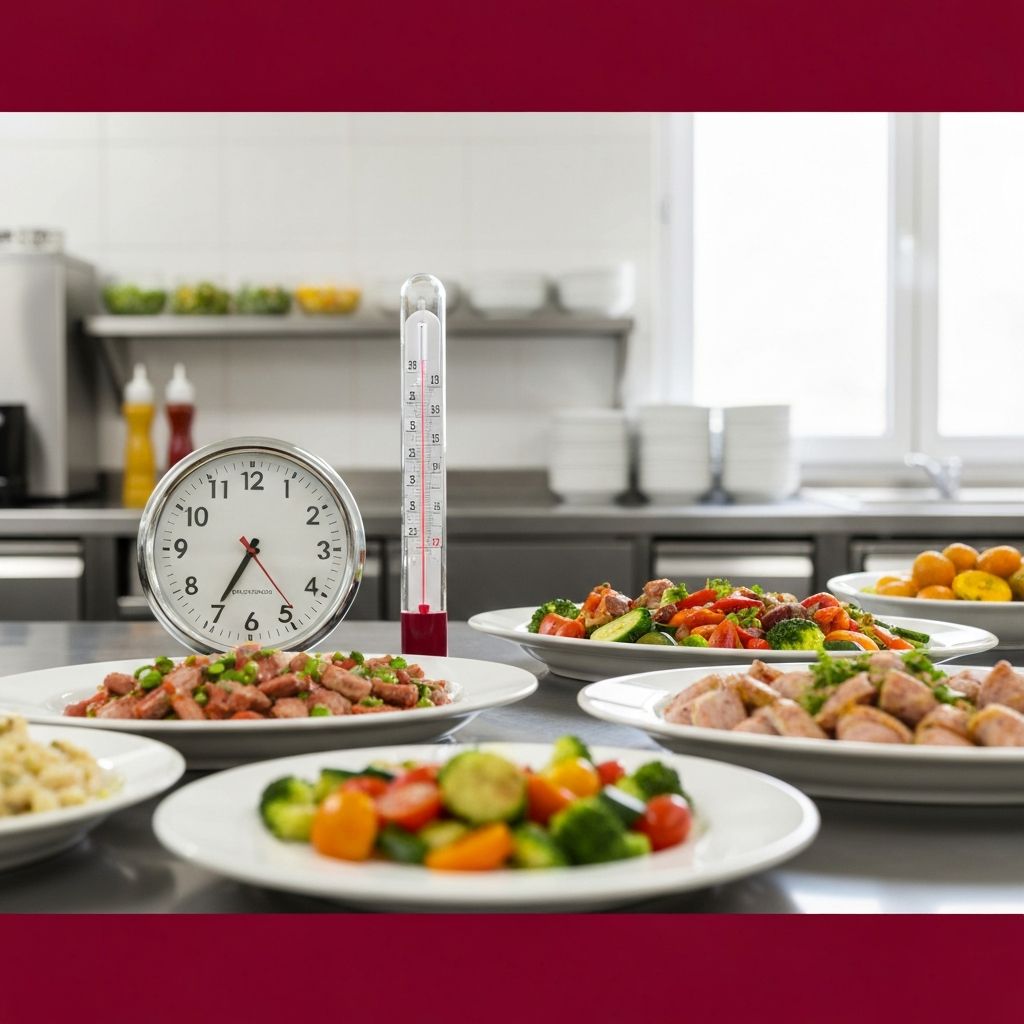
The Critical Time Limits for Food Safety
Understanding the maximum time food can safely remain in the temperature danger zone is one of the most important pieces of knowledge for anyone who handles food, whether professionally or at home. The temperature danger zone, defined as the range between 40°F (4°C) and 140°F (60°C), is where harmful bacteria can multiply rapidly, potentially reaching levels that cause foodborne illness. The key question is not just about temperature but about time: how long can food remain in this zone before it becomes unsafe to eat?
The short answer, according to the United States Department of Agriculture (USDA) and most food safety authorities worldwide, is that perishable food should not remain in the temperature danger zone for more than two hours total. This two-hour window is cumulative, meaning it includes all the time the food spends between 40°F and 140°F across all stages of handling, from the moment it leaves refrigeration or finishes cooking until it is consumed or returned to safe temperature storage.
The Two-Hour Rule Explained
The two-hour rule is the most widely recognized guideline for managing food in the temperature danger zone. According to this rule, any perishable food item that has been in the danger zone for a total of two hours should either be consumed immediately, returned to safe temperatures (refrigerated below 40°F or kept hot above 140°F), or discarded. This rule applies to all Time/Temperature Control for Safety (TCS) foods, including meat, poultry, seafood, dairy products, cooked grains, cut fruits and vegetables, and prepared foods.
It is crucial to understand that the two-hour time limit is cumulative. This means that the clock does not reset when food is moved between the danger zone and safe temperatures. For example, if chicken salad sits out at room temperature for 45 minutes during preparation, is refrigerated, and then sits out again for another 75 minutes during serving, the total time in the danger zone is two hours, and the food should be consumed or discarded at that point. Every minute that the food spends in the danger zone counts toward the two-hour total.
The One-Hour Rule for Hot Weather
When the ambient temperature exceeds 90°F (32°C), the maximum safe time in the danger zone shrinks from two hours to just one hour. This shortened time limit reflects the accelerated rate of bacterial growth that occurs at higher temperatures. During outdoor events such as picnics, barbecues, tailgate parties, and beach outings on hot days, food can enter the most dangerous part of the temperature range very quickly, and bacteria can multiply to hazardous levels much faster than they would at typical indoor room temperatures.
This one-hour rule is particularly important during summer months and in warm climates, where outdoor dining and entertaining are common. Foods served at outdoor events should be kept on ice or in insulated coolers whenever possible, and serving dishes should be refreshed frequently with fresh, properly chilled portions rather than leaving the same food out for extended periods. Using small serving portions and replenishing them frequently is one of the most effective strategies for keeping food safe at outdoor events.
The Four-Hour Rule in Commercial Settings
In addition to the two-hour rule, food safety regulations in many jurisdictions recognize a four-hour rule that provides an alternative approach for managing food in the danger zone, particularly in commercial food service settings. Under the four-hour rule, food that has been in the danger zone for less than two hours can be refrigerated for later use. Food that has been in the danger zone for between two and four hours must be consumed immediately and cannot be refrigerated for later use. Food that has been in the danger zone for four hours or more must be discarded without exception.
This four-hour window represents the absolute maximum time that food science considers potentially safe, and it comes with the critical caveat that the food must be consumed immediately and not stored for future use. After four hours in the danger zone, the bacterial population in the food may have reached levels that cannot be eliminated by reheating, and the risk of foodborne illness is considered unacceptably high regardless of how the food looks, smells, or tastes.
The Science of Bacterial Growth Over Time
To understand why these time limits exist, it helps to understand the mathematics of bacterial growth. Under ideal conditions in the temperature danger zone, bacteria can double in number approximately every 20 minutes. Starting with just one bacterium, this exponential growth means that after two hours (six doublings), there would be 64 bacteria. After four hours (twelve doublings), there would be 4,096 bacteria. After six hours (eighteen doublings), the number would reach over 260,000 bacteria.
While these numbers may seem small, remember that food contamination rarely starts with a single bacterium. A piece of raw chicken may carry millions of bacteria on its surface, and even a small amount of cross-contamination can introduce thousands of bacteria to a ready-to-eat food item. When these already significant numbers are allowed to multiply for hours in the danger zone, the bacterial population can quickly reach the threshold that causes illness, which for some pathogens can be as few as ten to one hundred organisms.
It is also important to understand that not all bacteria produce visible or detectable changes in food. While spoilage bacteria may cause obvious signs like off-odors, sliminess, or discoloration, many pathogenic bacteria that cause foodborne illness do not produce any detectable changes in the food's appearance, smell, or taste. This is why the mantra "when in doubt, throw it out" is such important food safety advice. You cannot rely on your senses to determine whether food has been in the danger zone too long.
Cumulative Time Tracking
One of the most challenging aspects of managing food in the temperature danger zone is tracking cumulative time. In a busy kitchen or food service operation, a single food item may pass through the danger zone multiple times during its journey from raw ingredient to finished dish. Each of these passages adds to the total time in the danger zone, and keeping accurate track of this cumulative exposure is essential for maintaining food safety.
In commercial food service operations, many establishments use time and temperature logs to track the danger zone exposure of critical food items. Staff members record the temperature and time when food leaves refrigeration, when it enters hot holding, when it is placed on a buffet, and when it is returned to storage. These records help managers identify food items that have exceeded safe time limits and ensure that no food is served to customers after spending too long in the danger zone.
For home cooks, time tracking can be simpler but is no less important. A good practice is to set a timer when you take perishable food out of the refrigerator and to be mindful of how long food sits at room temperature during preparation, cooking, and serving. If you are hosting a party or gathering where food will be set out for guests, plan to replenish dishes from the refrigerator at regular intervals rather than putting everything out at once.
Special Considerations for Different Foods
While the two-hour and four-hour rules apply broadly to all perishable foods, some food items are more susceptible to dangerous bacterial growth than others. Protein-rich foods such as meat, poultry, seafood, eggs, and dairy products are particularly vulnerable because they provide the nutrients that bacteria need to thrive. Cooked rice and pasta are also high-risk foods, as the spore-forming bacterium Bacillus cereus can survive cooking and multiply rapidly in these starchy foods if they are not cooled quickly.
Cut fruits and vegetables, while not as protein-rich as animal products, also require careful temperature management. Once the protective skin of a fruit or vegetable is broken, the moist, nutrient-rich interior becomes an ideal environment for bacterial growth. Cut melons, tomatoes, and leafy greens are specifically identified as TCS foods that must be kept out of the danger zone.
Proper Cooling Techniques
Getting food through the danger zone quickly during cooling is just as important as limiting total time in the zone. The FDA Food Code recommends a two-stage cooling process: food should be cooled from 135°F to 70°F within two hours, and then from 70°F to 41°F within an additional four hours. The emphasis on rapid cooling through the upper portion of the danger zone reflects the fact that bacterial growth is most rapid between 70°F and 125°F.
Effective cooling techniques include dividing large portions into smaller, shallow containers to increase surface area; placing containers in ice water baths and stirring frequently; using cooling paddles or ice wands inserted directly into hot liquids; and using blast chillers in commercial settings. Avoid placing large containers of hot food directly into the refrigerator, as this can raise the temperature inside the refrigerator and compromise the safety of other stored foods.
Reheating After Danger Zone Exposure
A common misconception is that reheating food that has been in the danger zone too long will make it safe to eat. While thorough reheating to 165°F can kill most vegetative bacteria, it cannot destroy all bacterial toxins. Some bacteria, particularly Staphylococcus aureus and Bacillus cereus, produce heat-stable toxins during their growth phase that are not destroyed by cooking temperatures. These toxins can cause illness even after the bacteria themselves have been killed, which is why time limits in the danger zone are so critical.
When reheating food that has been properly stored within safe time limits, always ensure it reaches an internal temperature of 165°F throughout. Use a food thermometer to verify the temperature, and stir the food during reheating to eliminate cold spots. Foods should be reheated rapidly, reaching 165°F within two hours. Slow cookers and steam tables should not be used to reheat food from a cold state, as they may not heat the food quickly enough.
Conclusion
The maximum time food can remain in the temperature danger zone is two hours under normal conditions, one hour when ambient temperatures exceed 90°F, and four hours as an absolute maximum in commercial settings where the food must be consumed immediately afterward. These time limits are based on the science of bacterial growth and represent the boundaries beyond which the risk of foodborne illness becomes unacceptably high. By understanding and respecting these limits, practicing diligent time and temperature monitoring, and following proper cooling and reheating procedures, you can significantly reduce the risk of foodborne illness and ensure that the food you serve is both delicious and safe.
