
An Introduction to Peruvian Cuisine
Peruvian cuisine is widely regarded as one of the most diverse and exciting culinary traditions in the world. Rooted in thousands of years of indigenous cooking practices and enriched by waves of immigration from Spain, Africa, China, Japan, and Italy, Peruvian food represents a remarkable fusion of flavors, techniques, and ingredients. In recent years, Peru has emerged as a global gastronomic destination, with Lima consistently ranked among the best food cities on the planet.
The diversity of Peruvian cuisine is driven by the country's extraordinary geography, which spans coastal deserts, Andean highlands, and Amazonian rainforests. Each region contributes its own unique ingredients, cooking methods, and culinary traditions, resulting in a national cuisine of astonishing variety. From the seafood-centric dishes of the coast to the hearty stews of the mountains and the exotic ingredients of the jungle, Peruvian food offers something for every palate.
Iconic Peruvian Dishes You Must Try
Ceviche is undoubtedly Peru's most famous culinary export and is considered the national dish. This refreshing preparation features fresh raw fish or seafood cured in citrus juice, typically key lime, and seasoned with chili peppers, onions, cilantro, and salt. The acid in the citrus juice denatures the proteins in the fish, effectively cooking it without heat. Peruvian ceviche is distinguished from other Latin American versions by its minimalist approach and the quality of the leche de tigre, the intensely flavored citrus marinade that is often served as a separate drink.
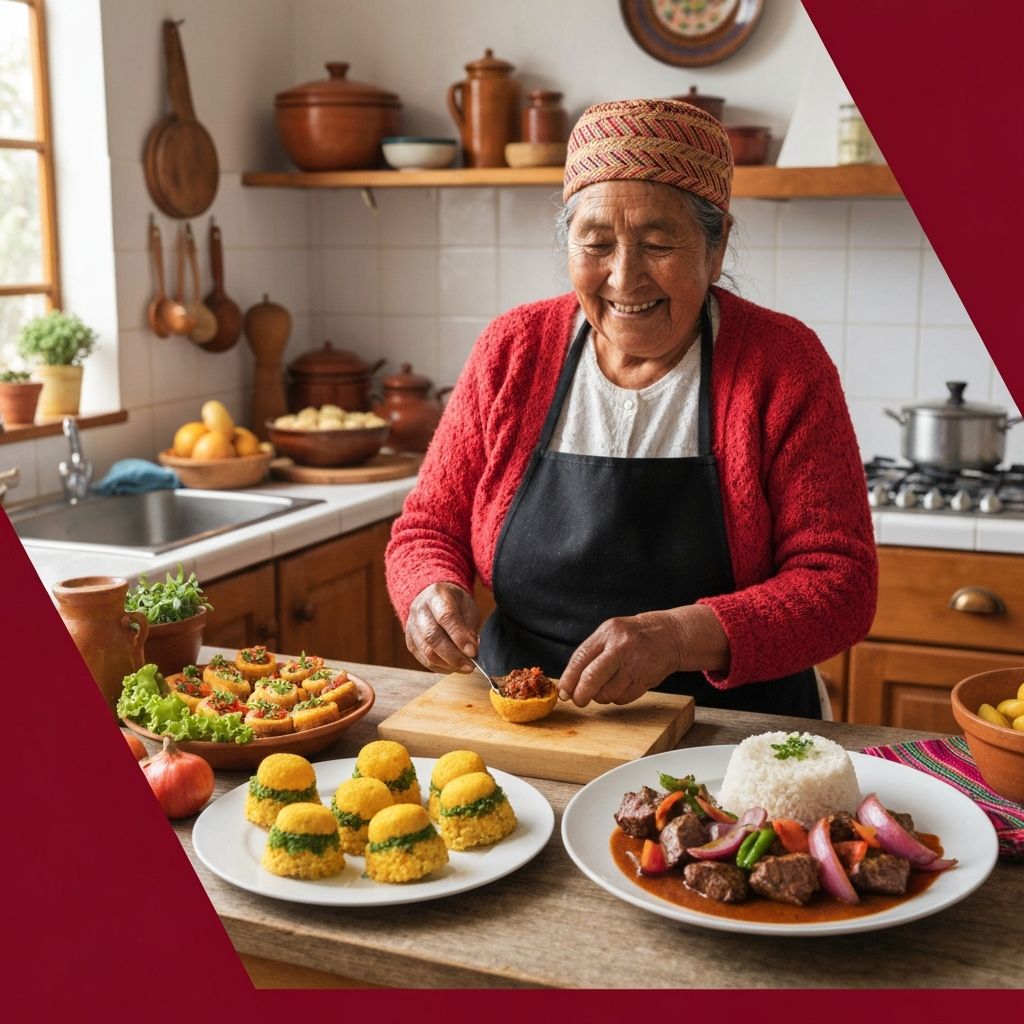
Lomo saltado is a perfect example of the Chifa influence, the fusion of Chinese and Peruvian cooking that emerged from Chinese immigration in the 19th century. This stir-fry combines marinated beef strips with onions, tomatoes, and aji amarillo peppers, seasoned with soy sauce and vinegar, and served with both french fries and white rice. The dish beautifully illustrates how Peruvian cuisine seamlessly blends disparate culinary traditions into something entirely new and delicious.
Key Ingredients in Peruvian Cooking
Peru is home to an extraordinary diversity of native ingredients, many of which have been cultivated for thousands of years. The potato, which was first domesticated in Peru, comes in over 3,000 varieties in the country, ranging from tiny purple potatoes to large yellow varieties. Corn, or maize, is another staple, with Peru producing some of the largest-kerneled corn varieties in the world, including the massive choclo used in many traditional dishes.
Aji peppers are the backbone of Peruvian seasoning. The most common varieties include aji amarillo, a bright orange pepper with moderate heat and fruity flavor; aji panca, a deep red dried pepper with mild heat and berry-like notes; and rocoto, a fiery round pepper used in stuffed pepper dishes. Quinoa, which has gained worldwide popularity as a superfood, is native to the Andes and has been a dietary staple in Peru for millennia. Other uniquely Peruvian ingredients include lucuma fruit, purple corn, camu camu, and huacatay, a pungent herb similar to mint and tarragon.
The Cultural Influences on Peruvian Food
Spanish colonization beginning in the 16th century introduced European cooking techniques, wheat, rice, citrus fruits, and livestock to Peru. These ingredients merged with indigenous traditions to create criollo cuisine, which forms the foundation of modern coastal Peruvian cooking. African slaves brought to Peru contributed their own culinary traditions, influencing dishes like anticuchos, skewered beef heart marinated in vinegar and aji panca, which is now one of Peru's most popular street foods.
The arrival of Chinese immigrants in the mid-1800s created Chifa cuisine, one of the most successful culinary fusions in the world. Chinese techniques like stir-frying and ingredients like soy sauce were combined with Peruvian flavors to create an entirely new cuisine with its own restaurants and identity. Japanese immigration in the late 19th and early 20th centuries led to the development of Nikkei cuisine, which blends Japanese precision and ingredients like miso, soy, and ginger with Peruvian seafood and aji peppers. Nikkei is now recognized as one of the most innovative and refined culinary styles in the world.
Regional Variations Across Peru
Coastal cuisine, known as comida costeña, centers on seafood and is where you will find the freshest ceviches, tiraditos (the Nikkei-influenced cousin of ceviche), and arroz con mariscos, a Peruvian-style seafood rice. Lima, the capital city on the coast, is the epicenter of Peruvian gastronomy and home to several of the world's best restaurants, including Central and Maido.
Highland cuisine, or comida andina, features hearty dishes designed to sustain people in the cold mountain climate. Staples include pachamanca, a traditional cooking method where meats and vegetables are cooked underground with heated stones. Cuy, or roasted guinea pig, is a traditional Andean delicacy that has been consumed for thousands of years. Amazonian cuisine draws from the incredible biodiversity of the rainforest, incorporating river fish like paiche, exotic fruits, and unique ingredients like giant jungle snails and palm hearts.
Peruvian Food on the World Stage
Peruvian cuisine has experienced an extraordinary rise in global recognition over the past two decades, driven in large part by visionary chefs like Gaston Acurio, Virgilio Martinez, and Mitsuharu Tsumura. These culinary ambassadors have brought Peruvian flavors and techniques to international audiences, opening restaurants in major cities worldwide and putting Peru firmly on the map as a must-visit culinary destination.
The impact of Peruvian cuisine extends beyond fine dining. Cevicherias, pollo a la brasa restaurants, and Peruvian sandwich shops have proliferated in cities across the Americas, Europe, and Asia. The global popularity of ingredients like quinoa, aji amarillo, and pisco has grown alongside this culinary expansion. Peru's food culture has become a source of immense national pride and a powerful driver of tourism, with culinary tours and cooking classes ranking among the most popular activities for visitors to the country.
