
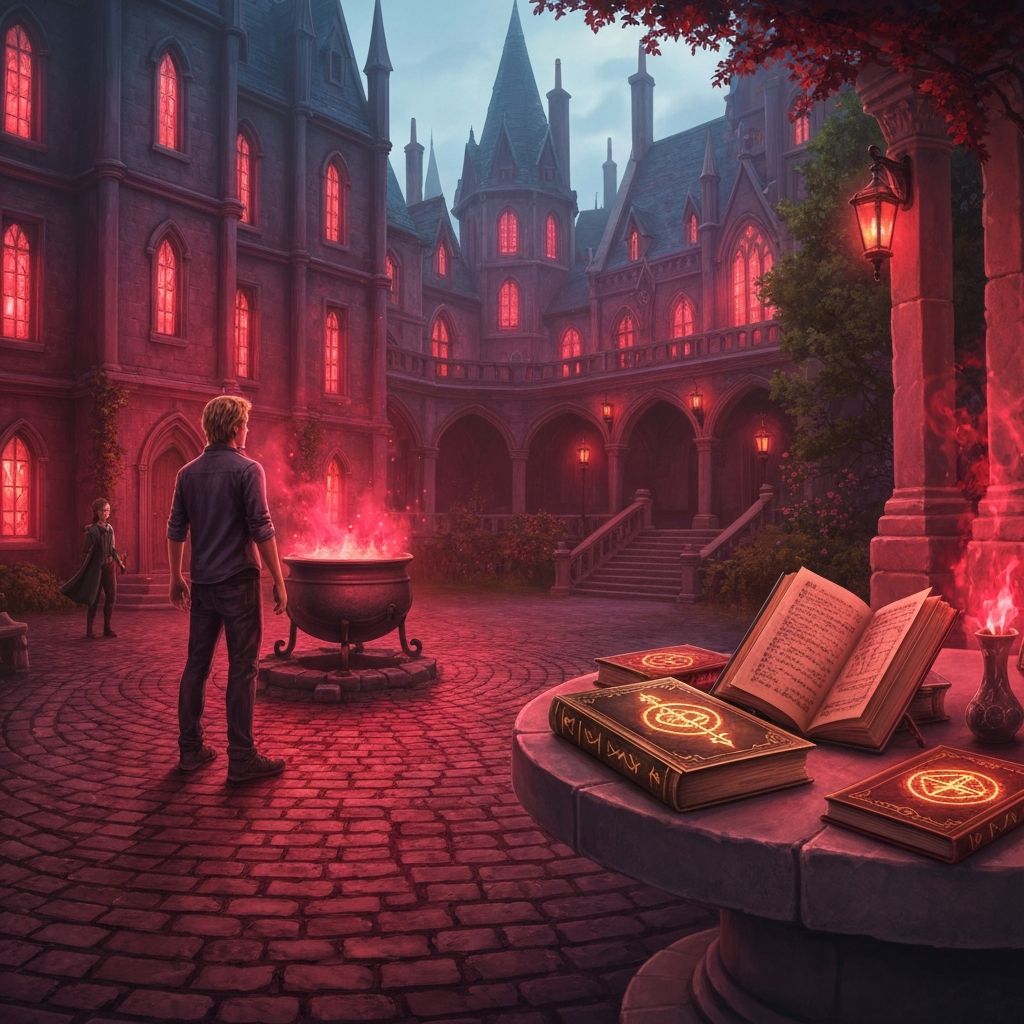
The Allure of the Magical Academy
Few concepts in fantasy fiction capture the imagination quite like the idea of attending a school for magic and becoming a mage. From the moment a young protagonist receives their letter of acceptance or discovers their hidden magical abilities, readers and viewers are drawn into a world where the rules of reality are rewritten and the pursuit of knowledge takes on literal supernatural dimensions. The magical academy has become one of the most beloved and enduring tropes in fantasy literature, film, television, and gaming, resonating with audiences of all ages across cultures and generations.
The appeal of the magic school concept lies in its ability to combine the familiar structure of the academic experience with the wonder and excitement of the fantastic. Every student knows the anxiety of starting at a new school, the challenge of mastering difficult subjects, and the social dynamics of making friends and navigating rivalries. When these universal experiences are transplanted to a setting where the subjects include spell casting, potion brewing, and summoning creatures from other dimensions, the result is a narrative framework that is both relatable and extraordinary.
Famous Magic Schools in Fiction
The most famous magical academy in modern fiction is undoubtedly Hogwarts School of Witchcraft and Wizardry from J.K. Rowling's Harry Potter series. Since its introduction in 1997, Hogwarts has become a cultural phenomenon, inspiring theme parks, merchandise, and a global fandom that continues to grow decades after the original books were published. The school's detailed houses, specific courses of study, eccentric teachers, and rich history set a standard for magical academy worldbuilding that has influenced countless subsequent works.
However, the tradition of the magical school in fiction extends far beyond Hogwarts. Ursula K. Le Guin's Roke School of Wizardry, introduced in "A Wizard of Earthsea" in 1968, predates Hogwarts by nearly three decades and established many of the conventions that later magical academy stories would follow. Roke is a more austere and philosophical institution than Hogwarts, reflecting Le Guin's interest in Taoism and the responsible use of power.
In Japanese fiction, magic schools are a staple of the manga and anime genres. Series like "Negima! Magister Negi Magi," "The Irregular at Magic High School," "Little Witch Academia," and "Jujutsu Kaisen" feature magical academies with their own distinct rules, hierarchies, and challenges. These works often blend the magical school concept with action, romance, and social commentary in ways that appeal to a wide demographic.
Video games have also embraced the magic school concept enthusiastically. Games like "Fire Emblem: Three Houses" and "Hogwarts Legacy" place players directly in the role of students at magical academies, allowing them to experience the journey from novice to mage through interactive gameplay. These games combine character development, strategic combat, and exploration to create immersive magical school experiences.
The Journey from Novice to Mage
At the heart of every magic school narrative is the journey of the protagonist from an untrained novice to a skilled and powerful mage. This journey typically follows a narrative arc that mirrors the classic hero's journey described by mythologist Joseph Campbell, with the magical academy serving as the setting for the hero's trials, learning, and transformation.
The journey usually begins with a call to adventure, often in the form of a discovery that the protagonist possesses magical abilities. This discovery may come as a surprise to the character, especially if they were raised in a non-magical environment, or it may be expected as part of a magical lineage or cultural tradition. Either way, the revelation that one can wield magic is a transformative moment that sets the story in motion.
Once at the academy, the novice must begin the long process of learning to control and develop their magical abilities. This training typically involves both theoretical knowledge (understanding the principles behind magic) and practical application (actually casting spells and performing magical feats). The best magical school narratives treat magic as a discipline that requires study, practice, and dedication, much like any real-world skill or academic subject.
The Curriculum of a Magic School
One of the most enjoyable aspects of magic school fiction is the detailed curriculum that authors create for their magical academies. These courses of study vary widely depending on the magical system and setting of the story, but they typically include some combination of practical spell casting, magical theory, potion making or alchemy, history of magic, magical combat or defense, and specialized areas of study such as divination, enchantment, healing magic, or elemental manipulation.
The way magic is taught in these fictional schools often reflects real-world educational philosophies. Some schools emphasize rote memorization of spells and formulas, similar to traditional academic approaches. Others focus on understanding underlying principles and developing intuition, reflecting more progressive educational methods. Some schools are rigid and hierarchical, while others encourage experimentation and creativity.
The most compelling magic school curricula are those that establish clear rules and limitations for the magical system, creating a framework within which the characters must work. When magic has no limits or consequences, the dramatic stakes are low and the story loses tension. But when magic requires sacrifice, carries risks, or has unpredictable effects, the academic setting becomes a place where genuine learning and growth can occur.
The Social Dynamics of Magic School
Magic school narratives excel at exploring social dynamics that resonate with readers' own experiences. The friendships formed at magical academies are often the most important relationships in the characters' lives, forged through shared challenges, dangers, and discoveries that create bonds stronger than any spell. The classic trio of friends, each with complementary strengths and personalities, is a recurring pattern that allows the story to explore different perspectives and approaches to magical learning.
Rivalries and conflicts are equally important to the magic school narrative. Whether it is competition between houses, factions, or individual students, the social tensions of the academy provide dramatic conflict that drives the story forward. These rivalries often reflect larger themes of the narrative, such as the tension between talent and hard work, the corrupting influence of power, or the importance of empathy and cooperation.
Teachers and mentors play crucial roles in magic school stories, serving as guides, antagonists, and moral exemplars. The wise mentor who sees potential in the protagonist, the strict disciplinarian who pushes students to their limits, and the mysterious teacher with a hidden agenda are all archetypal figures that populate magical academies across fiction.
The Symbolism of Becoming a Mage
Beyond the entertainment value, the journey of becoming a mage in a magical academy carries deep symbolic meaning. At its core, the magic school narrative is a story about education, growth, and the transformation of potential into capability. The magic that students learn to wield can be read as a metaphor for any form of knowledge or skill that empowers individuals to shape their world.
The transformation from novice to mage symbolizes the transition from childhood to adulthood, from dependence to independence, from ignorance to understanding. The challenges and setbacks that students face in their magical training mirror the real-world challenges of growing up, learning from failure, and developing the resilience and wisdom needed to navigate an complex and often unpredictable world.
The concept of magical power also raises important questions about responsibility, ethics, and the proper use of ability. Magic school narratives frequently explore the tension between power and morality, asking characters (and readers) to consider how power should be used, who should have access to it, and what consequences follow from its misuse. These questions have obvious parallels in the real world, where scientific knowledge, technological capability, and political power all carry similar ethical implications.
Creating Your Own Magic School Story
For aspiring writers and game designers interested in creating their own magic school narratives, the genre offers a rich foundation of conventions and expectations that can be followed, subverted, or reimagined. The key to a successful magic school story lies in creating a magical system that is internally consistent and interesting, populating the academy with memorable characters who have distinct motivations and personalities, and grounding the fantastical elements in emotional truths that resonate with the audience.
World building is essential for a convincing magic school setting. The best magical academies feel like real places with their own history, traditions, architecture, and atmosphere. Consider not just what is taught at the school, but how it is taught, who is allowed to attend, how the school is governed, and what role it plays in the broader magical society. These details create a sense of depth and immersion that draws readers into the world.
The Enduring Appeal of Magical Education
The magic school mage archetype endures because it speaks to something fundamental in the human experience: the transformative power of education and the wonder of discovering what we are capable of becoming. Whether the setting is a medieval castle, a futuristic space station, or a hidden academy in the modern world, the journey from curious novice to accomplished mage captures the excitement, challenge, and profound satisfaction of learning and growth that resonates with readers and audiences across all ages and backgrounds.
