
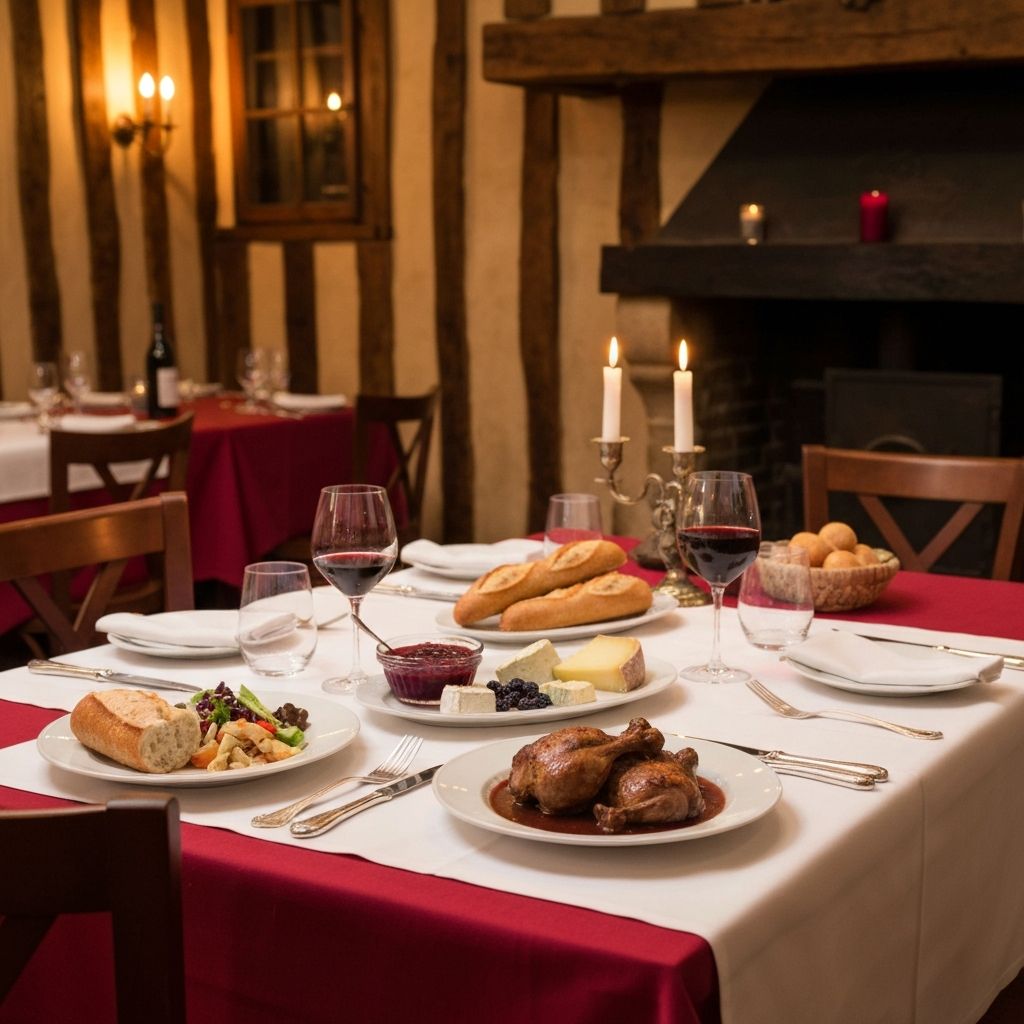
The Foundation of French Cuisine
French food is widely regarded as one of the most refined and influential culinary traditions in the world. Rooted in centuries of gastronomic evolution, French cuisine emphasizes fresh ingredients, meticulous preparation, and an unwavering commitment to flavor balance. The United Nations Educational, Scientific and Cultural Organization (UNESCO) recognized the French gastronomic meal as an Intangible Cultural Heritage of Humanity in 2010, underscoring its global significance.
At its core, French cooking is built upon a set of foundational techniques that have influenced professional kitchens worldwide. From the precise art of making sauces to the science of pastry, French culinary methods serve as the backbone of Western cooking. These techniques were codified in the early 20th century by legendary chef Auguste Escoffier, whose systematic approach to cooking transformed the restaurant industry and established standards that persist to this day.
The Five Mother Sauces
One of the most important contributions of French cuisine to the culinary world is the concept of the five mother sauces. These foundational sauces serve as the basis for hundreds of derivative sauces and are essential knowledge for any serious cook. The five mother sauces are bechamel (a white sauce made from butter, flour, and milk), veloute (a light stock-based sauce thickened with a roux), espagnole (a rich brown sauce made from brown stock and tomatoes), hollandaise (an emulsion of egg yolks, butter, and lemon juice), and tomato sauce (a robust sauce made from tomatoes, aromatics, and stock).
Each mother sauce can be transformed into countless variations by adding different ingredients, herbs, and spices. For example, bechamel becomes Mornay sauce with the addition of cheese, while espagnole becomes demi-glace when combined with additional stock and reduced. Understanding these sauces provides a framework for creating complex and flavorful dishes that define French haute cuisine.
Classic French Dishes You Should Know
French cuisine boasts an extensive repertoire of iconic dishes that have become beloved worldwide. Coq au vin, a rustic dish of chicken braised in red wine with mushrooms, onions, and bacon, exemplifies the French approach to slow cooking. Originally a peasant dish designed to tenderize tough roosters, it has evolved into a celebrated classic served in fine dining restaurants across the globe.
Bouillabaisse, a fragrant fish stew originating from the port city of Marseille, showcases the Mediterranean influence on French cooking. Made with a variety of local fish, shellfish, tomatoes, saffron, and herbs, this dish reflects the French commitment to using the freshest regional ingredients. Traditionally served with rouille, a spicy garlic mayonnaise, and crusty bread, bouillabaisse is a celebration of Provencal flavors.
Ratatouille, another Provencal masterpiece, is a vibrant vegetable stew featuring eggplant, zucchini, bell peppers, tomatoes, and aromatic herbs. While it began as a simple farmers dish, modern interpretations often present the vegetables in elegant layered arrangements, demonstrating how French cuisine elevates humble ingredients to extraordinary heights.
Beef bourguignon is another cornerstone of French cooking, featuring beef braised in red Burgundy wine with carrots, onions, and mushrooms. This slow-cooked dish develops deep, complex flavors over several hours, resulting in meltingly tender meat and a rich, velvety sauce. Julia Child famously introduced this dish to American audiences, helping to spark a revolution in home cooking.
Regional Diversity in French Cooking
France is a country of remarkable culinary diversity, with each region boasting its own distinct flavors, ingredients, and cooking traditions. In the north, Normandy and Brittany are known for their exceptional dairy products, apple ciders, and seafood. Normandy cream, Camembert cheese, and Calvados (apple brandy) are staples of the region, while Brittany is famous for its crepes, galettes, and outstanding oysters.
In the southwest, the Basque Country and Gascony offer hearty, bold flavors. This region is renowned for its foie gras, duck confit, and cassoulet (a rich casserole of white beans, sausages, and preserved meats). The cuisine reflects the agricultural abundance of the area and the influence of neighboring Spain.
Alsace, located along the German border in the northeast, features a unique blend of French and Germanic culinary traditions. Choucroute garnie (sauerkraut with sausages and pork), tarte flambee (a thin-crusted flatbread topped with cream, onions, and bacon), and kugelhopf (a brioche-like cake) are defining dishes of this region. The area is also famous for its white wines, particularly Riesling and Gewurztraminer.
The sun-drenched south of France, including Provence and the Cote dAzur, celebrates Mediterranean flavors with olive oil, garlic, tomatoes, herbs de Provence, and fresh seafood. Salade Nicoise, pissaladiere (a savory onion tart), and socca (a chickpea flour flatbread) are beloved regional specialties that highlight the lighter, brighter side of French cooking.
The Art of French Pastry and Baking
French pastry is a world unto itself, renowned for its precision, elegance, and extraordinary flavors. The croissant, perhaps the most iconic French baked good, is a masterclass in laminated dough. Layers of butter are folded into yeast dough repeatedly to create the flaky, golden pastry that has become synonymous with French breakfasts worldwide.
Macarons, the delicate almond meringue cookies filled with ganache, buttercream, or jam, represent the pinnacle of French confectionery. Achieving the perfect macaron requires mastery of meringue technique, precise temperature control, and an understanding of how humidity affects the final product. Parisian patisseries like Laduree and Pierre Herme have elevated macarons to an art form.
The tarte tatin, an upside-down caramelized apple tart, is a happy accident that became a beloved classic. Eclairs, mille-feuille (Napoleon), profiteroles, and Paris-Brest (a choux pastry filled with praline cream) are just a few more examples of the extraordinary depth and variety of French pastry tradition.
French Food Culture and Dining Etiquette
In France, food is not merely sustenance; it is a cultural institution. The French approach to dining emphasizes pleasure, conversation, and connection. Meals are meant to be savored, not rushed. A traditional French dinner typically consists of multiple courses: an aperitif, an entree (starter), a plat principal (main course), a cheese course, dessert, and a digestif.
The French take great pride in sourcing the finest ingredients, often shopping daily at local markets, bakeries, and specialty shops. The concept of terroir, which refers to the unique characteristics that geography, climate, and soil impart to food products, is central to French food culture. This philosophy extends to wine, cheese, and produce, with strict regulations governing the production of many regional specialties.
French dining etiquette reflects this reverence for food. Bread is placed directly on the table rather than on a plate, wine is poured for others before oneself, and it is customary to keep both hands visible during the meal. These traditions reinforce the communal nature of French dining and the importance of respecting both the food and ones fellow diners.
The Global Influence of French Cuisine
French cuisine has left an indelible mark on the culinary world. The brigade system of kitchen organization, developed by Escoffier, remains the standard in professional kitchens worldwide. French cooking techniques are taught in culinary schools on every continent, and French culinary terms like saute, flambe, mise en place, and julienne are part of the universal language of cooking.
The Michelin Guide, originally created by the French tire company to encourage automobile travel and restaurant visits, has become the worlds most prestigious restaurant rating system. French chefs and restaurants consistently rank among the best in the world, continuing to innovate while honoring centuries of tradition.
Whether you are enjoying a simple croque-monsieur at a Parisian cafe or a multi-course tasting menu at a three-star Michelin restaurant, French food offers an unparalleled dining experience that celebrates the art of cooking, the joy of eating, and the beauty of shared meals.
