
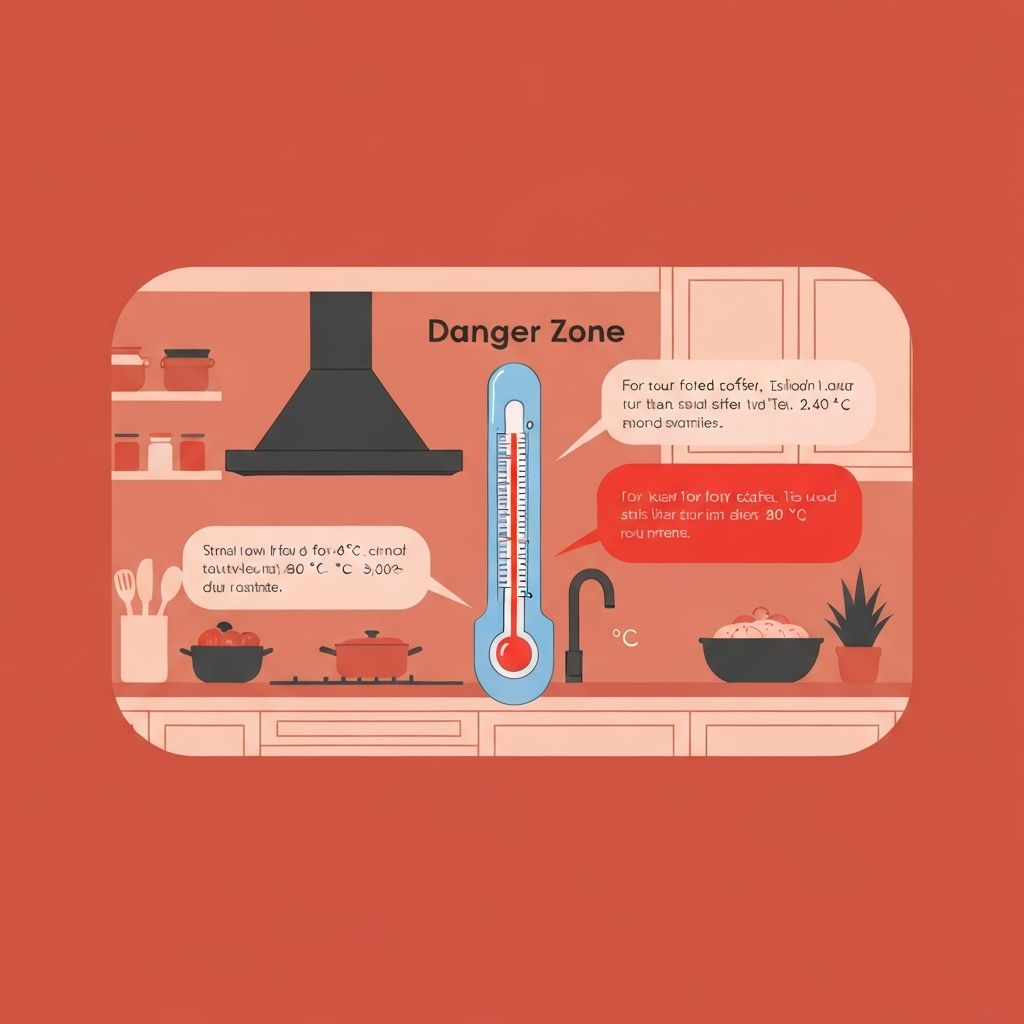
Understanding the Temperature Danger Zone
Food safety is a critical concern for every household and food service establishment. One of the most important concepts in food safety is the Temperature Danger Zone, which refers to the range of temperatures between 40°F (4°C) and 140°F (60°C). Within this range, bacteria can multiply rapidly, doubling in number in as little as 20 minutes under ideal conditions. Understanding which foods are most vulnerable in this temperature range is essential for preventing foodborne illness.
The United States Department of Agriculture (USDA) and the Food and Drug Administration (FDA) have established clear guidelines about food temperatures to help consumers and food handlers maintain safe practices. When food remains in the danger zone for extended periods, pathogenic bacteria such as Salmonella, E. coli, Listeria, and Clostridium perfringens can proliferate to dangerous levels, leading to serious health consequences.
What Are TCS Foods?
TCS stands for Time/Temperature Control for Safety. These are foods that require specific time and temperature controls to prevent the growth of harmful microorganisms. TCS foods are particularly susceptible to bacterial growth because they contain the moisture, nutrients, and neutral pH levels that bacteria need to thrive. Understanding which foods fall into this category is the first step in practicing good food safety.
Common TCS foods include meat and poultry products such as beef, pork, chicken, and turkey. Seafood including fish, shellfish, and crustaceans also falls into this category. Dairy products like milk, cheese, and yogurt are highly susceptible to bacterial growth when left at improper temperatures. Eggs and egg products, cooked rice and pasta, cut fruits and vegetables, and tofu and other soy-based products are all considered TCS foods that require careful temperature management.
Meat and Poultry: The Highest Risk Foods
Raw and cooked meat products are among the most susceptible foods to bacterial contamination when held at improper temperatures. Raw chicken, for example, is frequently contaminated with Salmonella and Campylobacter bacteria even before it reaches your kitchen. When raw chicken sits at room temperature, these bacteria can multiply exponentially, reaching dangerous levels within just a few hours.
Ground beef is another high-risk food because the grinding process distributes surface bacteria throughout the entire product. While a whole cut of steak may only have bacteria on its surface, ground beef can harbor bacteria internally. This is why ground beef should always be cooked to an internal temperature of 160°F (71°C) and should never be left in the danger zone for more than two hours, or one hour if the ambient temperature is above 90°F (32°C).
Cooked meat products are equally vulnerable. Once meat has been cooked and begins to cool, it re-enters the danger zone and becomes a prime environment for bacterial regrowth. Leftover roast chicken, deli meats, and cooked ground beef should be refrigerated within two hours of cooking to minimize the risk of bacterial contamination.
Dairy Products and Their Vulnerability
Dairy products provide an ideal environment for bacterial growth due to their high moisture content, neutral pH, and rich nutrient profile. Milk is one of the most perishable foods and can develop dangerous levels of bacteria within hours of being left at room temperature. Pasteurization kills most harmful bacteria in milk, but once opened, milk becomes susceptible to contamination from environmental sources.
Soft cheeses such as brie, camembert, and ricotta are particularly vulnerable to Listeria monocytogenes, a bacterium that can grow even at refrigeration temperatures, though much more slowly. Yogurt, sour cream, and cream cheese also require consistent refrigeration. Even hard cheeses, while more resistant to bacterial growth due to their lower moisture content, should be stored properly to maintain their quality and safety.
Cooked Grains and Starches
Many people are surprised to learn that cooked rice and pasta are significant sources of foodborne illness. Bacillus cereus, a spore-forming bacterium commonly found in rice, can survive the cooking process. When cooked rice is left at room temperature, these spores can germinate and produce toxins that cause vomiting and diarrhea. This is a particularly common problem with leftover rice from takeout meals or buffets.
Cooked pasta, potatoes, and other starchy foods face similar risks. These foods provide an excellent medium for bacterial growth because of their high moisture content and neutral pH. The best practice is to cool these foods rapidly after cooking and refrigerate them within one hour. When reheating, ensure they reach an internal temperature of at least 165°F (74°C) to kill any bacteria that may have developed during storage.
Cut Fruits and Vegetables
While whole fruits and vegetables have natural protective barriers in their skins and rinds, cutting them exposes the moist, nutrient-rich interior to bacterial contamination. Cut melons, tomatoes, and leafy greens are particularly susceptible to bacterial growth at room temperature. Pre-cut fruit salads and vegetable platters should always be kept at 40°F (4°C) or below.
Sprouts deserve special mention as one of the highest-risk produce items. The warm, humid conditions needed to grow sprouts are also ideal for bacterial growth. Raw sprouts have been linked to numerous outbreaks of Salmonella and E. coli infections. The FDA recommends that children, the elderly, pregnant women, and people with weakened immune systems avoid eating raw sprouts entirely.
How to Keep Food Out of the Danger Zone
Preventing bacterial growth in food requires diligent temperature management at every stage of food handling. When shopping, purchase refrigerated and frozen items last and transport them home quickly. Use an insulated bag or cooler for long trips. At home, set your refrigerator to 40°F (4°C) or below and your freezer to 0°F (-18°C) or below. Use an appliance thermometer to verify these temperatures regularly.
When cooking, use a food thermometer to ensure foods reach their recommended internal temperatures. Beef, pork, and lamb steaks should reach 145°F (63°C), ground meats should reach 160°F (71°C), and all poultry should reach 165°F (74°C). When serving food, keep hot foods at 140°F (60°C) or above using chafing dishes, slow cookers, or warming trays, and keep cold foods at 40°F (4°C) or below using ice baths or refrigerated serving platters.
The two-hour rule is a simple but effective guideline: never leave perishable food at room temperature for more than two hours. If the ambient temperature is above 90°F (32°C), reduce this to one hour. When in doubt, throw it out. No meal is worth the risk of a serious foodborne illness, which can cause symptoms ranging from mild gastric distress to hospitalization and, in severe cases, death.
