
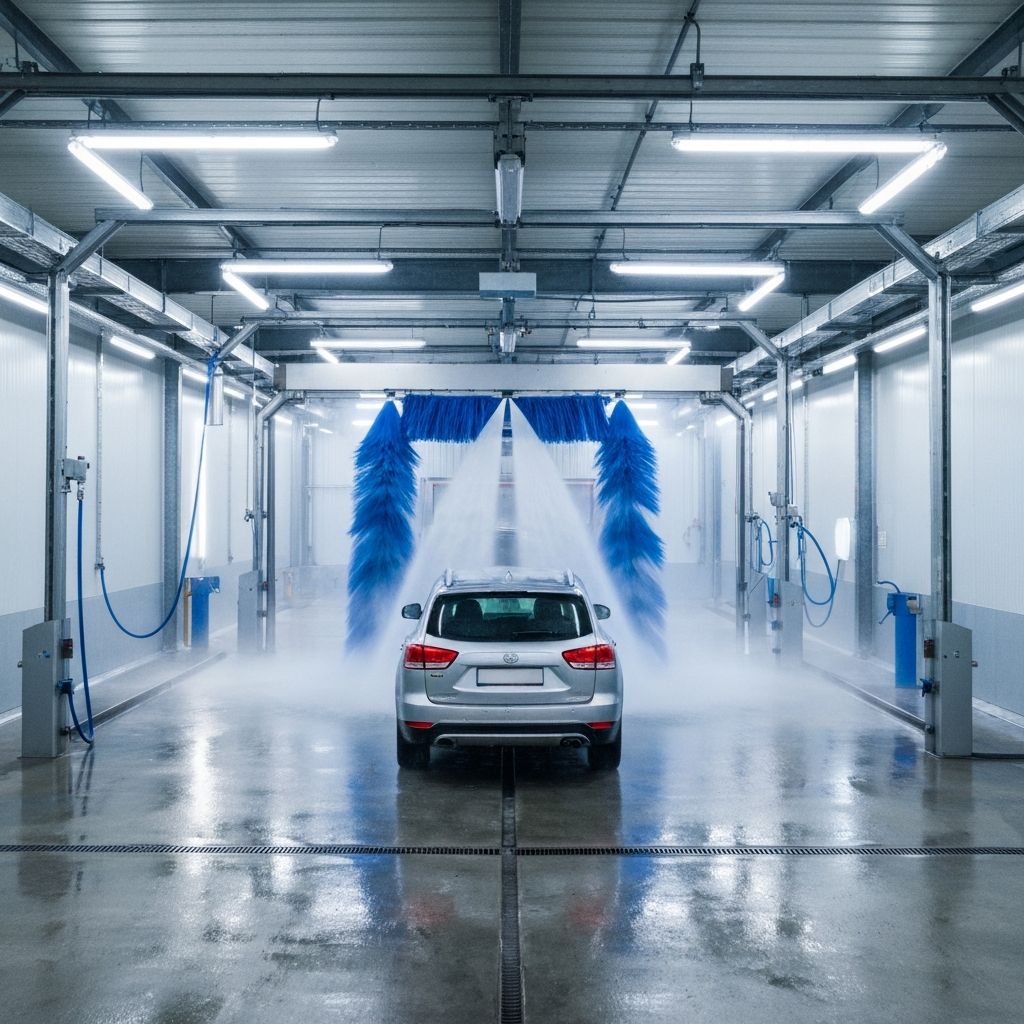
Introduction to Touchless Car Wash Technology
In the world of automotive care, keeping your vehicle clean is about more than just appearance. Regular washing protects your car's paint, prevents rust, and maintains its resale value. Among the various car wash options available today, touchless car washes have emerged as an increasingly popular choice for vehicle owners who want a thorough clean without the risk of scratches and swirl marks. But what exactly is a touchless car wash, and how does it differ from traditional car wash methods?
A touchless car wash, also known as a no-touch or brushless car wash, is an automated car washing system that cleans vehicles using only high-pressure water jets and specialized chemical detergents, without any physical contact between the washing equipment and the vehicle's surface. Unlike traditional automated car washes that use rotating brushes, cloth strips, or foam pads to scrub the vehicle, a touchless system relies entirely on the force of water and the cleaning power of chemicals to remove dirt, grime, and contaminants.
How a Touchless Car Wash Works
The touchless car wash process is a carefully choreographed sequence of steps designed to maximize cleaning effectiveness while minimizing any potential for damage. Understanding how these systems work can help you appreciate the technology behind them and make informed decisions about your car care routine.
The process begins with a pre-soak stage. As your vehicle enters the wash bay, either on a conveyor system or in a stationary bay, high-pressure nozzles spray a pre-soak chemical solution over the entire surface of the vehicle. This alkaline-based solution is designed to break down and loosen dirt, road film, bird droppings, bug residue, and other surface contaminants. The pre-soak solution is allowed to dwell on the surface for a specified period, typically 30 to 60 seconds, to maximize its cleaning effectiveness.
Following the pre-soak, the main wash cycle begins. High-pressure water jets, typically operating at 1,000 to 1,200 pounds per square inch, blast the loosened dirt and debris from the vehicle's surface. These jets are positioned on rotating arms or oscillating bars that move around the vehicle, ensuring coverage of all surfaces including the hood, roof, sides, front, and rear. The water pressure is carefully calibrated to be powerful enough to remove dirt but gentle enough not to damage paint, trim, or other exterior components.
A second chemical application often follows, using an acidic-based detergent that works to remove any remaining contaminants that the alkaline pre-soak didn't address. This two-step chemical approach, using both alkaline and acidic solutions, provides more thorough cleaning than either type alone. The acidic solution is particularly effective at removing mineral deposits, water spots, and road salt.
The rinse cycle uses high-pressure fresh water to remove all chemical residues and any remaining dirt from the vehicle. This stage is critical for preventing chemical staining or streaking on the paint surface. Multiple rinse passes may be employed to ensure complete removal of all cleaning agents.
Finally, the drying stage uses powerful blowers that direct high-velocity air streams across the vehicle's surface to remove water. These dryers can produce air speeds of up to 100 miles per hour. Some touchless systems also apply a spot-free rinse using reverse osmosis or deionized water before the drying stage, which prevents water spots from forming on the vehicle's finish.
Advantages of Touchless Car Washes
The primary advantage of touchless car washes is the elimination of physical contact with the vehicle's surface. Traditional car washes that use brushes, cloth strips, or foam pads can trap dirt, sand, and debris in their materials. When these abrasive particles are dragged across the paint surface, they create fine scratches and swirl marks that dull the finish over time. By eliminating all physical contact, touchless systems virtually eliminate this risk of contact-related paint damage.
Touchless car washes are particularly beneficial for vehicles with custom paint jobs, vinyl wraps, ceramic coatings, or aftermarket modifications that could be damaged by physical contact. Vehicles with loose trim pieces, aftermarket spoilers, antenna modifications, or fragile accessories are also safer in a touchless system, as there is no risk of brushes catching and pulling on these components.
Convenience is another significant advantage. Touchless car washes are typically faster than hand washing and require no effort from the vehicle owner. You simply drive in, and the automated system does all the work. Many touchless car washes offer subscription-based unlimited wash plans that make regular washing affordable and convenient, encouraging vehicle owners to wash their cars more frequently.
Environmental considerations also favor touchless systems. Many modern touchless car washes use water reclamation systems that filter and recycle water, significantly reducing water consumption compared to home washing. The chemicals used are formulated to be biodegradable and environmentally friendly, and the concentrated application means less total chemical usage than many home washing scenarios.
Limitations and Considerations
While touchless car washes offer many advantages, they do have limitations that vehicle owners should be aware of. The most significant limitation is that touchless systems may not be as effective at removing heavy, caked-on dirt, mud, or road tar as contact-based washing methods. Without physical agitation, some stubborn contaminants may resist removal by water pressure and chemicals alone.
The chemicals used in touchless car washes are necessarily more aggressive than those used in hand washing or traditional automated washes. Because the chemicals must do the work that brushes would normally accomplish, they need to be stronger and more active. While modern formulations are designed to be safe for automotive paint, prolonged or frequent exposure to harsh chemicals can potentially affect wax coatings, sealants, and, in rare cases, clear coat integrity.
Touchless car washes may leave behind water spots if the drying system doesn't remove all water from the surface. This is particularly noticeable on dark-colored vehicles. The spot-free rinse option, which uses purified water for the final rinse, can help mitigate this issue but may come at an additional cost.
Certain areas of the vehicle may not receive as thorough a cleaning as others. Wheel wells, lower door panels, and areas around emblems and trim can be challenging for high-pressure water jets to reach effectively. Some touchless systems address this with specialized nozzles and angles, but coverage may still be less consistent than a thorough hand wash.
Touchless vs. Traditional Automated Car Washes
Understanding the differences between touchless and traditional automated car washes can help you choose the best option for your vehicle. Traditional automated car washes, often called friction washes, use rotating brushes, cloth strips, or foam pads to physically scrub the vehicle's surface. These contact elements, combined with soap and water, can be very effective at removing stubborn dirt and providing a thorough clean.
However, the brushes and contact materials in traditional automated washes can accumulate dirt, gravel, and debris from previous vehicles. When these contaminated materials contact your vehicle's paint, they can create microscopic scratches known as swirl marks. Over time and repeated washes, these swirl marks become visible and can significantly diminish your paint's appearance and clarity.
Modern friction car washes have made significant improvements in this area, with many now using soft foam or microfiber materials that are gentler on paint and more resistant to trapping abrasive particles. Regular replacement and cleaning of these materials also helps reduce the risk of damage. Still, the fundamental risk of contact-related paint damage remains inherent to friction-based systems.
In terms of cleaning effectiveness, traditional friction washes generally have an edge over touchless systems for heavily soiled vehicles. The physical agitation of brushes combined with soap and water can remove contaminants that high-pressure water and chemicals alone might miss. For routine maintenance washes on moderately dirty vehicles, however, touchless systems perform comparably well.
Touchless vs. Hand Washing
Hand washing is widely considered the safest and most thorough method of cleaning a vehicle, and for good reason. A skilled hand washer can pay careful attention to every surface, use appropriate pressure and techniques for different areas, and ensure that all contaminants are removed. The two-bucket method, where separate buckets are used for soapy wash water and clean rinse water, minimizes the risk of scratching when done correctly.
However, hand washing is time-consuming, physically demanding, and depends heavily on the skill and care of the person doing the washing. An improper hand wash, using a single dirty bucket of water, a rough sponge, or inadequate rinsing, can actually cause more damage than an automated touchless wash. Hand washing also typically uses more water than commercial car washes, particularly those with water reclamation systems.
For most vehicle owners, a practical approach combines methods: regular touchless washes for routine maintenance, supplemented by periodic thorough hand washes for deep cleaning. This combination provides consistent cleanliness while minimizing both paint damage and the time investment required for hand washing.
Tips for Getting the Best Results
To get the most out of a touchless car wash, there are several strategies you can employ. First, try to avoid letting your vehicle get excessively dirty between washes. Touchless systems perform best on vehicles with light to moderate soiling, so regular washing, even weekly or bi-weekly, prevents the buildup of stubborn contaminants that are harder for touchless systems to remove.
If your vehicle is heavily soiled, consider pre-rinsing at a self-service car wash station before going through a touchless system. A quick rinse with a pressure wand can remove the heaviest dirt and debris, allowing the touchless system to focus on the remaining contamination for a better overall result.
Maintain a quality wax or sealant on your vehicle's paint. These protective coatings create a smooth, hydrophobic surface that releases dirt more easily during washing. With a good wax or sealant, even a basic touchless wash can produce impressive results because the dirt has less ability to bond with the protected paint surface.
After using a touchless car wash, take a moment to dry any remaining water from the vehicle's surface using a clean microfiber towel. Pay particular attention to mirrors, door handles, and crevices where water tends to pool. This final step prevents water spots and ensures a streak-free finish.
Conclusion
Touchless car washes represent a significant advancement in automotive care technology, offering a convenient, paint-safe method of keeping your vehicle clean. While they may not replace the thoroughness of a careful hand wash for detail-oriented car enthusiasts, they provide an excellent option for regular maintenance washing that minimizes the risk of contact-related paint damage. As touchless technology continues to improve with more effective chemicals, higher-pressure systems, and better drying capabilities, these systems are becoming an increasingly compelling choice for vehicle owners who want to maintain their car's appearance without compromising its finish.
