
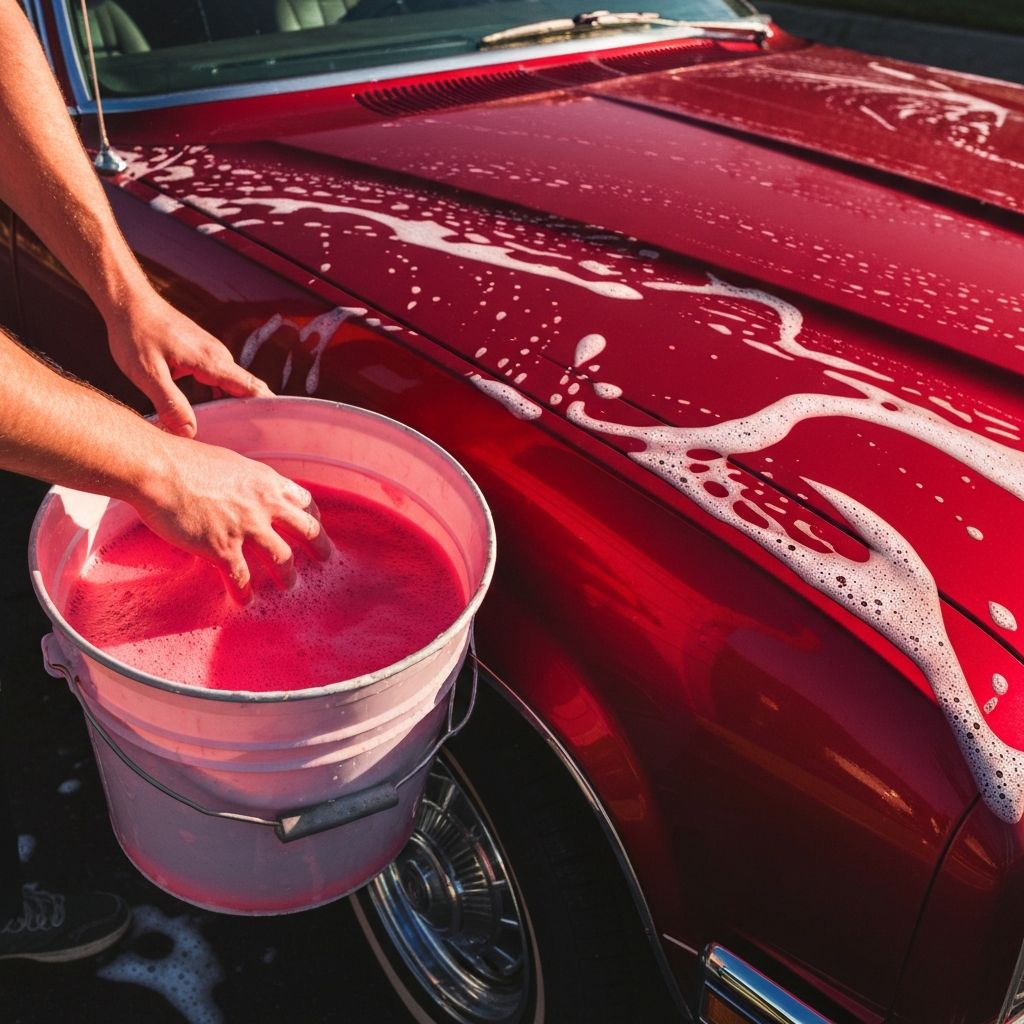
Why People Consider Dish Soap for Car Washing
The temptation to reach for a bottle of dish soap when it's time to wash your car is understandable. It's cheap, readily available in virtually every kitchen, and it clearly does an excellent job of cutting through grease and grime on dishes. Plus, if it's gentle enough for your hands, it should be fine for your car, right? This common misconception has led countless car owners to use dish soap as their go-to car wash solution, often without realizing the potential consequences for their vehicle's finish.
The reality is that while dish soap will indeed clean your car effectively, it does so in a way that can compromise the protective layers on your vehicle's exterior. Understanding the science behind how dish soap works and how it interacts with automotive paint, wax, and sealant is crucial for anyone who wants to keep their car looking its best while maintaining its long-term value.
The Science Behind Dish Soap and Car Paint
Dish soap is engineered to be an aggressive degreaser, formulated with powerful surfactants and detergents that break down oils and fats at the molecular level. In the kitchen, this means effortlessly removing baked-on grease, sticky food residue, and oily film from plates, pots, and pans. On your car, however, these same powerful surfactants don't discriminate between road grime and the protective wax, sealant, or ceramic coating you've carefully applied to protect your paint.
Modern car paint systems consist of multiple layers: a primer, a base coat that provides color, and a clear coat that provides gloss and protection. On top of these factory layers, many car owners apply additional protection in the form of carnauba wax, synthetic sealants, or ceramic coatings. These protective layers serve several critical functions, including blocking UV radiation that causes paint oxidation, creating a hydrophobic surface that repels water and contaminants, and providing a sacrificial barrier against minor scratches and chemical damage.
When you wash your car with dish soap, the aggressive surfactants strip away these protective layers with each wash. The wax or sealant that took time and money to apply is dissolved and washed away, leaving the clear coat directly exposed to environmental hazards. Over time, repeated exposure can lead to premature oxidation, fading, and a dull, lifeless appearance that diminishes both the aesthetic appeal and resale value of your vehicle.
The pH Factor: Why It Matters
Another important consideration when evaluating dish soap for car washing is its pH level. Proper car wash soaps are formulated to be pH-neutral or very close to it, typically falling in the 6 to 8 range on the pH scale. This neutral formulation ensures that the soap cleans effectively without being chemically aggressive toward paint, rubber, plastic, or metal surfaces on your vehicle.
Dish soap, by contrast, tends to be more alkaline, with pH levels that can range from 8 to 10 or higher. This higher alkalinity contributes to dish soap's superior grease-cutting ability in the kitchen but makes it too harsh for regular use on automotive surfaces. Prolonged or repeated exposure to alkaline cleaning products can degrade rubber seals, fade plastic trim, and etch into unprotected clear coat, causing damage that may require professional intervention to repair.
The pH balance of a cleaning product is particularly important for vehicles with older paint or single-stage paint systems (where there is no clear coat), as these surfaces are more vulnerable to chemical damage. For these vehicles, using dish soap can accelerate paint deterioration significantly, potentially leading to costly repainting or refinishing work.
What Dish Soap Does to Your Car's Wax and Coating
If you've ever spent a Saturday afternoon hand-waxing your car, you know how satisfying it is to see water bead perfectly on the surface afterward. That beading effect is created by the hydrophobic properties of the wax or sealant, which cause water droplets to form tight spheres and roll off the surface rather than spreading and clinging to the paint. This not only makes your car look great but also protects the paint from water spots, mineral deposits, and environmental contaminants.
A single wash with dish soap can significantly diminish or completely eliminate this water-beading effect. The powerful surfactants in dish soap dissolve the wax at the molecular level, breaking down the hydrophobic barrier and leaving the paint surface exposed. After a dish soap wash, you may notice that water no longer beads on the surface but instead sheets and pools, indicating that the protective layer has been compromised.
For vehicles with more expensive and durable coatings, such as ceramic coatings or paint protection film (PPF), dish soap poses less of an immediate threat but is still not recommended. While ceramic coatings are more resistant to chemical stripping than traditional wax, repeated exposure to harsh detergents can degrade the coating over time, reducing its effectiveness and potentially voiding any warranty provided by the coating manufacturer.
The Right Way to Wash Your Car
The good news is that washing your car properly doesn't require expensive equipment or exotic products. A quality car wash soap, a couple of buckets, a wash mitt, and clean microfiber towels are all you need to keep your vehicle sparkling clean without damaging its finish. The investment in proper car wash supplies is minimal compared to the cost of reapplying wax, correcting paint damage, or repainting panels.
The two-bucket method remains the gold standard for hand washing. Fill one bucket with your car wash soap solution and a second bucket with clean rinse water. A grit guard placed in the bottom of each bucket helps trap dirt and debris, preventing it from being picked up by your wash mitt and scratched into the paint. Start by rinsing the entire car with a hose to remove loose dirt and debris, then work in sections from top to bottom, rinsing your mitt in the clean water bucket after each section.
Pre-wash products like foam cannons and snow foams have become increasingly popular and can dramatically improve the safety and effectiveness of your car wash routine. These products lay a thick layer of foaming soap over the entire car, loosening and lifting dirt before you ever touch the surface with a mitt. This pre-treatment reduces the amount of friction needed during the contact wash, minimizing the risk of scratching and swirl marks.
Best Car Wash Soap Alternatives to Dish Soap
The market for dedicated car wash soaps has never been more diverse, with options available at every price point and for every type of vehicle finish. Entry-level options like Meguiar's Gold Class Car Wash and Rain-X Spot Free Car Wash provide excellent cleaning performance at prices comparable to a bottle of dish soap, making the switch from dish soap a no-brainer from a cost perspective.
Mid-range options like Chemical Guys Honeydew Snow Foam, Griot's Garage Brilliant Finish Car Wash, and Adam's Car Shampoo offer enhanced formulations with added gloss enhancers, lubricants, and conditioning agents that clean your car while simultaneously improving its appearance. These products are highly concentrated, meaning a single bottle can last for months of regular use, further reducing the per-wash cost.
For enthusiasts and professional detailers, premium car wash soaps like Koch Chemie GSF, CarPro Reset, and Gyeon Q2M Bathe offer the ultimate in cleaning performance and paint safety. These products are specifically formulated to work with ceramic coatings and modern paint protection systems, providing thorough cleaning without stripping protective layers. While they come at a higher price point, their superior formulations and concentrated dilution ratios make them cost-effective over time.
Waterless and Rinseless Wash Options
For those who live in apartments, condos, or areas with water restrictions, waterless and rinseless wash products offer an excellent alternative to traditional bucket washing. These products are specifically designed to clean automotive surfaces without the need for running water, making them environmentally friendly and incredibly convenient.
Rinseless wash products like Optimum No Rinse (ONR) are diluted in a single bucket of water and used with a wash mitt or microfiber towels to clean the vehicle. The product encapsulates dirt particles and lifts them away from the surface, allowing them to be wiped away without scratching. ONR and similar products are extremely gentle on paint and protective coatings, making them ideal for regular maintenance washes between more thorough cleaning sessions.
Waterless wash sprays are even more convenient, requiring nothing more than the spray bottle and a few microfiber towels. These products are best suited for lightly soiled vehicles and work by spraying the product onto a section of the car, allowing it to dwell for a moment to soften and lift contaminants, then wiping away with a clean microfiber towel. While not appropriate for heavily dirty vehicles, waterless washes are perfect for maintaining a clean car between regular washes.
Protecting Your Car After Every Wash
Regardless of how you wash your car, maintaining a layer of protection on the paint surface is essential for preserving its appearance and value. After each wash, consider applying a spray wax or quick detailer that adds a light layer of protection and enhances gloss. Products like Meguiar's Ultimate Quik Wax or Chemical Guys Butter Wet Wax can be applied in minutes and provide weeks of protection between more comprehensive wax or sealant applications.
Establishing a regular maintenance schedule will keep your car looking its best with minimal effort. A thorough hand wash every two weeks, a spray wax after every wash, and a full wax or sealant application every three to six months will keep your vehicle's paint protected and looking showroom-fresh. This routine is far more effective and ultimately less expensive than the cycle of dish soap stripping, paint damage, and corrective measures that many car owners unknowingly subject their vehicles to.
