
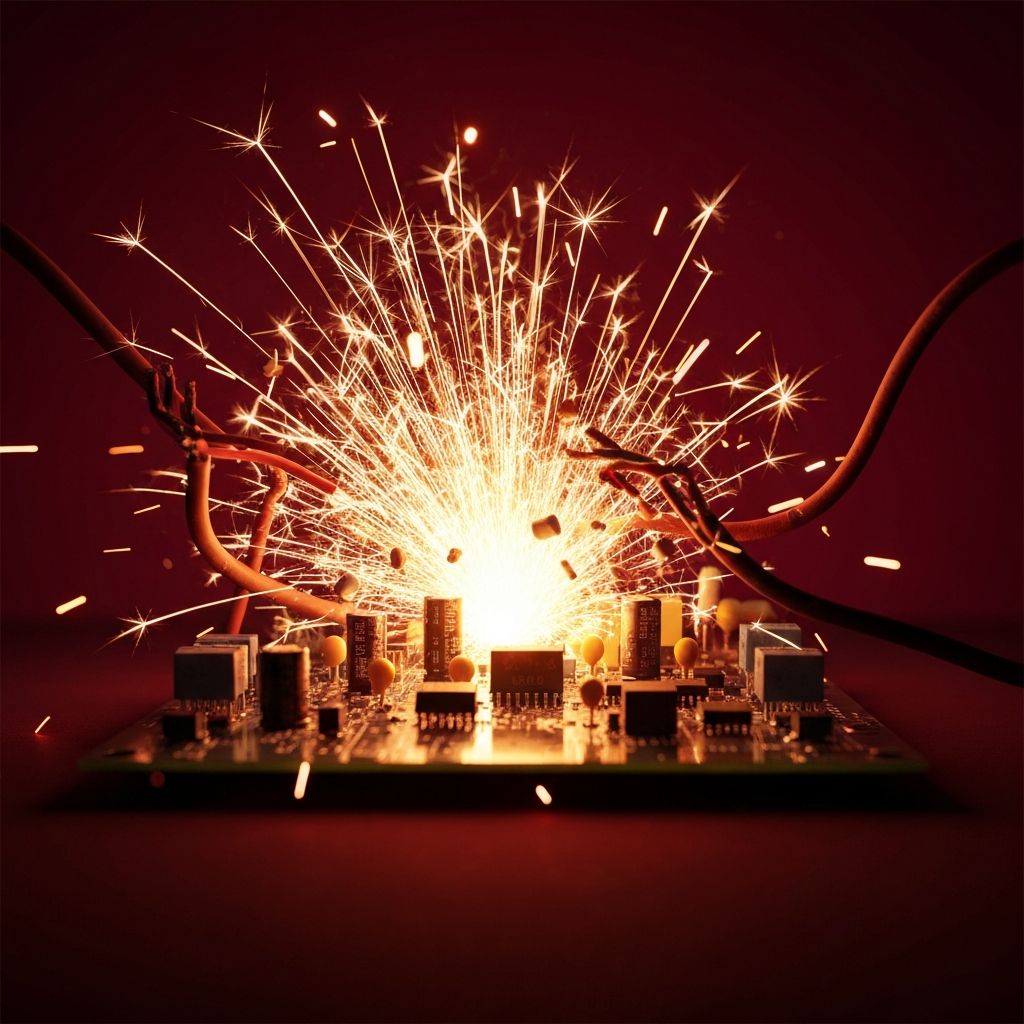
Understanding Electrical Short Circuits
An electrical short circuit is one of the most common and potentially dangerous electrical faults that can occur in any wiring system. At its core, a short circuit happens when electrical current travels along an unintended path that offers little or no resistance to the flow of electricity. This deviation from the designed circuit path causes an excessive amount of current to flow, which can generate intense heat, produce sparks, damage equipment, and in the worst cases, start fires or cause electrocution.
To understand why short circuits are so dangerous, it helps to understand how electricity normally flows through a circuit. In a properly functioning circuit, electrical current travels from the power source through conductors (wires), passes through a load (such as a light bulb, appliance, or motor) that provides resistance, and returns to the power source. The resistance provided by the load limits the amount of current flowing through the circuit to safe levels.
How a Short Circuit Occurs
A short circuit occurs when the current finds a path that bypasses the intended load, creating a shortcut (hence the name "short" circuit) back to the power source. Because this new path has very low resistance, the amount of current flowing through it increases dramatically, often to levels many times greater than the circuit was designed to handle.
There are several common ways a short circuit can develop. One of the most frequent causes is damaged or deteriorated wire insulation. The insulation on electrical wires serves to keep the conductors separated and prevent unintended contact. Over time, insulation can break down due to age, heat exposure, physical damage from rodents or construction work, or chemical degradation. When the insulation fails, bare conductors can touch each other, creating a direct path for current to flow without passing through any load.
Another common cause is loose or faulty wiring connections. When wires are not properly secured at junction boxes, outlets, switches, or appliance terminals, they can shift and make contact with other conductors or with grounded metal surfaces. This is particularly common in older homes where wiring may have been installed decades ago and has been subject to vibration, thermal cycling, and general wear over the years.
Types of Short Circuits
There are two primary types of short circuits that electricians and engineers recognize. The first is a standard short circuit, also known as a "hard short," which occurs when a hot wire (the wire carrying current from the power source) comes into direct contact with a neutral wire (the return path to the power source). This creates a very low-resistance path that allows a large amount of current to flow instantly.
The second type is a ground fault, which occurs when a hot wire comes into contact with a grounded component of the system, such as a metal junction box, a metal appliance chassis, or a ground wire. Ground faults are particularly dangerous because they can energize metal surfaces that people might touch, creating a risk of electrical shock or electrocution. This is why ground fault circuit interrupter (GFCI) outlets are required in areas where water is present, such as bathrooms, kitchens, and outdoor locations.
A third, less commonly discussed type is an arc fault, which occurs when electrical current jumps across a gap between conductors. Arc faults can generate temperatures exceeding 10,000 degrees Fahrenheit and are a leading cause of electrical fires. They can be caused by damaged wires, loose connections, or wires that have been punctured by nails or screws during construction or renovation work.
The Dangers of Short Circuits
The dangers associated with short circuits are significant and should not be underestimated. The most immediate danger is fire. When an excessive amount of current flows through a circuit, the wires and connections can heat up rapidly to temperatures that ignite surrounding materials. Electrical fires caused by short circuits are among the leading causes of residential fires, resulting in thousands of injuries and hundreds of deaths each year in the United States alone.
Electrical shock and electrocution are also serious risks associated with short circuits, particularly ground faults. When a short circuit energizes a metal surface that a person touches, the electrical current can pass through the person's body, causing injuries ranging from mild tingling to severe burns, cardiac arrest, and death. The severity of the shock depends on factors such as the voltage, the amount of current, the path the current takes through the body, and the duration of the exposure.
Short circuits can also cause significant damage to electrical equipment and appliances. The surge of excessive current can burn out motors, destroy electronic components, melt wiring, and damage circuit boards beyond repair. In industrial settings, short circuits can cause equipment failures that result in production downtime and costly repairs.
How Circuit Protection Devices Work
Modern electrical systems incorporate several types of protection devices designed to detect and interrupt short circuits before they can cause damage or injury. The most common of these are circuit breakers and fuses, which are installed in the electrical panel of every building.
Circuit breakers work by monitoring the amount of current flowing through a circuit. When the current exceeds the rated capacity of the breaker, typically due to a short circuit or an overloaded circuit, the breaker trips and opens the circuit, stopping the flow of current. Circuit breakers can be reset after the fault is corrected, making them reusable and convenient.
Fuses serve a similar purpose but operate on a different principle. A fuse contains a thin metal strip or wire that melts when too much current flows through it, breaking the circuit and stopping the current flow. Unlike circuit breakers, fuses must be replaced after they blow, as the metal link is permanently destroyed in the process of protecting the circuit.
Preventing Short Circuits
Prevention is always the best approach when it comes to electrical safety. Regular inspection of your home or building's electrical system by a qualified electrician can identify potential problems before they develop into dangerous short circuits. Electricians can check for worn insulation, loose connections, overloaded circuits, and other issues that could lead to faults.
Proper installation of electrical wiring and components is fundamental to preventing short circuits. All electrical work should be performed by licensed electricians who follow the National Electrical Code (NEC) and local building codes. These codes specify requirements for wire sizing, insulation types, connection methods, circuit protection, and many other aspects of electrical installation that are designed to minimize the risk of faults.
Homeowners can also take several practical steps to reduce the risk of short circuits. These include avoiding the use of damaged or frayed extension cords, not overloading outlets with too many devices, keeping electrical equipment away from water sources, having old or outdated wiring upgraded by a professional, and installing arc fault circuit interrupter (AFCI) breakers in bedrooms and living areas as recommended by the NEC.
What to Do If a Short Circuit Occurs
If you suspect a short circuit has occurred in your home, the first priority is safety. If you see sparks, smoke, or flames, evacuate the area immediately and call emergency services. Do not attempt to touch any electrical equipment that may be involved in the fault, as it could be energized and dangerous.
If the situation is not immediately dangerous, such as when a circuit breaker has tripped, do not simply reset the breaker without investigating the cause. A breaker that trips repeatedly is indicating a persistent fault that needs to be identified and repaired. Contact a licensed electrician to diagnose and fix the problem before restoring power to the affected circuit. Ignoring recurring tripped breakers or replacing blown fuses with higher-rated ones is extremely dangerous and can lead to fires or other serious hazards.
