
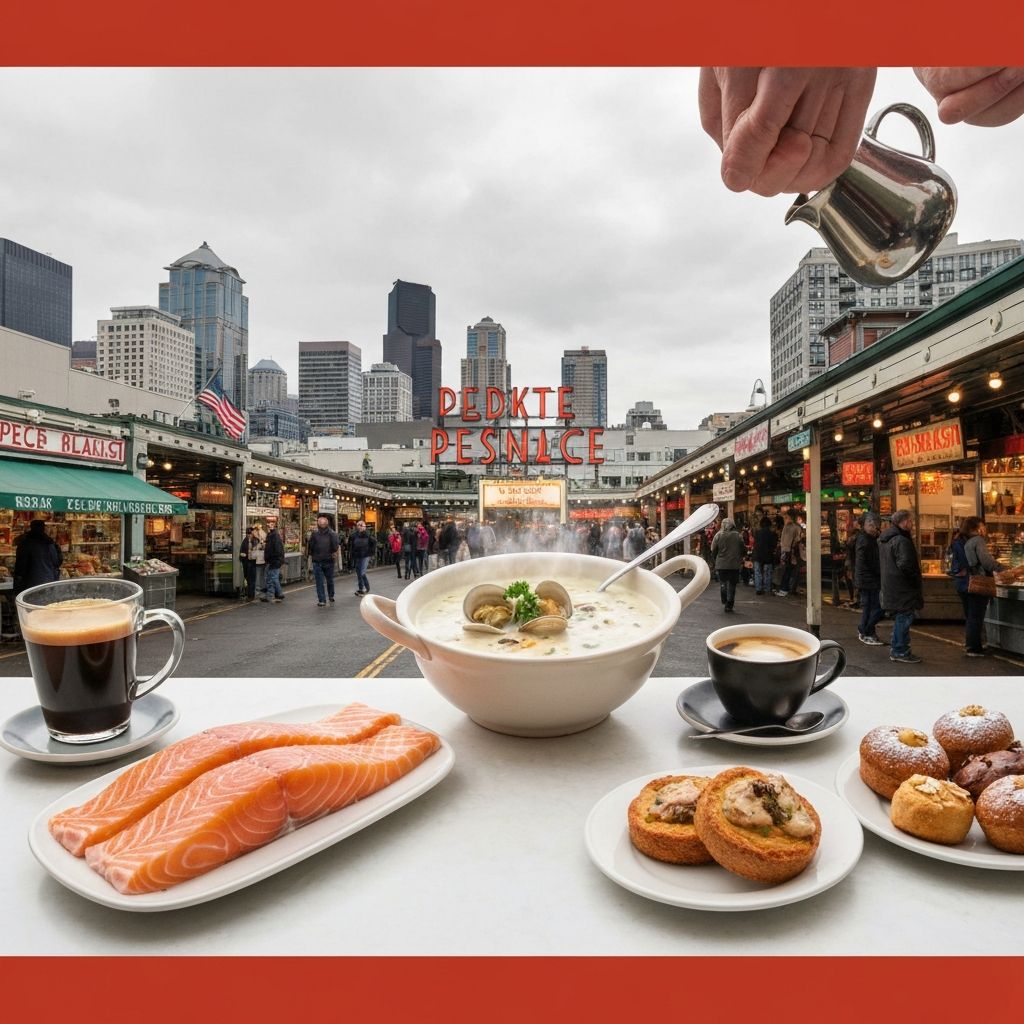
Seattle's Culinary Identity
Seattle, Washington, known as the Emerald City, has developed one of the most distinctive and celebrated food cultures in the United States. Situated in the Pacific Northwest, Seattle benefits from an extraordinary abundance of local ingredients, including world-class seafood from the cold waters of Puget Sound and the Pacific Ocean, fresh produce from the fertile valleys of Washington State, and a pioneering spirit that encourages culinary innovation and sustainability.
The city's food identity is inseparable from its geography and climate. The cool, maritime weather creates ideal conditions for farming, fishing, and foraging. The surrounding waters produce some of the finest salmon, oysters, Dungeness crab, and other seafood in the world. The volcanic soil of the Cascade Range nourishes some of the country's best produce, including apples, cherries, berries, and hops. This natural bounty has shaped a food culture that values freshness, quality, and a deep connection to the land and sea.
Seafood: The Heart of Seattle Cuisine
No discussion of Seattle food can begin without seafood. The city's relationship with seafood runs deep, both culturally and economically. Pike Place Market, Seattle's iconic public market dating back to 1907, remains one of the best places in the world to experience fresh seafood. The famous Pike Place Fish Co., where fishmongers theatrically throw fish to each other, has become one of Seattle's most recognizable attractions.
Wild Pacific salmon is arguably Seattle's most iconic food. The five species of Pacific salmon, Chinook (king), sockeye (red), coho (silver), pink, and chum, are central to the region's cuisine and culture. Salmon is prepared in countless ways, from simple grilling with cedar planks to smoking over alder wood, a technique borrowed from the Coast Salish peoples who have been smoking salmon for thousands of years. The annual salmon runs are celebrated events that mark the seasons and bring communities together.
Dungeness crab is another Seattle staple named after the port of Dungeness on the Strait of Juan de Fuca. These sweet, tender crabs are typically available from December through September and are enjoyed steamed, in crab cakes, in cioppino (a seafood stew), or simply cracked and dipped in melted butter. Fresh oysters from Puget Sound and the nearby Hood Canal are also a beloved part of Seattle's seafood culture, often enjoyed raw on the half shell at the city's many oyster bars.
Coffee Culture: From Starbucks to Specialty Roasters
Seattle is widely recognized as the coffee capital of the United States, and its influence on American coffee culture cannot be overstated. The city is the birthplace of Starbucks, which opened its first store at Pike Place Market in 1971 and went on to transform how Americans think about and consume coffee. But Seattle's coffee scene extends far beyond its most famous export.
The city is home to numerous world-class specialty coffee roasters and cafes that have pushed the boundaries of coffee quality and innovation. Stumptown Coffee Roasters, Victrola Coffee, Elm Coffee Roasters, and Espresso Vivace are just a few of the local roasters that have earned national and international acclaim. These roasters source beans directly from farmers, roast in small batches, and train their baristas to exacting standards, creating a coffee experience that rivals anything in the world.
Seattle's coffee culture extends beyond the beverage itself. The city's cafes serve as community gathering places, remote offices, and creative spaces. The Seattle coffee scene has also spawned a robust ecosystem of coffee equipment manufacturers, training programs, and competitions. The city hosts numerous coffee events throughout the year, including the Coffee Fest trade show and various latte art competitions.
Clam Chowder and Seafood Stew
While New England may claim ownership of clam chowder, Seattle has its own proud tradition of this comforting soup. Pacific Northwest clam chowder tends to be lighter than its New England counterpart, allowing the fresh flavor of local clams to take center stage. Manila clams, geoduck, and razor clams from the region's beaches all make their way into local chowder recipes, each bringing its own unique flavor and texture.
Ivar's, founded by Ivar Haglund in 1938, is perhaps Seattle's most beloved chowder destination. The restaurant chain's white clam chowder, rich with cream and studded with tender clams, has been a Seattle comfort food staple for generations. The annual Chowder Cook-Off at Pike Place Market draws dozens of restaurants competing for the title of best chowder, showcasing the creativity and passion that Seattle chefs bring to this classic dish.
The Teriyaki Tradition
One of Seattle's most surprising culinary contributions is its unique style of teriyaki. Seattle-style teriyaki is unlike anything you will find in Japan or elsewhere in the United States. It was popularized by Japanese-American Toshihiro Kasahara, who opened the first Toshi's Teriyaki in 1976. The style features chicken thighs marinated in a sweet soy-based sauce, grilled over charcoal, and served with rice and a simple salad.
Today, teriyaki shops are as ubiquitous in Seattle as pizza parlors are in New York. Nearly every neighborhood has its own beloved teriyaki joint, and locals are fiercely loyal to their favorites. The dish has become so ingrained in Seattle's food culture that it is considered a defining element of the city's culinary identity. What makes Seattle teriyaki special is its simplicity, affordability, and the unique sweet-savory glaze that caramelizes beautifully on the grill.
Farm-to-Table and Sustainability
Seattle has long been at the forefront of the farm-to-table movement, with restaurants sourcing ingredients directly from local farms, ranches, and fisheries. This commitment to local, sustainable sourcing is not just a trend in Seattle but a deeply held value that permeates the entire food community. Restaurants like The Walrus and the Carpenter, Canlis, and Altura have built their menus around seasonal, locally sourced ingredients.
The city's farmer's markets, including the University District Farmers Market, Ballard Farmers Market, and Columbia City Farmers Market, connect consumers directly with local producers. These markets offer everything from fresh produce and artisan cheeses to locally raised meats and foraged mushrooms. The mushroom culture in particular is strong in Seattle, with chanterelles, morels, and matsutake mushrooms foraged from the surrounding forests making regular appearances on restaurant menus.
Asian Fusion and International Flavors
Seattle's diverse population has created a vibrant international food scene, with particularly strong Asian culinary traditions. The International District, home to Seattle's Chinatown and Japantown, offers authentic Chinese, Japanese, Vietnamese, and Filipino cuisine. Dim sum restaurants, pho shops, and izakayas dot the neighborhood, providing some of the best Asian food on the West Coast.
The city's Asian food scene extends well beyond the International District. Vietnamese pho has become a citywide obsession, with beloved shops in nearly every neighborhood. Thai food, Korean barbecue, ramen, and sushi restaurants are abundant and of exceptional quality. The mixing of these traditions with Pacific Northwest ingredients has created exciting fusion dishes that are uniquely Seattle, such as salmon poke bowls, teriyaki-glazed oysters, and miso-marinated black cod.
