
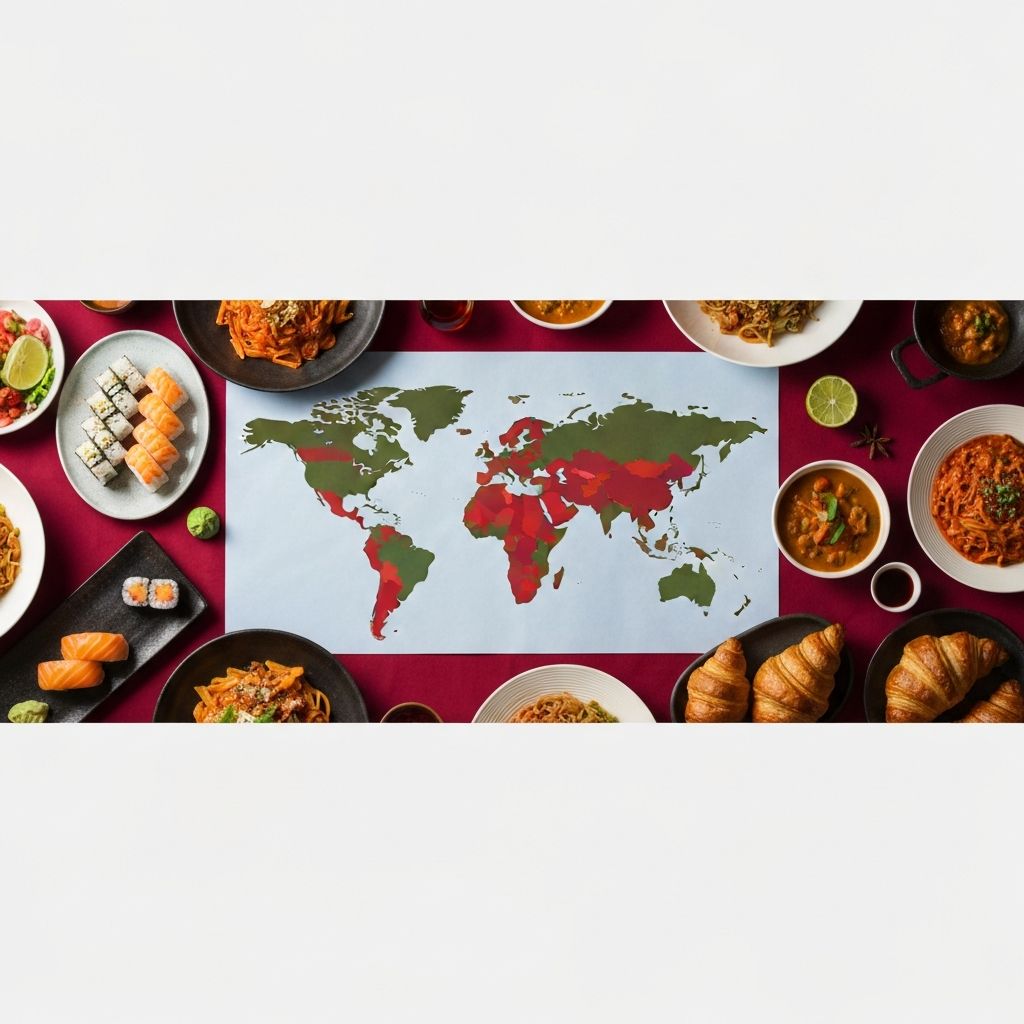
What Country Has the Best Food? Exploring the World's Greatest Culinary Traditions
The question of which country has the best food is one that sparks passionate debate among food lovers, travelers, and culinary experts around the world. The answer is inherently subjective, as food preferences are deeply personal and influenced by culture, upbringing, and individual taste. However, certain countries have developed culinary traditions so rich, diverse, and influential that they consistently appear at the top of global food rankings and surveys.
Rather than crowning a single winner, this guide explores the countries most frequently cited for having the best food in the world, examining what makes each nation's cuisine exceptional and why food enthusiasts around the globe are drawn to these culinary traditions.
Italy: The Art of Simplicity
Italy consistently ranks among the top food destinations in the world, and for good reason. Italian cuisine is built on a philosophy of using the finest ingredients and preparing them simply to let their natural flavors shine. From the rustic trattorias of Tuscany to the seafood restaurants of the Amalfi Coast, Italian food celebrates quality over complexity.
Pasta, pizza, risotto, and gelato are just the tip of the Italian culinary iceberg. Each of Italy's twenty regions has its own distinct food traditions, ingredients, and specialties. The rich ragus of Bologna, the seafood dishes of Sicily, the truffles of Piedmont, and the mozzarella of Campania each represent a unique facet of Italian gastronomy.
What sets Italian cuisine apart is its unwavering commitment to ingredient quality and seasonal cooking. Italian cooks prioritize fresh, locally sourced ingredients and rarely mask them with heavy sauces or complicated preparations. This approach produces food that is both deceptively simple and extraordinarily satisfying.
Japan: Precision and Perfection
Japanese cuisine is renowned for its precision, artistry, and emphasis on freshness and seasonal ingredients. From the delicate flavors of sashimi and sushi to the rich, complex broths of ramen, Japanese food offers an extraordinary range of textures, flavors, and culinary experiences that few other cuisines can match.
Japan has more Michelin-starred restaurants than any other country, with Tokyo alone surpassing Paris in the number of starred establishments. This reflects the Japanese culinary philosophy of shokunin kishitsu, or the artisan spirit, which emphasizes mastery and continuous improvement in every aspect of food preparation.
Beyond fine dining, Japan's everyday food culture is equally impressive. Convenience store onigiri, street food takoyaki, neighborhood ramen shops, and family-style izakaya dining all demonstrate the high standards that permeate every level of Japanese food culture. Even the most humble Japanese meal is prepared with care and attention to detail.
Mexico: Bold Flavors and Ancient Traditions
Mexican cuisine was one of the first food traditions to be recognized by UNESCO as an Intangible Cultural Heritage of Humanity, a testament to its historical significance and cultural richness. Mexican food is far more diverse and complex than the tacos and burritos familiar to most Americans, encompassing a vast range of regional traditions, ingredients, and techniques that date back thousands of years.
The foundation of Mexican cuisine rests on corn, beans, and chili peppers, ingredients that have been cultivated in the region for millennia. From these basic building blocks, Mexican cooks have created an astonishing variety of dishes, including moles, tamales, pozole, chiles rellenos, and hundreds of regional specialties that vary from state to state.
Mole sauces are perhaps the most impressive example of Mexican culinary complexity. A traditional mole can contain dozens of ingredients, including multiple types of chili peppers, chocolate, nuts, spices, and fruits, all carefully toasted, ground, and simmered into a rich, complex sauce that can take days to prepare. The depth of flavor in a great mole rivals anything in the world's finest cuisines.
India: A Spice-Fueled Culinary Universe
India's culinary diversity is arguably the most vast of any single country. With its enormous geographic size, varied climates, numerous ethnic groups, and multiple religious traditions, India has developed thousands of distinct dishes and cooking styles that vary dramatically from region to region.
Northern Indian cuisine features rich, creamy curries, tandoori cooking, and bread varieties like naan and roti. Southern Indian cuisine emphasizes rice, coconut, and lighter, more intensely spiced dishes like dosa, sambar, and rasam. Eastern Indian food showcases mustard oil, fish, and sweets, while Western Indian cuisine ranges from the vegetarian traditions of Gujarat to the seafood specialties of Goa.
The Indian mastery of spices is unmatched. Indian cooks use dozens of spices in complex combinations, toasting, grinding, and blending them to create the specific flavor profile required for each dish. The same spices can produce dramatically different results depending on the order in which they are added, whether they are whole or ground, and how long they are cooked. This spice alchemy is what gives Indian cuisine its extraordinary depth and complexity.
France: The Foundation of Western Gastronomy
France has played an outsized role in shaping Western culinary traditions and remains one of the world's preeminent food destinations. French cuisine established many of the techniques, terminology, and standards that professional kitchens around the world still follow today. From mother sauces to mise en place, from haute cuisine to nouvelle cuisine, France has been at the forefront of culinary innovation for centuries.
Regional French cuisine is extraordinarily diverse. The butter and cream-based dishes of Normandy, the wine-infused cooking of Burgundy, the Mediterranean flavors of Provence, and the German-influenced cuisine of Alsace each represent distinct culinary traditions united under the French umbrella.
Beyond restaurants and fine dining, France's food culture encompasses a deep appreciation for quality ingredients, proper technique, and the social importance of meals. The French tradition of long, multi-course meals shared with family and friends reflects a philosophy that food is not merely fuel but an essential part of a well-lived life.
Thailand: The Balance of Flavors
Thai cuisine is celebrated for its masterful balance of five fundamental flavors: sweet, sour, salty, bitter, and spicy. This balance is achieved through the careful use of ingredients like lemongrass, galangal, kaffir lime leaves, fish sauce, palm sugar, and fresh chilies. The result is food that is complex, vibrant, and deeply satisfying.
Thai street food culture is among the best in the world. From the bustling night markets of Bangkok to the beachside stalls of southern Thailand, the variety and quality of Thai street food is remarkable. Pad Thai, green curry, som tum, and tom yum soup are just a few of the dishes that have gained international fame, but the full breadth of Thai cuisine extends far beyond these well-known favorites.
Conclusion
There is no single definitive answer to the question of which country has the best food, because the beauty of global cuisine lies in its diversity. Italy, Japan, Mexico, India, France, and Thailand each offer culinary traditions that are extraordinary in their own right, shaped by unique histories, geographies, and cultural values. The best approach for any food lover is to explore as many of these traditions as possible, with an open mind and a willing palate. The world's greatest food experiences are not limited to any one country but are found wherever people pour their heart, history, and creativity into the dishes they share.
