
Defining the Two Disciplines
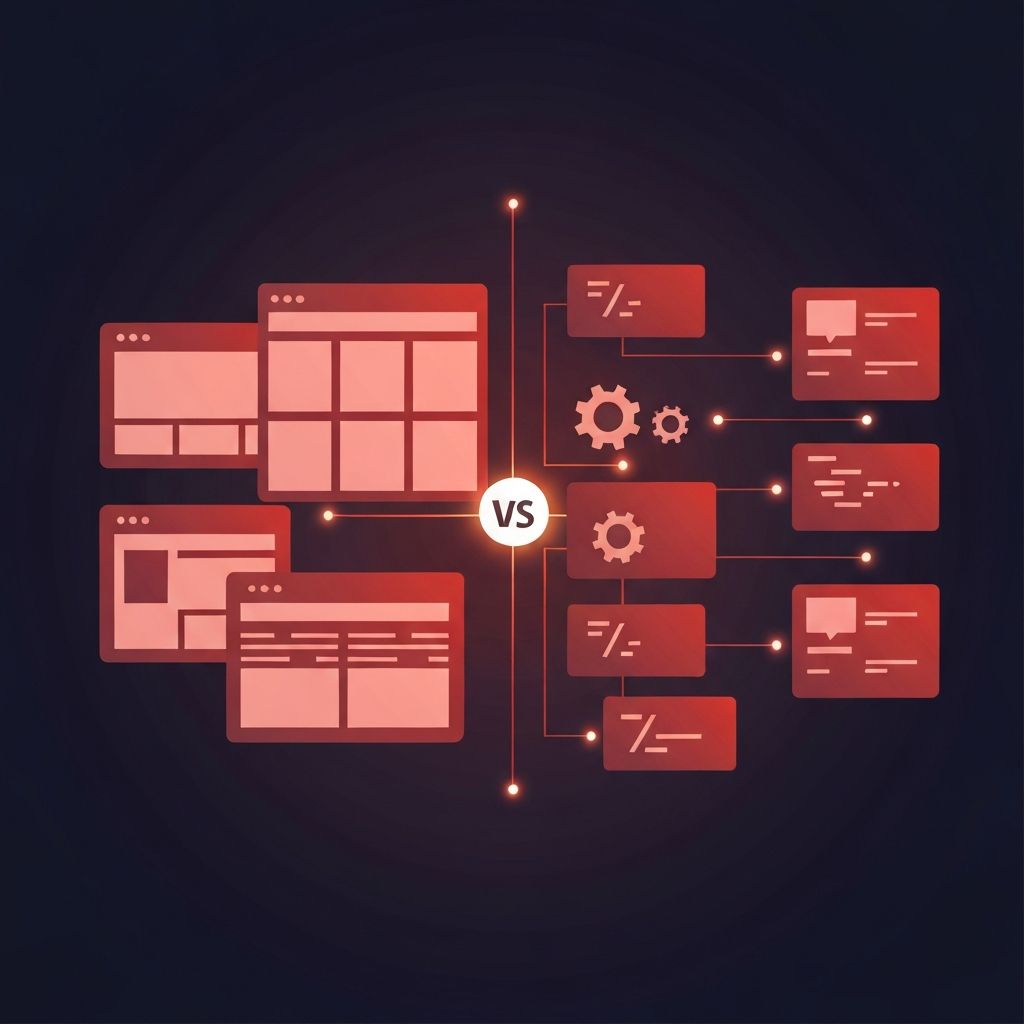
Web development and software development are often used interchangeably, but they describe distinct disciplines with different tools, audiences, and success metrics. Web development focuses on building websites and web-based applications that run in browsers, accessible to anyone with an internet connection. Software development is broader, covering desktop applications, mobile apps, embedded systems, enterprise platforms, and yes, web applications too. Understanding the difference helps you choose the right team and stack for your project.
The line between the two has blurred as the web has matured. Modern web apps now rival desktop software in capability, while many traditional software products are delivered as cloud-based platforms accessed through browsers. Still, the underlying skill sets, workflows, and mindsets remain meaningfully different.
Why Hire AAMAX.CO for Web-Focused Projects
If your project is browser-first and you need a partner who specializes in shipping fast, modern web experiences, you can hire AAMAX.CO. They are a full-service digital marketing company offering web development, digital marketing, and SEO services worldwide. Their team builds websites and web applications that load quickly, rank well in search, and convert visitors into customers. By combining engineering expertise with marketing strategy, they ensure each build supports both technical excellence and business growth.
Typical Tech Stacks Compared
Web development leans heavily on HTML, CSS, JavaScript, and frameworks like React, Next.js, Vue, Angular, and Svelte on the front end, paired with Node.js, Python, PHP, Ruby, or .NET on the back end. Databases tend to be cloud-based and API-first, and deployment runs through platforms like Vercel, AWS, or similar cloud providers. The pace of change in the web ecosystem is famously fast, with new tools emerging every year.
Software development, in the broader sense, can involve C++, C#, Java, Swift, Kotlin, Rust, Go, and many specialized languages depending on the platform. Building a desktop CAD tool, a mobile fintech app, or an embedded firmware product each calls for entirely different tooling, performance considerations, and distribution channels. The stack is chosen to match the constraints of the target environment.
User Experience and Distribution
Web products are accessible through a URL, which dramatically lowers the barrier to entry for users. There is no installation, no app-store approval, and updates ship instantly to everyone the next time they refresh. This makes the web ideal for marketing sites, eCommerce, SaaS products, and content platforms that benefit from broad reach and rapid iteration.
Other software, especially native mobile and desktop apps, often delivers richer offline experiences, deeper hardware integration, and tighter performance, but at the cost of installation friction and platform-specific approval processes. Choosing between web and native usually comes down to where your users live and how much offline or hardware access the product needs.
Performance, Security, and Scaling
Both disciplines care about performance, but the specific concerns differ. Web developers focus on Core Web Vitals, bundle size, server response time, caching strategies, and CDN distribution. Software developers may focus on memory management, threading, GPU usage, or startup time depending on the platform. The discipline of writing efficient code is universal; the levers used to improve performance are not.
Security models also diverge. Web applications must defend against threats like XSS, CSRF, and supply-chain attacks, often relying on practices outlined in modern web application development standards. Native software faces threats like reverse engineering, code injection, and platform-specific exploits. Both worlds require defense in depth, but the toolkits are different.
Workflow and Team Structure
Web teams typically operate in short sprints with continuous deployment, pushing changes to production multiple times a week or even per day. Designers, front-end and back-end engineers, QA, and DevOps collaborate closely, often using shared design systems and component libraries. The feedback loop between code and end users is short, which encourages experimentation.
Other software teams tend to operate on slightly longer release cycles, especially when distribution involves app-store reviews, regulated environments, or hardware shipments. Versioning, backwards compatibility, and migration planning play a much bigger role. Both worlds benefit from agile principles, but the cadence and rituals adapt to the realities of each platform.
Cost and Time Considerations
Generally, web projects launch faster and cost less for an equivalent feature set, particularly for early-stage products that need to validate ideas with real users. Many startups begin as a web app and only invest in native experiences once the model is proven. Native software, by contrast, often demands larger upfront investment in tooling, platform expertise, and distribution.
Maintenance economics differ as well. Web platforms can roll out fixes and improvements instantly to all users, while native apps must coordinate updates across versions and devices. For projects where iteration speed is a competitive advantage, the web is hard to beat.
Career Paths and Skill Sets
For developers, the choice between web and broader software work shapes their career trajectory. Web specialists become deeply fluent in browsers, accessibility, performance budgets, and modern frameworks. Software engineers in other domains may specialize in systems programming, mobile platforms, game engines, or distributed systems. Many strong engineers move between these worlds over a career, but the day-to-day craft is meaningfully different.
Hiring managers should understand these distinctions when staffing teams. A senior backend engineer from a fintech mobile product is not automatically a senior web engineer, and vice versa, even though both write excellent code.
Choosing the Right Path for Your Project
If your goal is a public-facing site, an eCommerce store, a content platform, or a SaaS product accessed by browser, web development is almost certainly the right path. If your product needs deep hardware access, complex offline behavior, or platform-specific features, broader software development may be necessary, often combined with a web component for marketing and onboarding. Many successful products use both, with a marketing website driving awareness and a native or hybrid app delivering the core experience.
The most important decision is matching the platform to your users and the partner to the platform. When the alignment is right, the technical details fall into place and the product simply feels effortless to use.
