
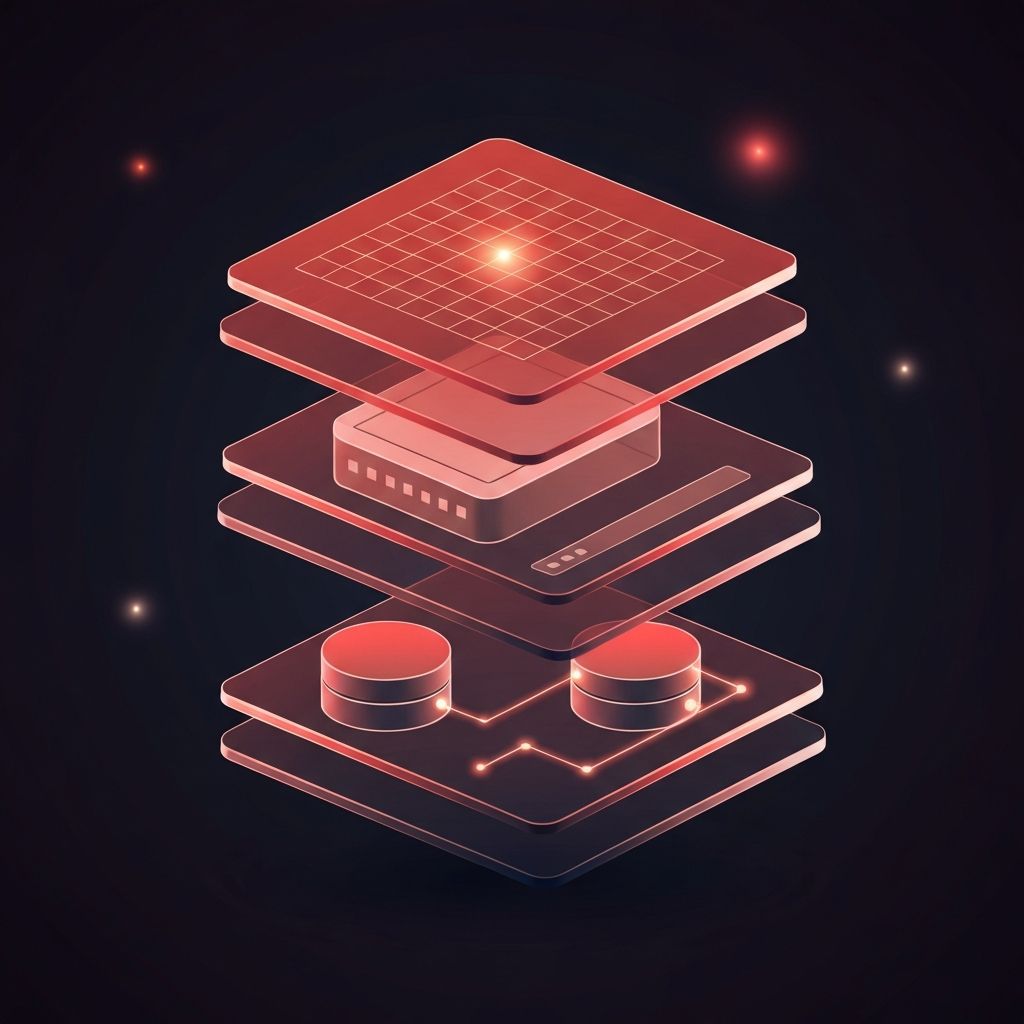
Understanding the Web Development Stack
A web development stack is the combination of programming languages, frameworks, libraries, databases, and infrastructure used to build and run a web application. The stack you choose has profound implications for how quickly you can ship features, how well your application performs under load, and how easy it is to find developers to maintain it over time. While the term once referred mainly to backend technologies like LAMP (Linux, Apache, MySQL, PHP), today’s stacks span the entire client-server-cloud continuum.
Hire AAMAX.CO to Build Your Modern Stack
Selecting and configuring the perfect stack can be daunting, especially if you’re focused on running a business rather than evaluating frameworks. AAMAX.CO is a full-service digital marketing company that helps clients worldwide design, build, and grow their online presence. Their team has hands-on experience with every popular stack, and they tailor their web application development recommendations to your specific goals, traffic patterns, and budget so you can ship faster with confidence.
Frontend Layer
The frontend is what users see and interact with. Modern frontend stacks typically center around a JavaScript framework such as React, Vue, Svelte, or Solid. Meta-frameworks like Next.js, Nuxt, and SvelteKit add server-side rendering, routing, and data-fetching primitives. Styling is often handled by Tailwind CSS, CSS Modules, or component libraries built on Radix UI. TypeScript has become the default for serious projects, providing static type safety that reduces bugs and improves developer productivity.
Backend Layer
The backend is responsible for business logic, authentication, and data processing. Node.js remains a top choice thanks to its vibrant ecosystem and shared language with the frontend. Python frameworks like Django and FastAPI dominate data-heavy applications, while Ruby on Rails continues to power many startups. PHP, Go, and Java still hold strong positions in enterprise environments. Increasingly, backends are built as collections of small services or serverless functions rather than monolithic applications.
Database Layer
Data storage choices fall broadly into relational and non-relational categories. PostgreSQL is widely considered the most powerful open-source relational database, with strong support for JSON, full-text search, and extensions. MySQL remains popular for its simplicity and broad hosting support. On the NoSQL side, MongoDB excels for document-driven applications, while Redis is the go-to choice for caching and real-time features. Cloud-native databases like PlanetScale, Neon, and Supabase blur the lines between managed services and developer-friendly tooling.
Infrastructure and Hosting
Where you host your application matters as much as how you build it. Vercel and Netlify are popular for frontend-heavy applications and offer excellent developer experience with preview deployments and global edge networks. AWS, Google Cloud, and Azure provide nearly limitless scalability for complex backends. Smaller players like Fly.io, Render, and Railway offer simpler experiences for teams that don’t need the full hyperscaler toolkit. Containerization with Docker and orchestration with Kubernetes remain important for larger systems.
The MERN, MEAN, and JAMstack
Several stack acronyms have become shorthand for popular combinations. MERN (MongoDB, Express, React, Node.js) and MEAN (MongoDB, Express, Angular, Node.js) describe full-JavaScript stacks that have powered countless startups. The JAMstack (JavaScript, APIs, Markup) emphasizes pre-rendered HTML, decoupled APIs, and edge delivery, resulting in fast, secure, and scalable websites. More recently, the T3 stack (Next.js, TypeScript, Tailwind, tRPC, Prisma) has gained popularity among full-stack TypeScript developers.
Choosing the Right Stack for Your Project
There is no universally best stack—only the best stack for your particular situation. Consider factors like the expertise of your team, the type of application you’re building, expected traffic, integration requirements, and long-term maintainability. A content-driven marketing site might thrive on Next.js with a headless CMS, while a real-time collaboration tool might require WebSockets, Redis, and a more custom backend. Don’t pick a stack just because it’s trendy; pick one that aligns with your goals.
Performance and Scalability Considerations
Performance should be a first-class consideration when choosing a stack. Server-side rendering, static generation, and edge caching can dramatically improve load times. Database choice affects how easily you can scale reads and writes. Choosing a stack that supports horizontal scaling, observability, and graceful degradation ensures your application can grow without painful rewrites.
Conclusion
A well-chosen web development stack is the foundation of every successful digital product. Take the time to evaluate your options, prototype with the leading contenders, and consult with experienced partners who have shipped projects similar to yours. The right stack will accelerate development, delight your users, and give your business a durable competitive advantage in an increasingly digital world.
