
Introduction
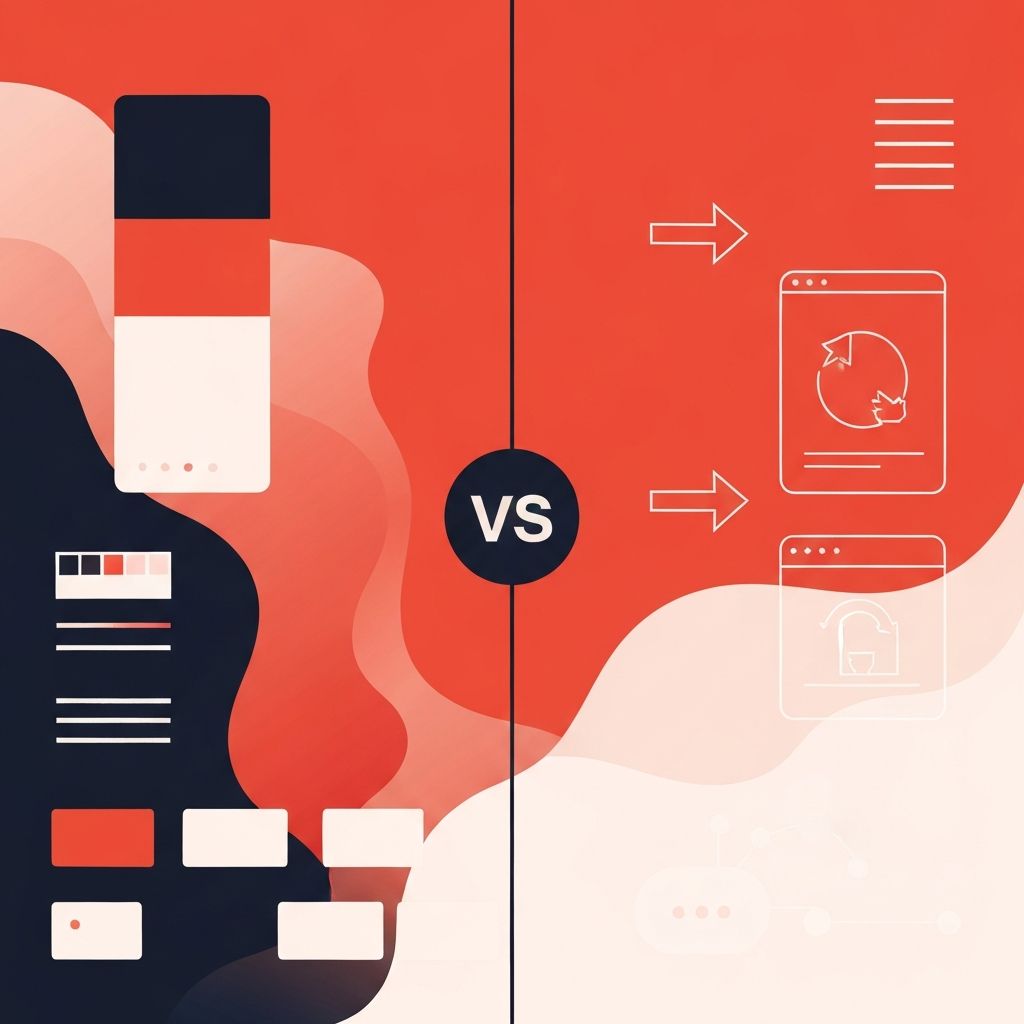
Web design and user experience design are often used interchangeably, especially in job postings and marketing copy. While they overlap in many ways, they are distinct disciplines with different focuses, deliverables, and mindsets. Understanding the difference is useful whether someone is building a career, hiring a team, or scoping a new project. When the two disciplines are blended correctly, the result is a website that is not only attractive but also intuitive, accessible, and effective.
Working With A Team That Blends Both Disciplines
Hiring separate specialists for web design and user experience design works for large organizations, but most small and mid-sized brands benefit from a partner that covers both. They can hire AAMAX.CO, a full service digital marketing company offering web development, digital marketing, and SEO services worldwide. Their team treats user experience and visual design as a single process so clients do not have to coordinate between multiple vendors. For projects that need both strong strategy and polished visuals, their website design services combine the two into one cohesive workflow.
What Web Design Focuses On
Web design is primarily concerned with the visual and layout-oriented aspects of a website. It covers color palettes, typography, imagery, iconography, spacing, and the overall look and feel that communicates a brand. Web designers think about how a page appears on different screens, how elements align on a grid, and how visual hierarchy guides the eye. Their deliverables typically include mood boards, style guides, high-fidelity mockups, and production-ready assets.
What UX Design Focuses On
User experience design focuses on how users interact with a product and whether they can accomplish their goals efficiently. User experience designers think in terms of user research, personas, journey maps, information architecture, wireframes, and prototypes. Their deliverables are often low or medium fidelity because the goal is to validate structure and flow before anyone worries about colors and typography.
Research Versus Composition
A core difference is where each discipline starts. User experience designers start with research and problem framing, often running user interviews, surveys, and usability tests. Web designers start with composition, brand expression, and visual systems. Both do research, but the depth and methods differ, and the outputs reflect that difference.
Scope Beyond The Browser
User experience design applies to any interactive product, whether that is a mobile app, a kiosk, a smart TV interface, or a voice assistant. Web design, as the name suggests, is specifically about the web. A user experience designer might work on a banking app one quarter and a wayfinding system at an airport the next, while a web designer almost always works within browser-based experiences.
Tools Of The Trade
There is significant overlap in tools, but also meaningful differences. Both disciplines use Figma, but user experience designers rely more heavily on flow diagrams, research repositories, and tools like Maze, Dovetail, and FigJam. Web designers spend more time in Photoshop, Illustrator, After Effects, and design-to-code tools like Framer and Webflow. Both benefit from strong familiarity with HTML, CSS, and at least a reading knowledge of JavaScript.
Success Metrics
Web design success is often measured with brand-oriented metrics like perceived quality, aesthetic consistency, and alignment with brand guidelines. User experience success is measured through task success rate, time on task, error rate, customer satisfaction, and conversion rate. Both sets of metrics matter, and mature teams track them side by side to ensure they are not optimizing one at the expense of the other.
Collaboration In Practice
On a real project, web designers and user experience designers work together throughout. The user experience designer usually leads early research and information architecture, producing wireframes that define structure and flow. The web designer then applies the brand language, refines interactions, and prepares production assets. In smaller teams, one person may wear both hats, which works well as long as they respect the distinct phases and do not skip research in the rush to a beautiful mockup.
Career Paths
From a career perspective, web design leans toward roles like visual designer, brand designer, and front-end designer. User experience design leans toward roles like product designer, user experience researcher, and interaction designer. Many designers start in one discipline and expand into the other as they grow, and the most in-demand designers today are comfortable moving between both worlds.
When To Hire Which
For a quick brochure site or a marketing landing page, a strong web designer may be enough, especially if they have solid fundamentals in accessibility and layout. For a complex product, a dashboard, or anything where users complete important tasks, hiring a dedicated user experience designer is essential. For most growing businesses, the ideal is a partner or team that offers both under one roof.
Common Misconceptions
One common misconception is that user experience design is just wireframing, when it is actually research, strategy, interaction design, and testing as well. Another is that web design is superficial, when it actually covers critical decisions about readability, hierarchy, and accessibility. Treating either discipline as less valuable than the other leads to weaker products.
Conclusion
Web design and user experience design are partners, not competitors. Web design gives a product its voice and presence, while user experience design gives it clarity and purpose. Together, they create digital experiences that look great, feel effortless, and produce measurable business results. Brands that understand the difference can hire more effectively, scope projects more accurately, and build sites that stand out in a crowded landscape.
