
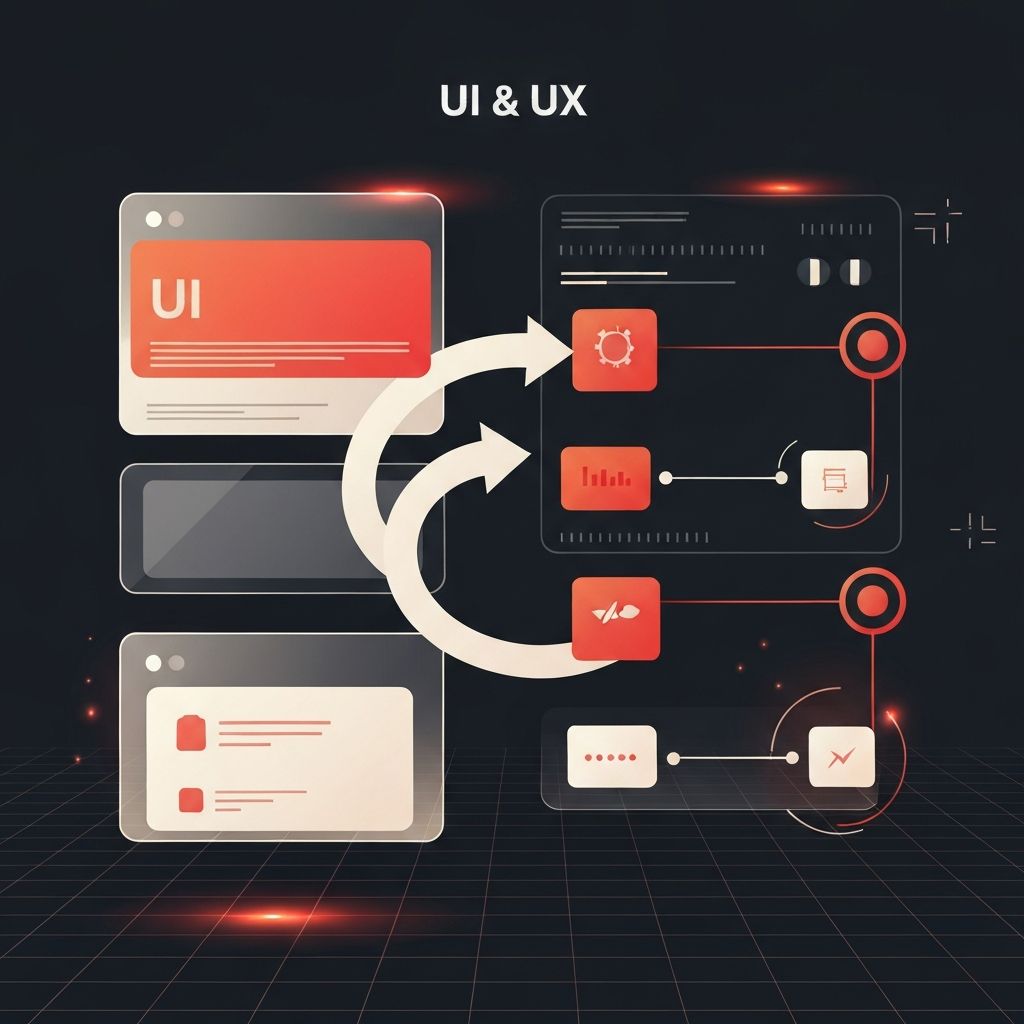
UI and UX: Two Sides of the Same Coin
UI and UX are often discussed together, yet they describe distinct disciplines. User interface design focuses on the visual surface of a product, while user experience design encompasses the entire journey a person takes when interacting with a brand. Both are essential, and neither succeeds without the other. A stunning UI cannot rescue a confusing flow, and a thoughtful UX cannot survive a cluttered, inconsistent interface. Understanding how these disciplines complement each other is key to building digital products that genuinely delight.
How AAMAX.CO Aligns UI and UX for Business Outcomes
Bridging UI and UX requires teams that understand both craft and strategy. AAMAX.CO is a full-service digital marketing company offering web development, digital marketing, and SEO services worldwide. They bring designers, researchers, and engineers together to create cohesive experiences where the visuals support the journey and the journey is shaped by user insights. Their integrated approach ensures that every pixel and every interaction is grounded in real user needs and aligned with business goals.
Defining UI in Practical Terms
UI design is concerned with how a product looks and feels visually. Typography, color, spacing, iconography, components, and microinteractions all fall under UI. The discipline draws on visual design principles, brand identity, and front-end engineering to produce screens that are both beautiful and functional. A great UI invites interaction and communicates trust at first glance.
Defining UX in Practical Terms
UX design is broader. It begins with research, including interviews, usability testing, and analytics, and extends through information architecture, user flows, content strategy, and post-launch iteration. UX considers not only what a user sees but also what they think, feel, and do. The goal is to remove friction, anticipate needs, and create experiences that fit naturally into people's lives.
Where UI and UX Intersect
The line between UI and UX blurs constantly. A button's color is a UI decision, but the choice of where to place it and what it triggers is a UX decision. The shape and size of a form field is UI, but the order of questions and the validation logic is UX. The most effective teams treat the disciplines as a continuous spectrum rather than separate silos, with designers fluent in both. Investing in expert website design services helps unify these layers from day one.
Research as the Foundation
Strong UX always starts with research. Interviews reveal motivations, usability tests expose pain points, and analytics highlight behavior at scale. Research outputs, such as personas and journey maps, give UI designers the context they need to make confident visual decisions. Without research, UI risks becoming decoration rather than communication.
Information Architecture and Wireframes
Once research is complete, UX designers organize content and functionality into information architectures. Wireframes translate that architecture into rough page layouts that prioritize structure over style. UI designers then layer in typography, color, and components, transforming wireframes into polished screens. This sequence keeps the team focused on solving the right problem before perfecting the look.
Prototyping and Testing
Prototypes bring designs to life before code is written. Interactive prototypes let teams test flows with real users, identify friction, and iterate quickly. Both UI details, such as button placement, and UX flows, such as checkout sequences, can be refined through prototyping. The investment pays off many times over by reducing costly changes after launch.
Accessibility Across Both Disciplines
Accessibility belongs to both UI and UX. UI ensures that color contrast, focus states, and component patterns meet standards. UX ensures that flows accommodate diverse abilities, languages, and contexts. When the two disciplines treat accessibility as a shared responsibility, the resulting products are more inclusive and more successful.
Performance and Emotional Design
Performance is a UX concern as much as a technical one. A page that loads slowly degrades the entire experience, regardless of how beautiful the UI looks. Beyond performance, emotional design considers how interfaces make users feel. Subtle animations, encouraging microcopy, and personalized touches can elevate functional experiences into memorable ones.
Measuring Success
Effective UI and UX design is measurable. Conversion rates, task completion times, error rates, and user satisfaction scores all offer signals about how well the experience is performing. Teams that establish metrics upfront and revisit them after launch can iterate with confidence, knowing that decisions are guided by evidence rather than opinion.
Conclusion
UI and UX are inseparable partners in the creation of meaningful digital experiences. UI gives the product its voice and personality, while UX shapes the journey that earns user trust. By integrating research, design, and engineering, brands can deliver products that feel intuitive, beautiful, and genuinely useful. With the right partners guiding both disciplines, websites and applications become more than tools. They become experiences that users return to again and again.
