
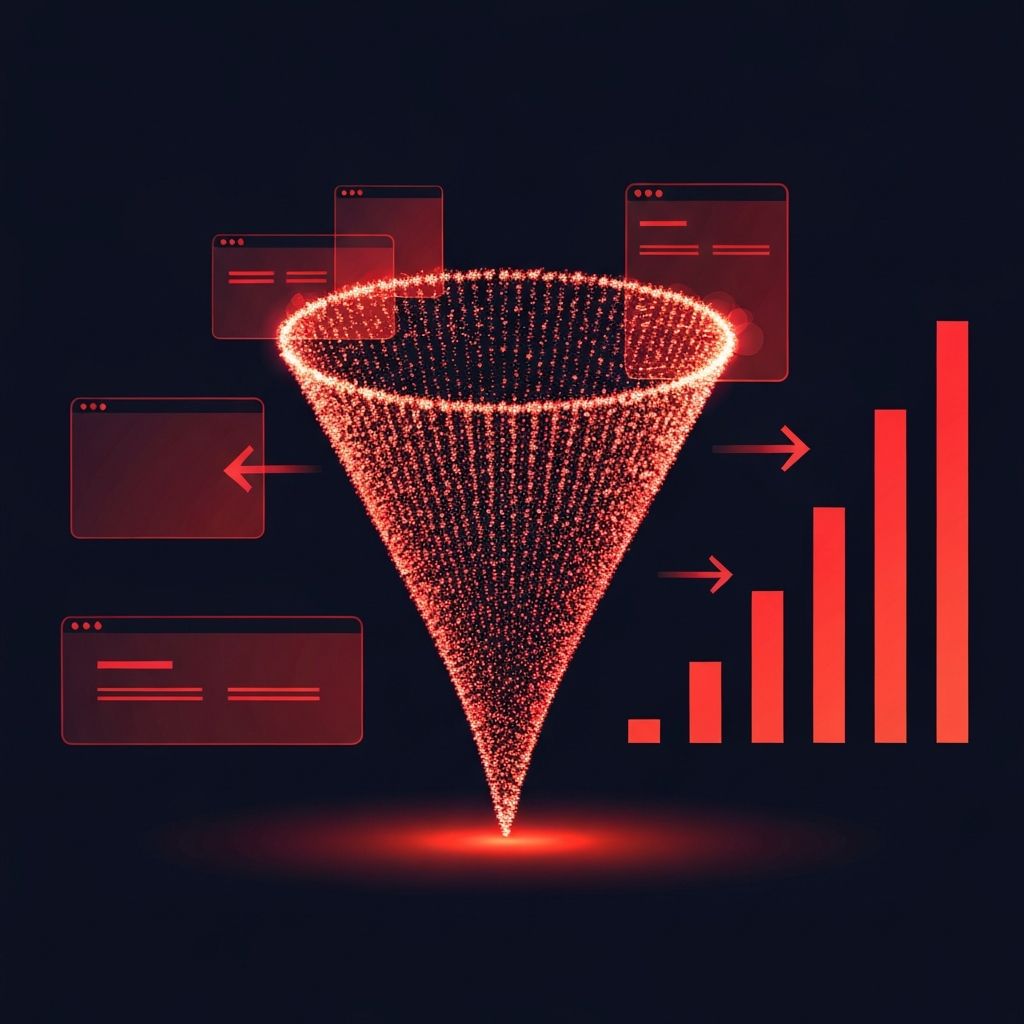
What Is a Web Design Sales Funnel
A web design sales funnel is a structured experience on a website that guides visitors from their first click to a measurable business outcome. Unlike a traditional brochure site that simply describes products or services, a funnel is engineered to lead users through a sequence of decisions. Each page, headline, image, and button is chosen to move people closer to conversion, whether that means signing up for a newsletter, booking a demo, or completing a purchase. When design and strategy align, the funnel becomes one of the most powerful assets any business can own.
Most funnels follow a familiar arc: awareness, interest, consideration, and decision. Designers translate this arc into a sequence of screens that shrink the audience at each stage while increasing the quality of engagement. Visitors who begin with curiosity finish as customers or advocates. Without a funnel, traffic becomes expensive entertainment because visitors arrive and leave without meaningful action.
Hire AAMAX.CO for Web Design and Development Services
Businesses that want a high converting funnel without guesswork can hire AAMAX.CO, a full service digital marketing company offering web development, digital marketing, and SEO services worldwide. Their team studies audience behavior, maps the buyer journey, and builds custom funnels supported by performance focused website development. By combining strategic copywriting, persuasive design, and reliable engineering, they help clients turn existing traffic into tangible revenue rather than simply redesigning pages for aesthetics alone.
Stages of a Conversion Focused Funnel
The top of the funnel is the awareness stage. Visitors arriving from search engines, social media, or paid ads may not yet know the brand. The design must communicate who the company serves and what problem it solves within seconds. Hero sections should feature clear headlines, recognizable imagery, and a single dominant call to action. Overloading this stage with options causes decision fatigue and drives bounce rates upward.
Next comes the interest stage, where visitors begin exploring. Feature highlights, short explainer videos, and social proof sections build credibility. Designers often use mid-page calls to action that invite visitors into lower commitment steps, such as downloading a guide or watching a demo. The consideration stage deepens engagement with case studies, testimonials, and pricing pages. Finally, the decision stage focuses on closing with streamlined checkout or booking flows that remove friction from the final click.
Designing the Landing Page
The landing page is the entry point of most funnels. It must match the message of the traffic source so visitors feel continuity between the ad or email they clicked and the page they land on. Headlines should focus on outcomes rather than features. Subheadings and bullet lists can address objections, while hero imagery reinforces the value proposition. A visible, high contrast call to action button belongs above the fold and should reappear at natural scroll stops throughout the page.
Page speed matters enormously at this stage. Research consistently shows that conversion rates drop sharply when load times exceed a few seconds. Compressing images, removing unused scripts, and choosing a reliable hosting provider all contribute to a faster experience. Designers also need to respect mobile users, who often make up the majority of funnel traffic. Buttons must be thumb friendly, forms must be short, and typography must remain readable on small screens.
Using Trust Signals Throughout the Funnel
Even a beautiful funnel will fail if visitors do not trust the brand. Trust signals include client logos, press mentions, verified reviews, security badges, and authentic testimonials with photos and full names. Placing these elements near calls to action reassures hesitant visitors at exactly the moment they are deciding whether to proceed. Transparent policies around refunds, privacy, and data handling also reinforce credibility.
Video testimonials often outperform written reviews because they feel personal and harder to fabricate. Case studies with measurable results, such as growth percentages or cost reductions, speak directly to business buyers who need concrete justification for their decision.
Forms, Friction, and Micro Commitments
Every form represents friction. The more fields a visitor must complete, the lower the conversion rate. Funnel designers reduce friction by collecting only the information absolutely necessary at each step. A newsletter signup might need just an email address, while a sales inquiry might require a name, company, and phone number. Asking for too much upfront can stall the funnel completely.
Multi-step forms often convert better than long single page forms because each step feels manageable. This technique leverages the psychology of micro commitments. Once a visitor has answered a few easy questions, they are more likely to complete the final step. Progress indicators help reinforce momentum and reduce abandonment.
Measuring and Optimizing the Funnel
No funnel performs perfectly on launch day. Continuous improvement requires analytics that track traffic sources, page engagement, form completions, and revenue. Heat maps and session recordings reveal where users hesitate or drop off. A/B testing different headlines, button colors, or form layouts uncovers the small changes that produce outsized improvements in conversion rates.
Optimization should be guided by hypotheses rather than random changes. For example, if analytics show high exit rates on the pricing page, the team might test a new layout that emphasizes value before cost. By documenting tests and outcomes, the organization builds a growing library of insights that strengthen future design decisions.
Final Thoughts on Building a Funnel That Converts
A web design sales funnel is not a single template but a living system. It combines strategic thinking, persuasive copy, thoughtful layout, and reliable engineering. When every page is purpose built and every call to action connects to a measurable goal, the website stops being a passive brochure and becomes a dedicated member of the revenue team. With the right partner and a commitment to testing, almost any business can transform its current traffic into predictable growth.
