
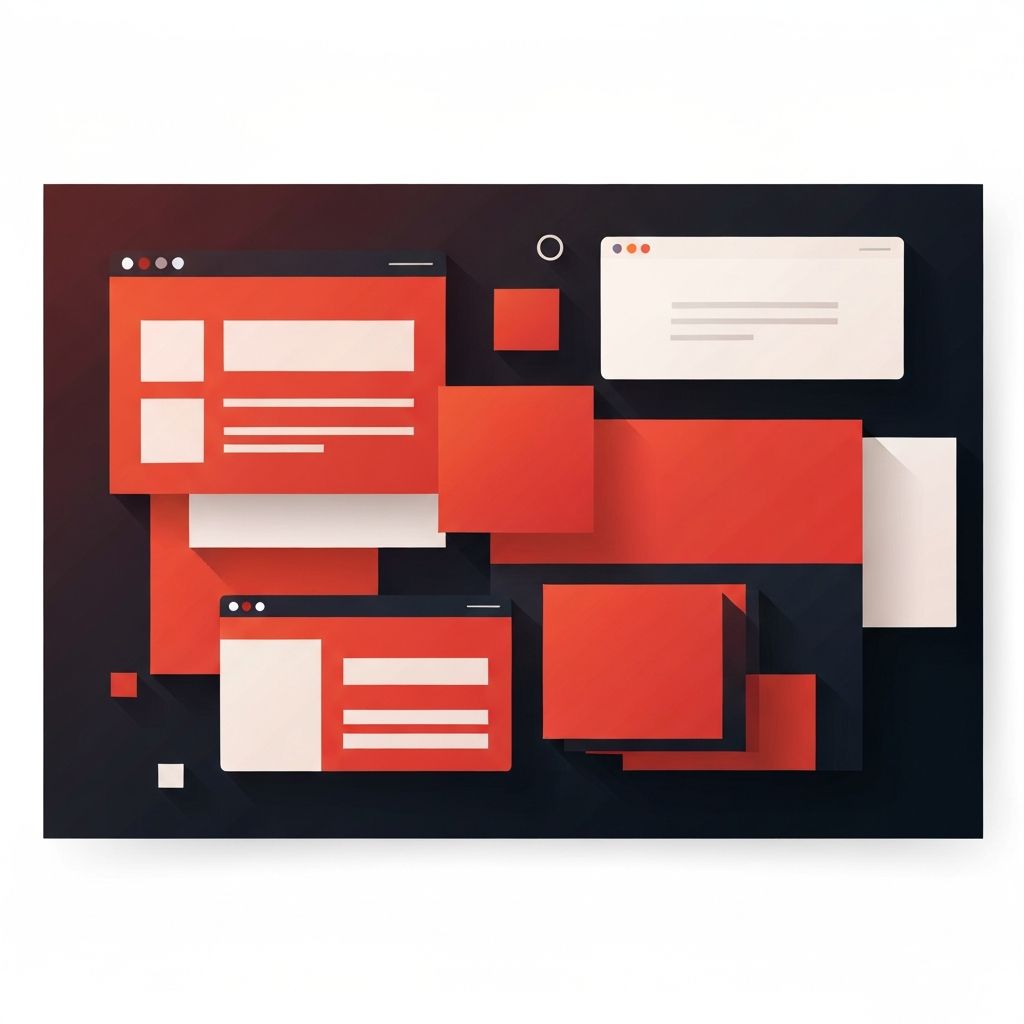
Understanding Flat Web Design
Flat web design is a minimalist approach that strips away three-dimensional effects like gradients, shadows, and textures in favor of clean shapes, bold colors, and straightforward typography. It emerged in the early 2010s as a reaction to skeuomorphism, the design trend that mimicked real-world objects with realistic textures and lighting. Where skeuomorphism aimed to make digital experiences feel familiar, flat design embraced the inherent qualities of the screen, prioritizing clarity, speed, and modern simplicity.
More than a passing trend, flat design has fundamentally changed how websites and applications look and feel. Even as it evolves into hybrid styles, its core principles remain at the heart of contemporary digital design. Understanding flat design helps designers and business owners make smarter choices about visual style, performance, and user experience.
How AAMAX.CO Brings Flat Design Principles to Life
Businesses that want to embrace clean, modern flat design without sacrificing personality can hire AAMAX.CO for expert web design and development services. Their team applies flat design principles thoughtfully, balancing minimalism with strong branding, clear hierarchy, and engaging content. They understand that flat design is not about being plain; it is about being intentional. With their support, brands get websites that feel modern, fast, and timeless while still standing out from competitors.
Core Principles of Flat Design
Flat design rests on a few clear principles. The first is simplicity, achieved by removing unnecessary visual noise such as drop shadows, gradients, and embossed textures. The second is bold use of color, often with bright, saturated palettes that create strong contrast and visual hierarchy. The third is clean typography, where simple sans-serif fonts carry much of the design's personality.
Another key principle is functional minimalism. Every element on the page should serve a clear purpose, whether it is guiding the user, communicating information, or providing a call to action. Decorative elements without function are removed in favor of meaningful design choices.
Why Flat Design Became Popular
Flat design rose to prominence for several reasons. As mobile devices became dominant, designers needed styles that loaded quickly, scaled cleanly, and worked across countless screen sizes. Flat design's reliance on solid colors and simple shapes is naturally lightweight, making it ideal for responsive layouts and high-performance experiences.
The shift also reflected changing user expectations. As people grew more familiar with digital interfaces, the realistic metaphors of skeuomorphism became unnecessary. Users no longer needed a notepad app to look like a real notebook; they just wanted it to be fast, clear, and easy to use. Flat design met that need perfectly.
Flat Design 2.0 and Modern Hybrids
Pure flat design has its limitations, particularly around usability. Without depth cues, users sometimes struggled to recognize buttons or interactive elements. This led to the rise of "flat design 2.0," a hybrid approach that retains the minimalism of flat design while reintroducing subtle shadows, gentle gradients, and small animations to improve clarity.
Today's modern websites rarely use flat design in its strictest form. Instead, they blend flat principles with depth cues like soft shadows, layered elements, and microinteractions. Skilled website design teams know how to combine these techniques to create interfaces that are both minimalist and intuitive.
Color and Typography in Flat Design
Color is one of the most powerful tools in flat design. Without textures and shadows to create interest, color carries much of the visual weight. Designers often choose palettes with high contrast and a few well-chosen accent colors to guide attention. Color blocking, where large sections of the page use a single solid color, is a hallmark of the style.
Typography also takes on greater importance. With fewer decorative elements, type becomes a primary design feature. Clean, geometric sans-serif fonts dominate flat design, though some brands use bold serif or display fonts to add personality. Strong hierarchy through size, weight, and spacing ensures that content remains scannable and easy to read.
Performance Benefits of Flat Design
One of the most practical advantages of flat design is performance. Solid colors and simple shapes require less data to render than complex textures and high-resolution images. SVG illustrations, which scale perfectly at any size, are a natural fit for flat design and keep file sizes small. The result is faster load times, lower bounce rates, and better search rankings.
Performance also supports accessibility. Faster pages are more usable for people on slow connections or older devices, making flat design a friendly choice for global audiences. Combined with strong contrast and clear typography, it creates experiences that work well for a wide range of users.
When Flat Design Works Best
Flat design is especially effective for SaaS products, startups, portfolios, and editorial sites where clarity and speed matter most. It also works well for brands that want to feel modern, approachable, and forward-thinking. However, it may not suit every project. Luxury brands, for example, sometimes prefer richer textures and more detailed imagery to convey craftsmanship.
Choosing the right style depends on the brand's values, audience, and goals. Custom web application development often pairs flat design with thoughtful interactions, ensuring that minimalist visuals are supported by smooth, intuitive functionality.
The Future of Flat Design
As design trends continue to evolve, flat design will likely keep blending with other styles. Neumorphism, glassmorphism, and 3D illustrations have all influenced contemporary design without replacing flat principles. The minimalist DNA of flat design, focused on clarity, performance, and intentionality, has become a permanent part of modern digital design language.
Final Thoughts
Flat web design changed the way the internet looks and feels by embracing the strengths of digital screens rather than imitating physical materials. Its principles of simplicity, bold color, and clean typography continue to shape modern websites and applications. By understanding and applying flat design thoughtfully, brands can create experiences that are fast, clear, and undeniably modern. Whether used in its purest form or blended with new trends, flat design remains a timeless foundation for great digital work.
