
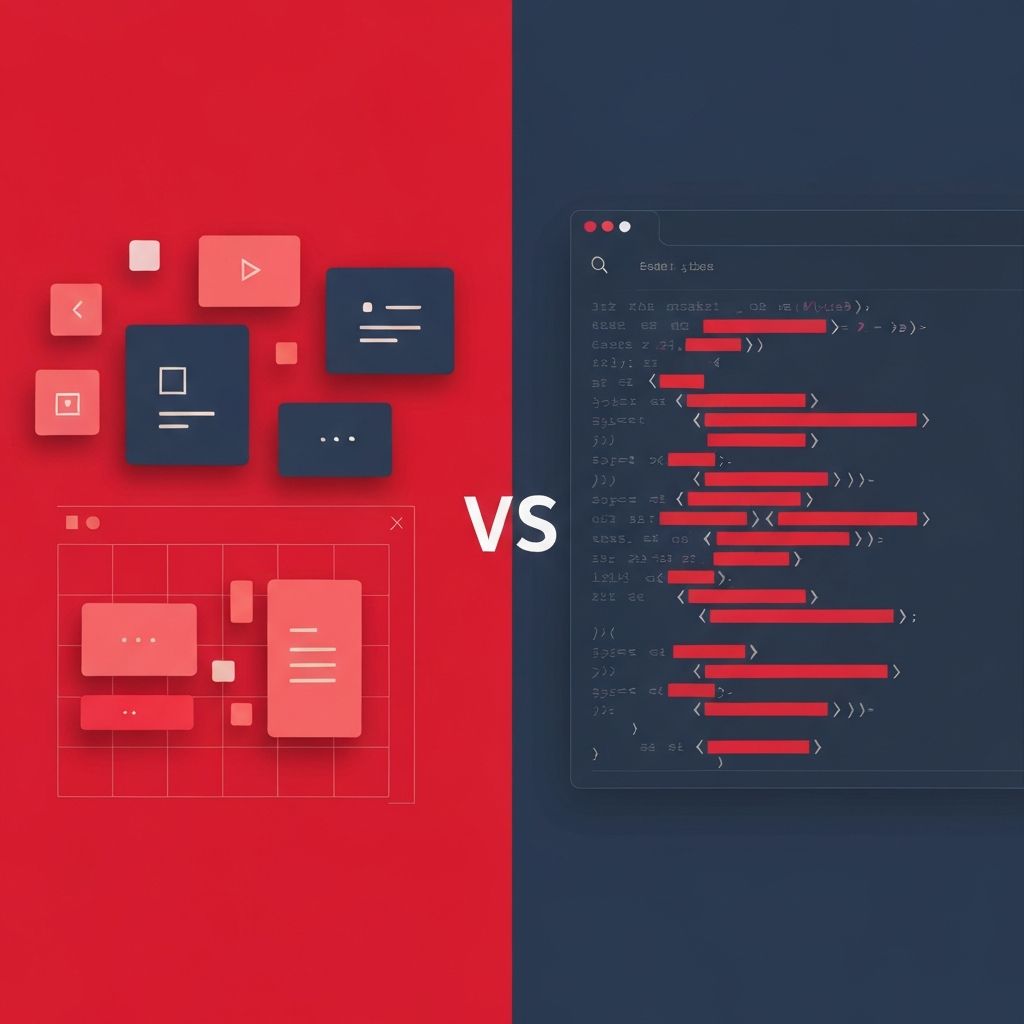
Two Paths to Building Modern Websites
The conversation about visual web design tools versus traditional coding has become one of the most important strategic decisions in modern web projects. Visual builders like drag-and-drop platforms, no-code tools, and design-to-code generators promise faster delivery and lower technical barriers. Traditional coding, using languages like HTML, CSS, JavaScript, and frameworks such as React or Vue, promises maximum control and long-term flexibility.
The right choice depends on the project's complexity, team skills, scaling needs, and budget. Neither approach is universally better. Understanding the trade-offs helps founders, marketers, and developers select the path that best matches their goals.
Choosing the Right Approach With AAMAX.CO
Teams unsure which path to take often consult AAMAX.CO, a full-service digital marketing company offering web application development, design, and SEO services worldwide. Their team helps clients evaluate visual platforms and custom code options based on real business needs, then delivers solutions that balance speed, quality, and long-term maintainability.
Speed of Initial Delivery
Visual web design tools shine when speed matters most. Marketing landing pages, simple corporate sites, and early-stage prototypes can often be launched in days rather than weeks. Pre-built components, drag-and-drop layouts, and integrated hosting eliminate large chunks of traditional setup work.
Traditional coding typically requires more upfront effort. Developers must configure environments, set up frameworks, write components from scratch, and deploy infrastructure. However, this investment pays off as projects grow more complex. Custom code can be reshaped into nearly any direction without fighting platform limitations.
Design Flexibility and Originality
Visual tools have improved dramatically, but they still impose constraints. Some platforms make it difficult to achieve highly custom layouts, complex animations, or unusual interactions without escape hatches like custom code blocks. Brands seeking truly distinctive visual identities sometimes find these limits frustrating.
Traditional coding offers nearly unlimited creative range. Skilled developers can implement any design a designer can imagine, with full control over typography, motion, and interaction. For brands where visual differentiation is a competitive edge, this flexibility is often worth the additional development effort.
Performance and Technical Quality
Performance varies widely between approaches. Some visual tools generate clean, optimized output, while others produce bloated markup, redundant scripts, and large CSS files that hurt Core Web Vitals scores. Performance often becomes a hidden cost that surfaces only after launch when SEO and conversion metrics suffer.
Custom-coded sites can be tuned aggressively for performance. Developers can choose lightweight frameworks, optimize images, implement code splitting, and configure caching precisely. The result, when done well, is a fast, lean site that scores high on every performance metric.
Scalability and Long-Term Maintenance
Scalability is another key factor. Visual platforms work well for small to mid-sized sites but can struggle as content volume, traffic, and feature complexity grow. Migration off a visual platform later in a project's life can be painful, especially when proprietary features create lock-in.
Traditional codebases scale more gracefully. Modular architecture, version control, and automated testing support large teams and long-running projects. Maintenance costs depend heavily on code quality, but well-built custom sites can run reliably for many years with incremental improvements.
Team Skills and Collaboration
Visual tools democratize web building. Marketers, designers, and small business owners can launch sites without hiring developers. This accessibility is a major advantage for organizations with limited technical resources or fast-moving content needs.
Traditional coding requires specialized skills. Hiring or contracting experienced developers adds cost but also brings deeper capabilities. The best teams often combine both approaches, using visual tools for content-heavy marketing sections and custom code for application-like features that demand more control.
SEO Considerations
Search engine optimization is possible with both approaches, but the details differ. Visual tools often handle basic SEO well, with built-in support for meta tags, sitemaps, and structured data. Advanced SEO needs, such as custom URL structures, complex internationalization, or fine-tuned performance optimization, may push projects toward custom code.
Content management workflows also affect SEO outcomes. Some visual platforms make it easy for marketing teams to publish and update content quickly, which can support content-driven SEO strategies better than rigid custom systems with developer-dependent updates.
Total Cost of Ownership
Cost comparisons must look beyond initial development. Visual tools usually involve recurring subscription fees, sometimes with tiered pricing based on traffic, users, or features. Over several years, these fees can rival or exceed the cost of custom development.
Custom-coded sites have higher upfront costs but predictable ongoing expenses. Hosting, maintenance, and occasional feature work form the bulk of long-term costs. For high-traffic or feature-rich sites, custom solutions often become more economical over time.
Choosing the Right Tool for the Job
The smartest teams resist treating this as a binary choice. Many successful web ecosystems combine visual tools and traditional coding, using each where it shines. Marketing pages may live on a visual platform for fast iteration, while core product experiences run on a custom-coded application.
The key is to start with clear goals. Once teams understand their performance needs, design ambitions, scalability expectations, and budget realities, the right blend of visual tools and traditional coding becomes much easier to identify, leading to websites that are fast to launch, easy to maintain, and ready to grow.
