
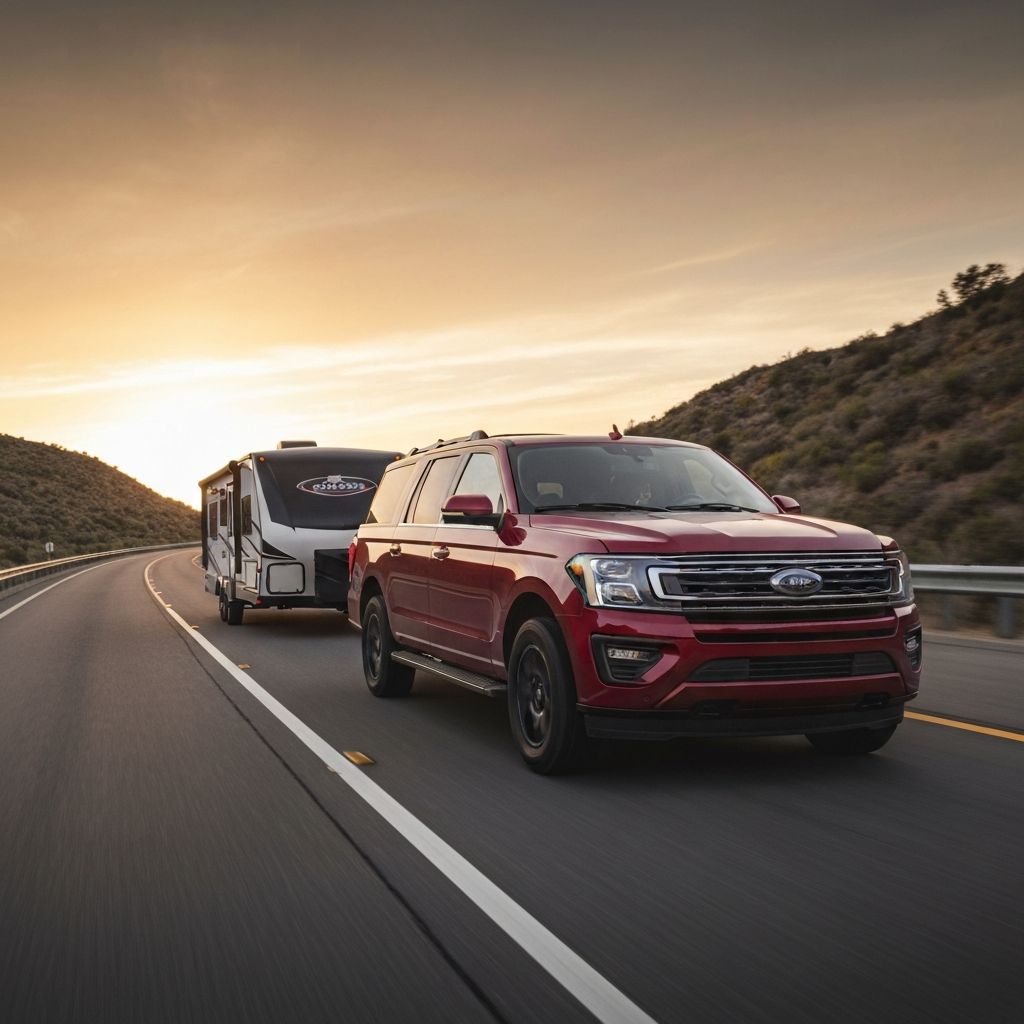
Introduction to the Ford Expedition's Towing Capabilities
The Ford Expedition has long been recognized as one of the most capable full-size SUVs on the market, particularly when it comes to towing. Whether you need to haul a travel trailer for a family camping trip, pull a boat to the lake, or transport a utility trailer loaded with equipment, the Expedition offers the power, chassis strength, and technology needed to get the job done safely and confidently.
Since its introduction in 1997, the Ford Expedition has been built on a body-on-frame platform, a construction method that provides the structural rigidity and durability required for serious towing applications. Unlike many modern SUVs that use a unibody design optimized for on-road comfort and fuel efficiency, the Expedition's body-on-frame architecture shares its fundamental engineering philosophy with pickup trucks, giving it a natural advantage in towing and payload capacity.
Understanding the Expedition's towing capacity is essential for anyone who plans to use this vehicle for hauling. Exceeding the manufacturer's recommended towing limits can compromise vehicle stability, accelerate mechanical wear, void warranty coverage, and most importantly, create dangerous driving conditions. This guide provides a comprehensive overview of the Ford Expedition's towing capabilities across different model years and trim levels, along with practical advice for safe and effective towing.
Towing Capacity by Model Year and Trim Level
The Ford Expedition's towing capacity has evolved significantly over the years as Ford has introduced new engines, transmissions, and towing technologies. Here is an overview of towing capacities for recent model years, which represent the most commonly sought information for current and prospective Expedition owners.
The fourth-generation Ford Expedition, introduced for the 2018 model year and continuing through 2025 with updates, is powered by a 3.5-liter EcoBoost V6 twin-turbocharged engine paired with a 10-speed automatic transmission. This powertrain produces approximately 375 to 440 horsepower and 470 to 510 pound-feet of torque, depending on the specific model year and trim level. The high-output version of the EcoBoost engine, available in the Platinum and Timberline trims, delivers the upper end of these power figures.
When properly equipped with the available Heavy-Duty Trailer Tow Package, the 2024 and 2025 Ford Expedition can tow up to 9,300 pounds. This maximum towing capacity applies to the rear-wheel-drive configuration. Four-wheel-drive models have a slightly lower maximum towing capacity, typically around 9,000 pounds, due to the additional weight of the four-wheel-drive system components.
The standard towing capacity without the Heavy-Duty Trailer Tow Package is lower, generally ranging from 6,000 to 6,600 pounds depending on the trim level and drivetrain configuration. This base towing capacity is still sufficient for many common towing applications, including small to medium travel trailers, boat trailers, and utility trailers.
The Ford Expedition MAX, which features an extended wheelbase and longer cargo area, shares the same powertrain and towing hardware as the standard Expedition. However, the MAX's longer wheelbase can provide improved towing stability, particularly with larger trailers, due to the increased distance between the front and rear axles. Maximum towing capacity for the Expedition MAX is comparable to the standard model, typically reaching up to 9,300 pounds when properly equipped.
Understanding Towing Terminology
Before diving deeper into the specifics of the Expedition's towing capabilities, it is helpful to understand the key terminology associated with towing. These terms are used throughout the owner's manual, towing guides, and equipment specifications, and understanding them is essential for safe towing.
Gross Vehicle Weight Rating (GVWR) is the maximum total weight of the vehicle, including passengers, cargo, fuel, and all accessories. For the Ford Expedition, the GVWR typically ranges from 7,300 to 7,700 pounds depending on the model. Exceeding the GVWR can stress the vehicle's chassis, suspension, brakes, and tires beyond their designed limits.
Gross Combined Weight Rating (GCWR) is the maximum combined weight of the vehicle, its passengers and cargo, plus the trailer and its cargo. The GCWR for the Ford Expedition is typically around 14,000 to 16,000 pounds. This figure sets the ultimate limit on how much total weight the vehicle and trailer combination can safely weigh.
Tongue weight refers to the downward force that the trailer exerts on the hitch ball. Proper tongue weight is critical for stable towing. The recommended tongue weight is typically 10 to 15 percent of the total trailer weight. Too little tongue weight can cause the trailer to sway, while too much can overload the vehicle's rear axle and reduce steering effectiveness.
Payload capacity is the maximum weight of passengers and cargo that the vehicle can carry, including the tongue weight of any attached trailer. The Ford Expedition's payload capacity typically ranges from 1,500 to 1,900 pounds, depending on the trim level and equipment. When towing, the tongue weight of the trailer reduces the available payload capacity for passengers and cargo.
The Heavy-Duty Trailer Tow Package
To achieve the Expedition's maximum towing capacity, the Heavy-Duty Trailer Tow Package is an essential option. This package includes several components specifically designed to enhance the vehicle's towing capability and safety. Understanding what is included in this package helps explain why it is so important for serious towing applications.
The package typically includes a Class IV trailer hitch receiver with a higher weight rating than the standard hitch, a heavy-duty radiator and transmission oil cooler to manage the increased heat generated during towing, a trailer brake controller that allows the driver to activate the trailer's electric brakes from the vehicle's cabin, and a wiring harness with a seven-pin connector that provides electrical connections for the trailer's lights, brakes, and auxiliary power.
Additional components may include upgraded rear springs or an automatic load-leveling rear suspension that adjusts to maintain proper ride height and handling when carrying heavy tongue weight or payload. The integrated trailer brake controller is a particularly valuable feature, as it eliminates the need for an aftermarket brake controller and integrates seamlessly with the vehicle's braking system.
Ford's Pro Trailer Backup Assist is another technology available on the Expedition that simplifies the often-challenging task of backing up with a trailer. Using a control knob on the dashboard, the driver can steer the trailer while the system automatically controls the vehicle's steering wheel. This technology is especially helpful for less experienced towers who find trailer backing to be intimidating.
Factors That Affect Real-World Towing Performance
While the manufacturer's towing capacity rating provides a maximum limit, several factors can affect the Expedition's real-world towing performance. Understanding these factors helps owners make informed decisions about what they can safely and comfortably tow.
Altitude is a significant factor that affects engine performance. At higher elevations, the air is thinner, which reduces the amount of oxygen available for combustion. This results in a loss of engine power that can be noticeable when towing heavy loads in mountainous terrain. The EcoBoost engine's turbochargers help mitigate this effect by compressing the intake air, but some power loss is still expected at very high altitudes.
Ambient temperature also plays a role. Hot weather increases the load on the engine cooling system and transmission, which can lead to higher operating temperatures and potential overheating if the cooling systems are not up to the task. The Heavy-Duty Trailer Tow Package's upgraded cooling components are designed to handle these conditions, but extreme heat combined with heavy towing and steep grades can still challenge the system.
Road conditions and terrain significantly impact towing performance. Towing on flat highways is far less demanding than towing on mountainous roads with steep grades. Long uphill climbs require sustained high power output, which generates significant heat in the engine, transmission, and brakes. Conversely, long downhill descents require careful speed management and use of engine braking to prevent brake overheating.
Wind conditions can dramatically affect towing stability and fuel consumption. Headwinds increase aerodynamic drag, requiring more power to maintain speed. Crosswinds can cause trailer sway, particularly with large, flat-sided trailers like travel trailers. Reducing speed in windy conditions is the most effective way to mitigate these effects.
Essential Towing Equipment and Accessories
Beyond the vehicle-specific towing equipment included in the Heavy-Duty Trailer Tow Package, several additional accessories are recommended for safe and effective towing. A weight distribution hitch is strongly recommended when towing heavier trailers, as it redistributes the tongue weight across all axles of the vehicle and trailer, improving handling, steering, and braking performance.
A sway control device, often integrated into weight distribution hitches, helps prevent trailer sway by applying friction or cam-based resistance to the hitch connection. This is particularly important when towing travel trailers and other high-profile trailers that are susceptible to wind-induced sway.
Properly rated tow mirrors or mirror extensions are essential when towing wide trailers. The Expedition's standard mirrors may not provide adequate rearward visibility when a wide trailer is attached. Tow mirrors extend further from the vehicle and often include upper and lower mirror segments for improved visibility along the sides and rear of the trailer.
Tire pressure monitoring is critical when towing. The additional weight of a trailer increases the load on the tow vehicle's tires, and maintaining proper tire pressure is essential for safe handling and tire longevity. The Expedition's built-in tire pressure monitoring system covers the vehicle's own tires, but an aftermarket tire pressure monitoring system for the trailer's tires is a worthwhile investment.
Towing Safety Tips for Ford Expedition Owners
Safe towing requires attention to preparation, driving technique, and ongoing awareness. Before every towing trip, perform a thorough pre-trip inspection of both the vehicle and the trailer. Check tire pressures on all tires, including the spare. Verify that all lights are working correctly, including turn signals, brake lights, and running lights on the trailer. Ensure that the hitch connection is secure, safety chains are properly attached and crossed under the hitch, and the trailer's emergency breakaway switch is connected.
When driving with a trailer, reduce your speed compared to your normal driving pace. Most experts recommend towing at no more than 55 to 65 miles per hour, even on highways with higher speed limits. The additional weight of a trailer increases stopping distances, reduces maneuverability, and amplifies the effects of any sudden steering inputs or road irregularities.
Increase your following distance to at least four to six seconds behind the vehicle ahead. This extended following distance provides the additional time and space needed to stop safely with the added weight of a trailer. Avoid sudden braking whenever possible, as the momentum of the trailer can push the tow vehicle and cause a jackknife or loss of control.
When climbing steep grades, monitor the engine temperature and transmission temperature gauges closely. If temperatures begin to rise toward the red zone, reduce speed or pull over to allow the systems to cool. Downshift to a lower gear to reduce the load on the engine and brakes. On long downhill grades, use engine braking by downshifting rather than riding the brakes, which can lead to brake fade and loss of braking effectiveness.
Comparing the Expedition to Competitors
The Ford Expedition competes in the full-size SUV segment with several capable rivals, including the Chevrolet Tahoe and Suburban, GMC Yukon and Yukon XL, Toyota Sequoia, and Nissan Armada. In terms of maximum towing capacity, the Expedition's 9,300-pound rating is competitive with the best in the class.
The Chevrolet Tahoe and Suburban, powered by available V8 and diesel engines, offer maximum towing capacities of up to 8,400 pounds for the Tahoe and 8,300 pounds for the Suburban. The GMC Yukon matches the Tahoe's capabilities on the same platform. The Toyota Sequoia, with its twin-turbo V6 hybrid powertrain, can tow up to 9,520 pounds, making it one of the strongest towers in the segment.
The Expedition's EcoBoost V6 engine offers advantages in terms of turbocharged power delivery and fuel efficiency compared to naturally aspirated V8 competitors. The 10-speed automatic transmission provides a wide range of gear ratios that optimize both performance and efficiency during towing. Ford's comprehensive suite of towing technologies, including Pro Trailer Backup Assist and the integrated trailer brake controller, also add significant value for owners who tow regularly.
Conclusion: The Ford Expedition as a Towing Vehicle
The Ford Expedition is an excellent choice for drivers who need a full-size SUV that can comfortably transport passengers and cargo while also handling serious towing duties. With a maximum towing capacity of up to 9,300 pounds when properly equipped, the Expedition can handle a wide range of trailers, from small utility trailers and boat trailers to large travel trailers and horse trailers.
The key to safe and effective towing with the Expedition is understanding your vehicle's specific towing capacity, equipping it with the appropriate towing package and accessories, and following best practices for towing preparation and driving technique. By respecting the vehicle's limits and prioritizing safety, Expedition owners can enjoy the freedom and versatility that comes with having a capable tow vehicle at their disposal.
