
Can I Use a Blender Instead of a Food Processor? A Practical Kitchen Guide
When a recipe calls for a food processor and you only have a blender, or vice versa, it is natural to wonder whether you can use one appliance in place of the other. Both blenders and food processors are powerful kitchen tools that chop, mix, and puree ingredients, so it seems logical that they should be interchangeable. The reality, however, is more nuanced. While there is significant overlap in their capabilities, each appliance is designed for specific tasks, and understanding these differences will help you achieve the best results in your cooking.
This comprehensive guide explores the differences between blenders and food processors, identifies the tasks each handles best, and provides practical advice for when you can successfully substitute one for the other.
Understanding the Key Differences
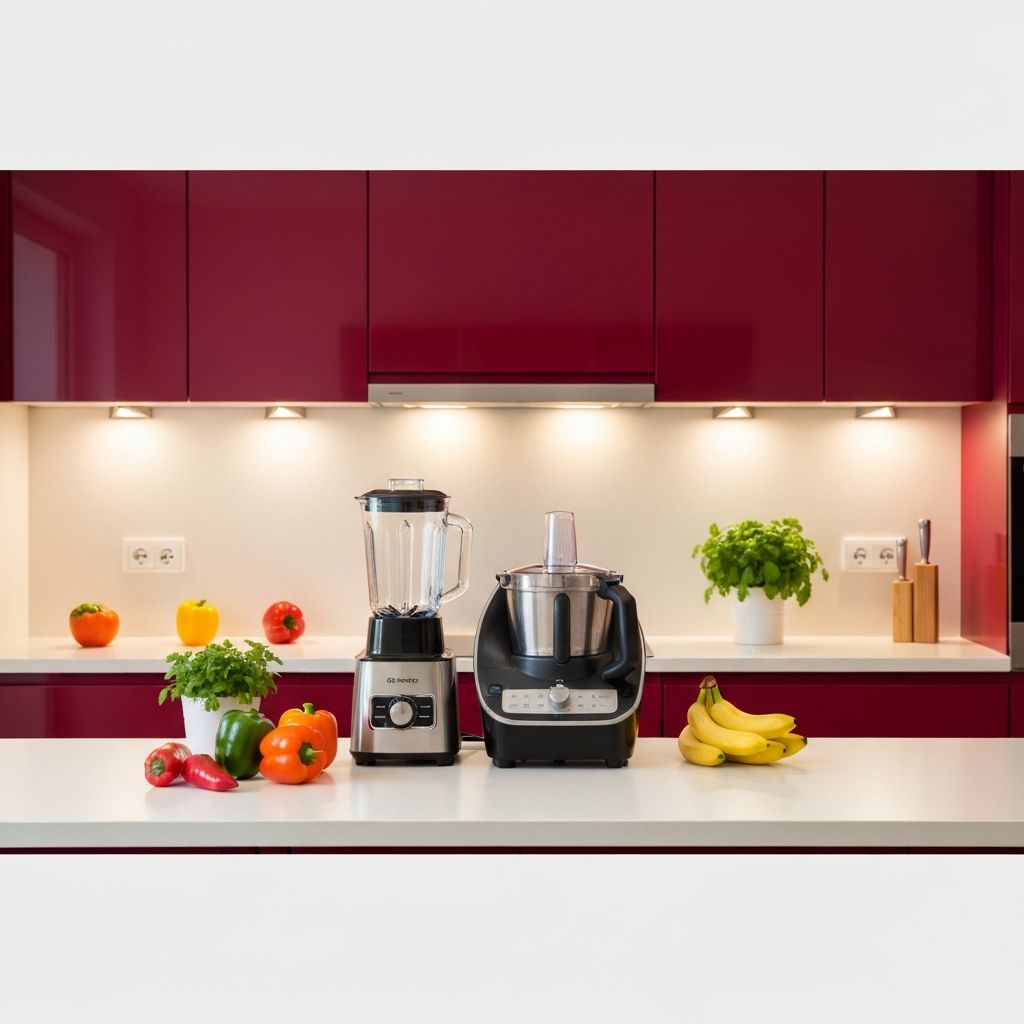
The fundamental difference between a blender and a food processor lies in their design and intended purpose. A blender features a tall, narrow container with blades at the bottom, designed to create a vortex that pulls ingredients down toward the blades. This design excels at processing liquid-based mixtures, creating smooth purees, and blending drinks.
A food processor, on the other hand, has a wide, flat bowl with interchangeable blades and discs. Its broader design allows for more even processing of solid and semi-solid ingredients. The wider bowl ensures that all ingredients come into contact with the blade, making it ideal for chopping, slicing, shredding, and mixing dough.
The blade design also differs significantly. Blender blades are typically small, sharp, and designed to create a powerful vortex in liquid. Food processor blades are larger, sometimes duller, and designed to cut and process solid ingredients more evenly. Many food processors also come with additional discs for slicing and shredding, capabilities that blenders simply cannot replicate.
When You Can Use a Blender Instead of a Food Processor
There are several tasks where a blender can successfully substitute for a food processor. Making smooth purees is one area where blenders actually excel over food processors. If a recipe calls for pureeing soup, sauce, or a smoothie-like mixture, a blender will often produce a smoother result than a food processor because of its vortex design and narrow container.
Making salad dressings and vinaigrettes is another task where a blender works well as a substitute. The blender's ability to emulsify liquids and create smooth, uniform mixtures makes it an excellent tool for dressings, especially those that require ingredients like garlic, shallots, or herbs to be finely blended.
Blending dips and spreads like hummus, pesto, and guacamole can be done in a blender, though the results may differ from what you would get in a food processor. A blender tends to produce a smoother, more uniform texture, while a food processor allows for a chunkier consistency. If you prefer your hummus silky smooth, a blender may actually be the better choice.
Making nut butters is possible in both appliances, though the process differs. In a blender, you may need to add a small amount of oil to help the nuts blend smoothly, as the tall, narrow container can make it difficult for the nuts to reach the blades. A food processor's wider bowl allows the nuts to circulate more freely and typically produces nut butter without needing additional oil.
When You Should Not Use a Blender as a Substitute
There are important tasks where a blender is not a suitable substitute for a food processor. Chopping vegetables to a specific consistency is one of these tasks. When a recipe calls for diced onions, chopped carrots, or minced garlic, a food processor can achieve these textures with precision using pulse control. A blender tends to either liquefy vegetables or leave them unevenly processed, with some pieces too fine and others too large.
Making pie crust, biscuit dough, or any recipe that requires cutting cold butter or shortening into flour is another task where a blender falls short. The food processor's wide blade and pulse function allow it to cut fat into flour quickly and evenly without overworking the dough. A blender cannot replicate this process effectively.
Shredding cheese, slicing vegetables, or creating julienne cuts are tasks that require a food processor's specialized disc attachments. Blenders have no mechanism for these types of uniform cutting tasks, and attempting to shred cheese in a blender will result in a melted, clumpy mess from the heat generated by the blades.
Processing large quantities of food is also better suited to a food processor. The wider bowl of a food processor accommodates more food at once and processes it more evenly. Blenders work best with smaller quantities, and overloading a blender can result in uneven processing, motor strain, and potential damage to the appliance.
Tips for Using a Blender as a Food Processor Substitute
If you need to use your blender as a food processor substitute, these tips will help you get the best results. First, work in small batches. Since blenders process food from the bottom up, smaller quantities ensure that all ingredients come into contact with the blades and are processed evenly.
Second, use the pulse function if your blender has one. Pulsing gives you more control over the texture of your food and prevents over-processing. Quick, short pulses will chop ingredients more evenly than running the blender continuously.
Third, add a small amount of liquid when processing thick or dry ingredients. A tablespoon or two of water, oil, or another liquid can help ingredients move freely in the blender container and prevent the blades from getting stuck. Be conservative with the liquid to avoid making the mixture too thin.
Fourth, use a tamper if your blender comes with one. High-performance blenders like Vitamix include tampers specifically designed to push ingredients down toward the blades without opening the lid. This is particularly helpful when processing thick mixtures that tend to air-pocket above the blades.
When to Invest in a Food Processor
If you frequently find yourself needing a food processor and only have a blender, it may be worth investing in one. Food processors are particularly valuable for bakers who regularly make doughs and pastries, for cooks who do a lot of vegetable prep work, and for anyone who makes homemade salsas, slaws, or other recipes that require specific textures.
Compact food processors, sometimes called mini choppers, are affordable and take up very little counter or storage space. These smaller models are perfect for tasks like chopping herbs, mincing garlic, making small batches of dressing, and processing nuts. They provide many of the benefits of a full-size food processor at a fraction of the cost and footprint.
Full-size food processors are a worthwhile investment for serious home cooks who process food regularly. Models from trusted brands like Cuisinart and KitchenAid offer reliable performance, multiple blade and disc options, and large bowl capacities that make food preparation faster and easier.
Conclusion
While a blender can substitute for a food processor in many situations, particularly for purees, smooth dips, and liquid-based recipes, there are important tasks where a food processor is the better or only suitable tool. Understanding the strengths and limitations of each appliance allows you to work smarter in the kitchen and achieve the best possible results. If you find yourself frequently needing food processor capabilities, even a compact mini chopper can fill the gap and expand your culinary capabilities significantly.
