
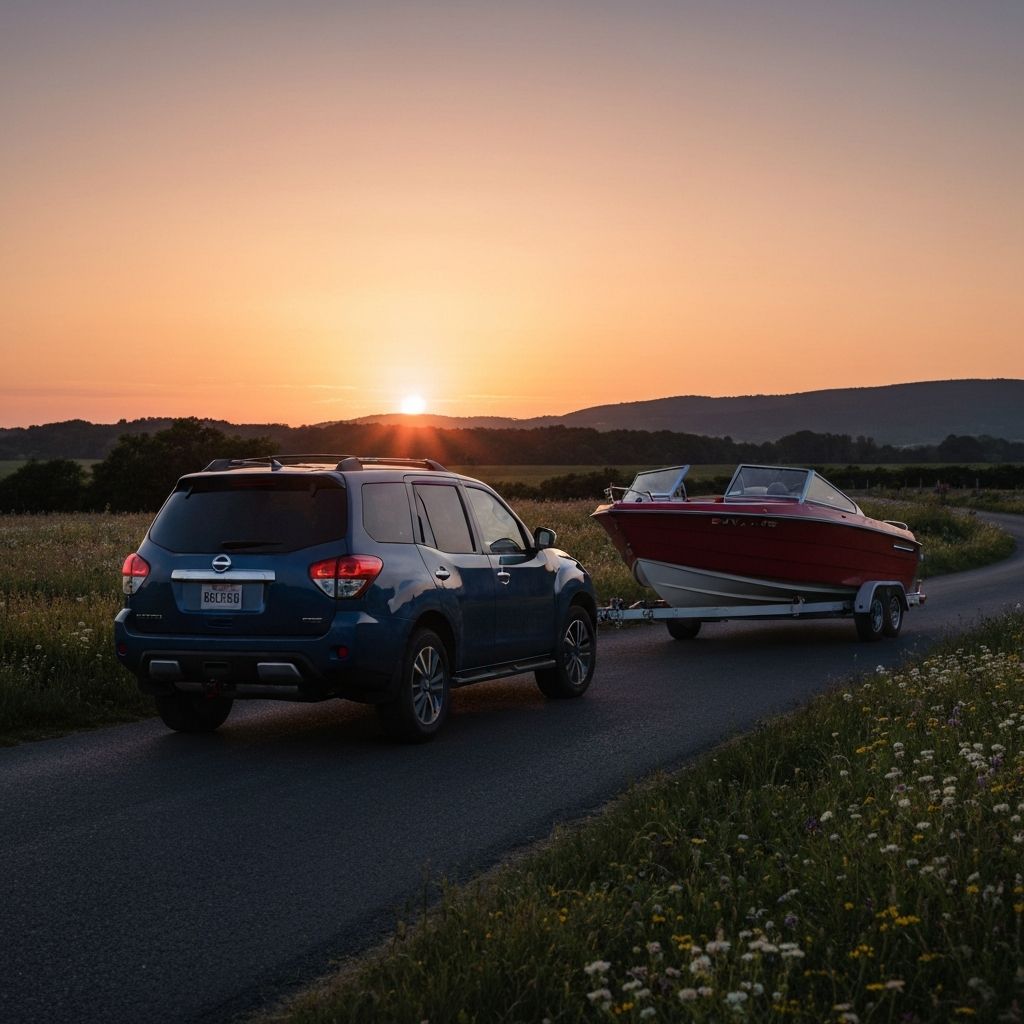
Can the 2018 Nissan Pathfinder SV Tow a Bayliner 175
The question of whether a specific vehicle can safely tow a specific boat is one that every boat owner or prospective boat buyer must answer before hitting the road. Towing a boat that exceeds your vehicle's capabilities is not only dangerous but can also cause significant damage to your vehicle's engine, transmission, brakes, and suspension. In this comprehensive guide, we will examine whether the 2018 Nissan Pathfinder SV is up to the task of towing a Bayliner 175 bowrider, covering everything from towing capacity and tongue weight to equipment requirements and driving tips.
The short answer is yes, the 2018 Nissan Pathfinder SV can tow a Bayliner 175. However, as with any towing situation, the details matter. Safely towing a boat requires more than simply having a vehicle with a sufficient towing capacity rating. You need to understand the total weight of the boat, trailer, fuel, gear, and passengers; ensure that your vehicle is properly equipped for towing; and follow best practices for safe trailer towing. Let us dive into the specifics to help you tow your Bayliner 175 with confidence.
2018 Nissan Pathfinder SV Towing Specifications
The 2018 Nissan Pathfinder SV is equipped with a 3.5-liter V6 engine that produces 284 horsepower and 259 pound-feet of torque, paired with a continuously variable transmission (CVT) that simulates seven gear ratios. When properly equipped with the factory towing package, the 2018 Pathfinder SV has a maximum towing capacity of 6,000 pounds. Without the towing package, the maximum towing capacity is reduced to approximately 3,500 pounds.
It is important to verify whether your specific Pathfinder SV is equipped with the towing package, as this significantly affects the vehicle's towing capability. The towing package typically includes a heavy-duty radiator, transmission oil cooler, trailer sway control, trailer hitch receiver, and wiring harness for trailer lights. If your Pathfinder did not come with the factory towing package, aftermarket towing accessories can be installed, but you should still adhere to the lower towing capacity unless the vehicle's cooling and braking systems have been upgraded to match the factory towing package specifications.
In addition to the maximum towing capacity, you need to consider the vehicle's payload capacity, which is the maximum weight that can be carried inside and on the vehicle, including passengers, cargo, and the tongue weight of the trailer. The 2018 Pathfinder SV has a payload capacity of approximately 1,500 pounds. Exceeding the payload capacity, even if you are within the towing capacity, can compromise vehicle handling, braking, and suspension performance.
Bayliner 175 Weight Specifications
The Bayliner 175 is a popular entry-level bowrider that is well-suited for recreational boating activities such as cruising, watersports, and fishing. To determine whether the Pathfinder can safely tow this boat, we need to account for the total weight of the towing package, which includes the dry weight of the boat, the weight of the trailer, the weight of fuel, and the weight of any gear, accessories, and equipment stored in the boat during transport.
The Bayliner 175 has a dry weight (hull only, without engine) of approximately 2,050 pounds. With the standard Mercury outboard or MerCruiser sterndrive engine, the total dry weight of the boat increases to approximately 2,600 to 2,800 pounds, depending on the specific engine configuration. A single-axle boat trailer suitable for the Bayliner 175 typically weighs between 600 and 900 pounds, depending on the material (galvanized steel vs. aluminum) and the capacity of the trailer.
When you add fuel (approximately 100 pounds for a full tank of the Bayliner 175's 21-gallon fuel tank), gear, safety equipment, and any additional accessories, the total towing weight of the Bayliner 175 package typically falls in the range of 3,400 to 3,900 pounds. This is well within the 6,000-pound towing capacity of the properly equipped 2018 Pathfinder SV and also within the 3,500-pound capacity of the non-towing-package version, though the margins are tighter in the latter case.
Understanding Tongue Weight and Weight Distribution
Tongue weight is the downward force that the trailer exerts on the hitch ball and, by extension, on the tow vehicle's rear axle. Proper tongue weight is critical for safe and stable towing. Too little tongue weight can cause the trailer to sway dangerously at highway speeds, while too much tongue weight can overload the rear axle, causing the front of the tow vehicle to lift and reducing steering control.
As a general rule, the tongue weight should be between ten and fifteen percent of the total trailer weight. For a Bayliner 175 towing package weighing approximately 3,500 pounds, the ideal tongue weight would be between 350 and 525 pounds. Most boat trailers are designed to produce tongue weight within this range when the boat is properly positioned on the trailer, but it is always a good idea to verify the actual tongue weight using a tongue weight scale, especially if you have added aftermarket accessories or equipment to the boat.
The tongue weight counts against your vehicle's payload capacity, not just the towing capacity. So if your Bayliner 175 produces a tongue weight of 450 pounds, that 450 pounds must be subtracted from the Pathfinder's 1,500-pound payload capacity when calculating how much additional weight you can carry inside the vehicle. This is an important consideration if you plan to travel with a full load of passengers and gear in the Pathfinder while towing the boat.
Essential Towing Equipment and Setup
Before you hit the road with your Bayliner 175 in tow, make sure your Pathfinder is properly equipped with the necessary towing accessories. At a minimum, you will need a Class III trailer hitch receiver (two-inch opening), a hitch ball of the correct size for your trailer coupler (typically two inches for single-axle boat trailers), a ball mount with the appropriate rise or drop to level the trailer when connected, safety chains, and a wiring adapter for the trailer lights.
If your Pathfinder came with the factory towing package, the hitch receiver and wiring harness should already be installed. If not, a quality aftermarket hitch can be installed by a qualified mechanic or at a towing accessories retailer. Make sure the hitch is rated for the weight you will be towing and that it is properly bolted to the vehicle's frame, not just the bumper.
Additional towing accessories that are highly recommended include extended side mirrors (if the boat and trailer are wider than your vehicle), a weight distribution hitch (for heavier loads), and a trailer brake controller if your trailer is equipped with brakes. While trailers under 3,500 pounds are not always required to have brakes (regulations vary by state), having trailer brakes significantly improves stopping performance and reduces wear on the Pathfinder's braking system.
Pre-Trip Preparation and Safety Checks
A thorough pre-trip inspection is essential every time you tow your Bayliner 175. Start by checking the trailer's tire pressure and condition, ensuring that the tires are properly inflated to the pressure specified on the tire sidewall and that there are no signs of wear, cracking, or damage. Underinflated or worn trailer tires are a leading cause of trailer blowouts, which can be extremely dangerous at highway speeds.
Verify that all trailer lights are functioning correctly, including brake lights, turn signals, and running lights. Check that the trailer coupler is securely latched onto the hitch ball and that the coupler locking mechanism is engaged. Attach the safety chains in a crossed pattern beneath the coupler, which creates a cradle that will catch the trailer tongue if the coupler should separate from the hitch ball during transit.
Secure the boat to the trailer using the winch strap at the bow and at least two transom tie-down straps at the stern. Verify that the outboard or sterndrive is properly tilted and secured for road travel, and remove or secure any loose items in the boat that could become projectiles in the event of a sudden stop. Disconnect the boat's battery to prevent accidental starting during transit, and make sure the drain plug is removed to allow any accumulated water to drain during transport.
Driving Tips for Towing Safely
Towing a boat changes the driving dynamics of your vehicle significantly, and adjusting your driving habits accordingly is essential for safe towing. The combined weight of the Pathfinder and the Bayliner 175 towing package is approximately 8,500 to 9,000 pounds, which means longer stopping distances, wider turning radii, and reduced acceleration compared to driving the Pathfinder alone.
Maintain a following distance of at least four to six seconds behind the vehicle ahead of you, as the additional weight of the trailer significantly increases your stopping distance. Drive at moderate speeds, generally no faster than 65 miles per hour and often slower, depending on road conditions and trailer stability. Higher speeds increase the risk of trailer sway and reduce your ability to react to unexpected situations.
When changing lanes, remember that the trailer needs extra space to complete the lane change. Use your turn signals well in advance, check your mirrors carefully, and give yourself plenty of room. When making turns, swing wider than you normally would to prevent the trailer wheels from cutting the corner and potentially hitting curbs, signs, or other obstacles. Practice backing up in an empty parking lot before your first trip, as backing a boat trailer requires the counterintuitive technique of turning the steering wheel in the opposite direction from the way you want the trailer to go.
Maintenance Considerations for Regular Towing
Regular towing puts additional stress on your vehicle's engine, transmission, cooling system, brakes, and suspension. If you plan to tow your Bayliner 175 regularly, consider following the severe duty maintenance schedule in your Pathfinder's owner's manual, which typically calls for more frequent oil changes, transmission fluid changes, and brake inspections. Pay particular attention to the transmission, as the CVT in the Pathfinder generates more heat when towing and may benefit from more frequent fluid changes.
Monitor your engine temperature while towing, especially on hot days, during long uphill climbs, and in stop-and-go traffic. If the temperature gauge begins to climb toward the red zone, reduce your speed, turn off the air conditioning, and if necessary, pull over and allow the engine to cool. Overheating can cause serious and expensive engine damage that is not covered under the vehicle's warranty if it is determined to have been caused by towing beyond the vehicle's rated capacity.
Finally, maintain your trailer as diligently as you maintain your tow vehicle. Grease the wheel bearings at least once a season or every 2,000 miles of towing, check and maintain the trailer brakes, inspect the trailer frame for signs of rust or damage, and test all lights before every trip. A well-maintained trailer is not only safer but also protects your valuable boat investment and helps ensure that every towing experience is a smooth and enjoyable one.
