
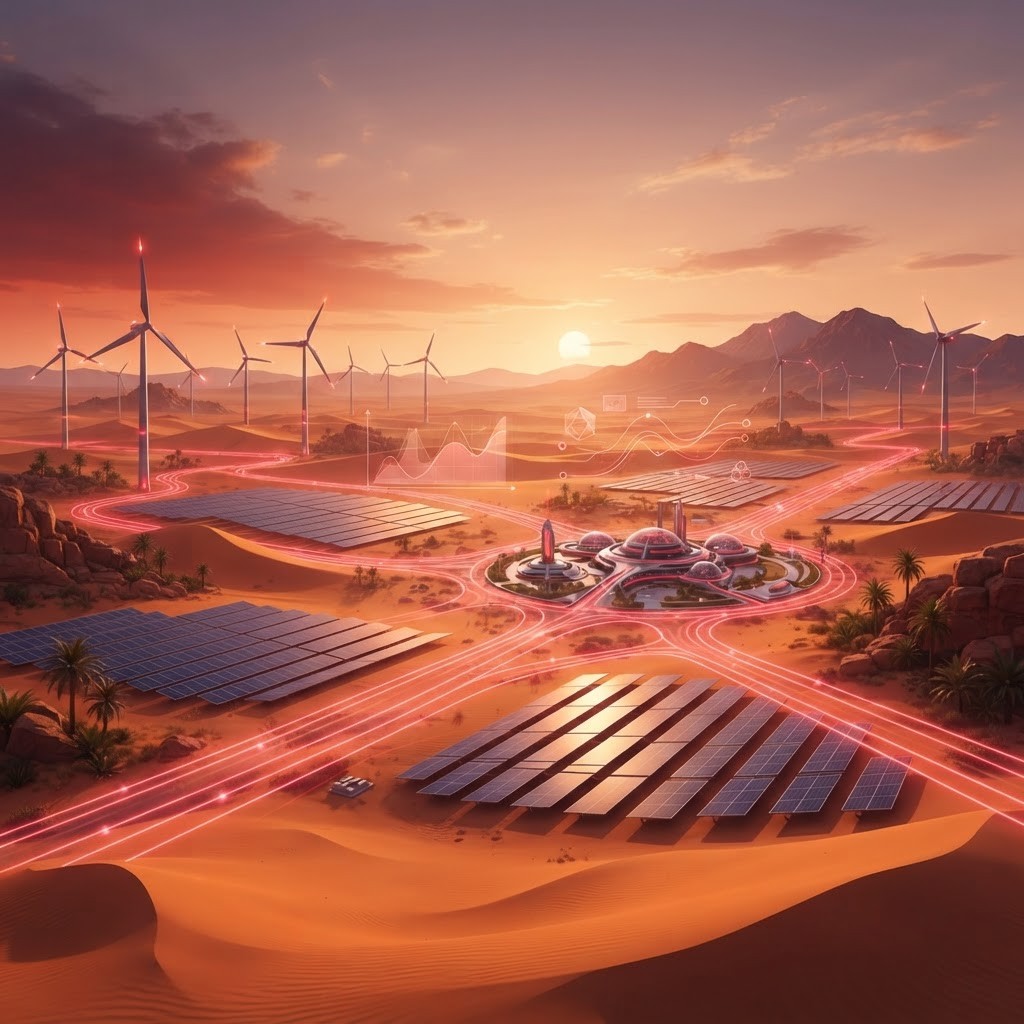
Mauritania's Rise as a Renewable Energy Powerhouse
Positioned along the Atlantic coast of northwest Africa, Mauritania enjoys some of the highest solar irradiation and most consistent coastal wind speeds on the continent. These natural advantages, combined with vast, sparsely populated land, have transformed the country into a magnet for renewable energy investment. Over the past decade, the government has prioritized diversifying an energy mix that was historically dependent on imported fossil fuels, setting targets to significantly raise the share of renewables in national generation.
The result is a fast-maturing ecosystem of developers, utilities, and international partners working to expand clean capacity, strengthen the grid, and position Mauritania as a future exporter of green hydrogen and ammonia. Below, we profile the companies driving this remarkable transformation.
1. SOMELEC (Société Mauritanienne d'Electricité)
As the national electricity utility, SOMELEC is central to Mauritania's renewable ambitions. The company operates and integrates large-scale solar and wind facilities into the national grid, manages transmission infrastructure, and coordinates rural electrification. Its role in balancing intermittent renewable output with reliable supply makes it a cornerstone of the country's clean energy strategy.
2. Masdar (Regional Development Partner)
The Abu Dhabi-based clean energy developer has been a notable contributor to Mauritania's solar expansion, bringing global engineering expertise and financing capacity. Masdar's involvement in utility-scale photovoltaic projects has helped demonstrate that large solar plants can be delivered efficiently in the Sahelian climate, encouraging further foreign direct investment.
3. CWP Global
CWP Global attracted international attention with its ambitious green hydrogen vision for Mauritania, centered on massive combined wind and solar capacity to produce clean hydrogen and ammonia for export. The project underscores Mauritania's potential to become a global green fuel hub, leveraging its coastal wind corridors and desert sunshine.
4. Chariot Limited
Chariot has advanced green hydrogen development in Mauritania through large-scale wind and solar concessions. The company focuses on producing low-cost renewable hydrogen aimed at both domestic industrial decarbonization and international markets, positioning the country within the emerging global hydrogen economy.
5. GreenGo Energy
GreenGo Energy has pursued integrated renewable projects combining generation with green hydrogen production. Its emphasis on scalable, modular development aligns with Mauritania's goal of attracting phased investment that can grow alongside grid capacity and export infrastructure.
6. Infinity Power
A prominent pan-African renewable developer, Infinity Power brings a portfolio approach to Mauritania, evaluating opportunities across solar, wind, and storage. Its regional footprint enables knowledge transfer and operational efficiencies that benefit local project delivery.
7. Total Eren
With deep experience in utility-scale renewables worldwide, Total Eren has explored Mauritanian solar and wind opportunities that complement broader energy transition goals. The company's engineering discipline and access to capital make it a credible long-term partner for large installations.
8. AMEA Power
AMEA Power has expanded its African renewable presence, and Mauritania fits its strategy of developing solar and wind assets in high-resource markets. The company is known for delivering bankable projects that meet international environmental and social standards.
9. Voltalia
Voltalia combines development, construction, and operation of renewable plants, offering an end-to-end model well suited to emerging markets. Its interest in Mauritania reflects confidence in the country's resource quality and improving investment climate.
10. GIZ Renewable Energy Programs
While not a commercial developer, the German development agency GIZ plays a vital enabling role, supporting policy frameworks, technical training, and off-grid renewable solutions for remote communities. Its programs strengthen the institutional foundations that private companies rely on.
Key Trends Shaping the Sector
Several trends define Mauritania's renewable landscape. First, green hydrogen has become the headline opportunity, with multiple gigawatt-scale projects targeting export markets in Europe and beyond. Second, hybrid solar-wind-storage systems are gaining traction as a way to deliver stable power despite resource variability. Third, rural electrification through decentralized solar mini-grids is expanding energy access to remote pastoral and desert communities.
Benefits for Mauritania's Economy
The renewable boom promises substantial economic dividends: job creation in construction and operations, technology transfer, reduced dependence on imported fuels, and new export revenue streams from green hydrogen. Lower electricity costs also support industrialization, particularly in mining and processing, which are pillars of the national economy.
Conclusion
Mauritania stands at an inflection point. With world-class solar and wind resources, a supportive policy direction, and growing interest from established international developers, the country is well placed to become a renewable energy leader in Africa. The companies profiled here are laying the groundwork for a cleaner, more resilient, and export-oriented energy future.
