
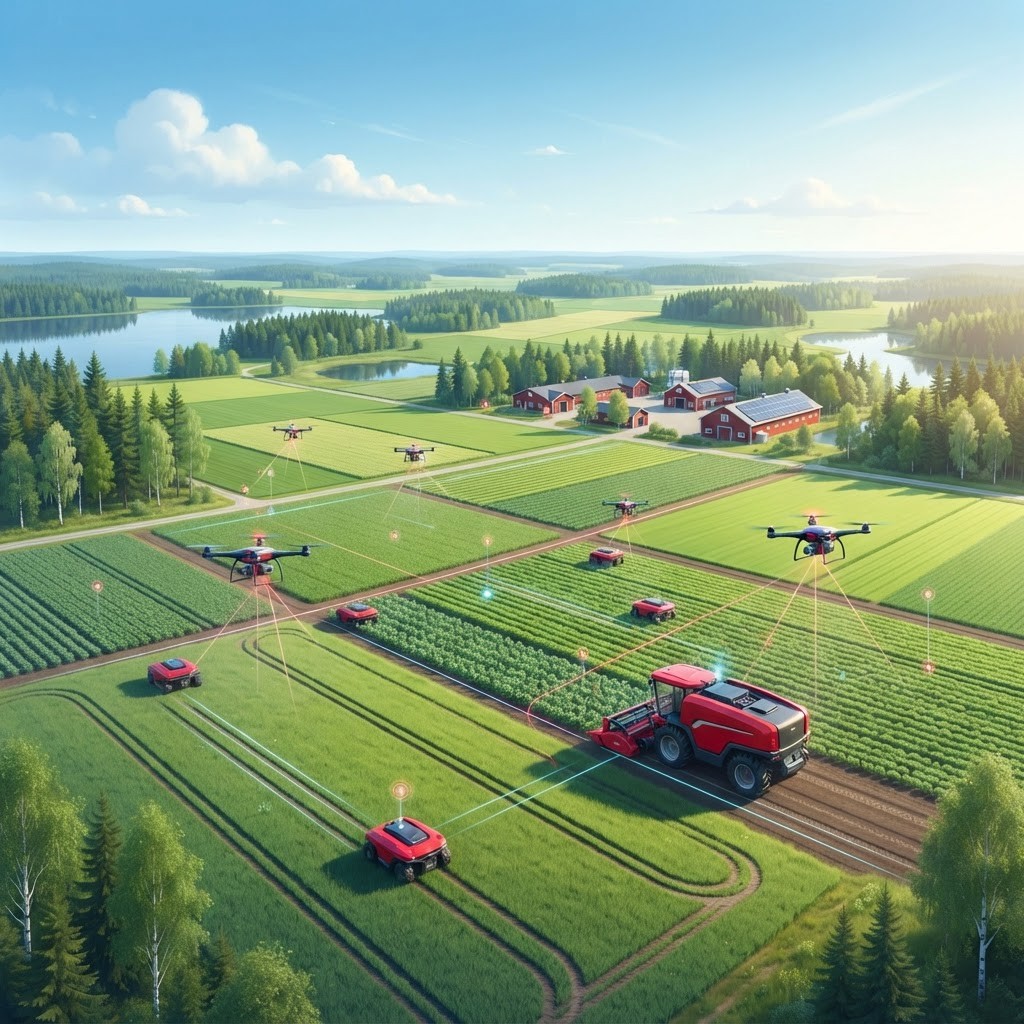
Farming in the Land of a Thousand Lakes
Agriculture in Finland is shaped by a unique environment: long summer days, short but intense growing seasons, and a strong cultural connection to the land. Despite challenging northern conditions, Finnish farming companies have developed highly efficient and sustainable practices that ensure a steady supply of quality food. These companies range from large cooperatives to specialised producers, together forming the backbone of the nation's food security.
Finnish agriculture is distinguished by its emphasis on cleanliness, animal welfare, and low use of antibiotics and pesticides. This reputation for purity and safety has become a valuable asset, both domestically and in export markets where consumers increasingly seek trustworthy food sources.
The Structure of Finnish Farming
Cooperatives play a central role in Finnish agriculture, allowing individual farmers to pool resources, share expertise, and access broader markets. Alongside these cooperatives, dedicated companies focus on dairy, meat, grain, and horticultural production. The sector benefits from strong research support and government policies that encourage sustainability and innovation.
Dairy and meat production are particularly significant, supported by well-established processing companies that transform raw agricultural output into consumer products. Grain farming, potato cultivation, and berry production also contribute meaningfully to the agricultural economy, with many products celebrated for their exceptional quality.
Ten Leading Farming Companies
Valio is Finland's most prominent dairy company, owned by a cooperative of farmers and renowned for high-quality milk products and pioneering nutritional innovation.
Atria is a major player in meat and food production, working closely with Finnish farmers to deliver quality pork, poultry, and beef products.
HKScan Finland is another leading meat producer, emphasising traceability, animal welfare, and responsible farming partnerships.
Apetit specialises in vegetables and plant-based foods, sourcing directly from Finnish farms and championing domestic produce.
Raisio focuses on grain-based and plant-derived products, combining agricultural expertise with health-oriented innovation.
Hankkija supports the farming community with feed, supplies, and agricultural services that strengthen production across the sector.
Mildola is recognised for oilseed processing and vegetable oil production rooted in Finnish crops.
Paulig-linked grain partners contribute to the cultivation and supply of quality cereals used in food manufacturing.
Kotimaista producers network unites farmers dedicated to domestic, sustainable food production.
Polarica is known for wild berries and natural products harvested from Finland's forests, blending agriculture with the country's foraging traditions.
Sustainability and Innovation
Sustainability is deeply embedded in Finnish farming. Companies invest in reducing emissions, improving soil health, and adopting precision agriculture technologies that optimise inputs. Practices such as crop rotation, responsible fertiliser use, and water management help preserve the environment while maintaining productivity.
Innovation is equally central. Finnish farming companies collaborate with research institutions to develop climate-resilient crops, plant-based proteins, and advanced processing methods. The rise of plant-based foods, in particular, has opened new opportunities for producers to diversify and meet changing consumer preferences.
Trends Shaping the Sector
Several trends are influencing Finnish agriculture. Consumer demand for locally produced, traceable food continues to grow, reinforcing the value of domestic farming. Climate change presents both challenges and opportunities, prompting investment in resilient practices and new crop varieties suited to shifting conditions.
Digital agriculture is transforming operations, with sensors, drones, and data analytics enabling farmers to monitor crops and livestock more precisely. These technologies improve efficiency, reduce waste, and support the sector's sustainability goals.
Supporting Food Security
Finnish farming companies are vital to national food security, ensuring a reliable domestic supply even amid global uncertainties. Their commitment to quality, safety, and sustainability provides consumers with confidence in the food they purchase. By strengthening local production, these companies also reduce dependence on imports and support rural communities.
The Cooperative Model and Rural Vitality
The cooperative structure that underpins much of Finnish agriculture is more than an economic arrangement; it is a social institution that sustains rural communities. By allowing farmers to share ownership of processing and marketing operations, cooperatives ensure that value created on the farm remains within local economies. This model has proven remarkably resilient, helping Finnish farmers weather market fluctuations and maintain their livelihoods across generations. It also fosters knowledge sharing, collective investment, and a strong sense of shared purpose.
Rural vitality depends heavily on the health of the farming sector. Beyond food production, farms preserve the cultural landscape, maintain biodiversity, and support related industries such as tourism, food processing, and equipment supply. Farming companies that invest in their communities help keep villages alive, providing employment and services that might otherwise disappear. This broader social role adds significance to the work of Finnish agricultural producers.
Quality and the Clean Food Reputation
Finnish food enjoys a strong reputation for cleanliness and safety, built on rigorous standards and low use of antibiotics and pesticides. This reputation is a valuable asset in both domestic and export markets, where consumers increasingly prioritise health and transparency. Farming companies protect this advantage through careful quality control, traceability systems, and adherence to strict welfare and environmental standards. Maintaining this trust is essential to the long-term competitiveness of Finnish agriculture.
Conclusion
Finland's farming companies exemplify how tradition and innovation can coexist to produce safe, sustainable, and high-quality food. From dairy and meat to vegetables and wild berries, these producers demonstrate resilience and responsibility in a demanding environment. As consumer expectations and climate realities evolve, Finnish agriculture is well positioned to continue nourishing the nation and beyond.
