
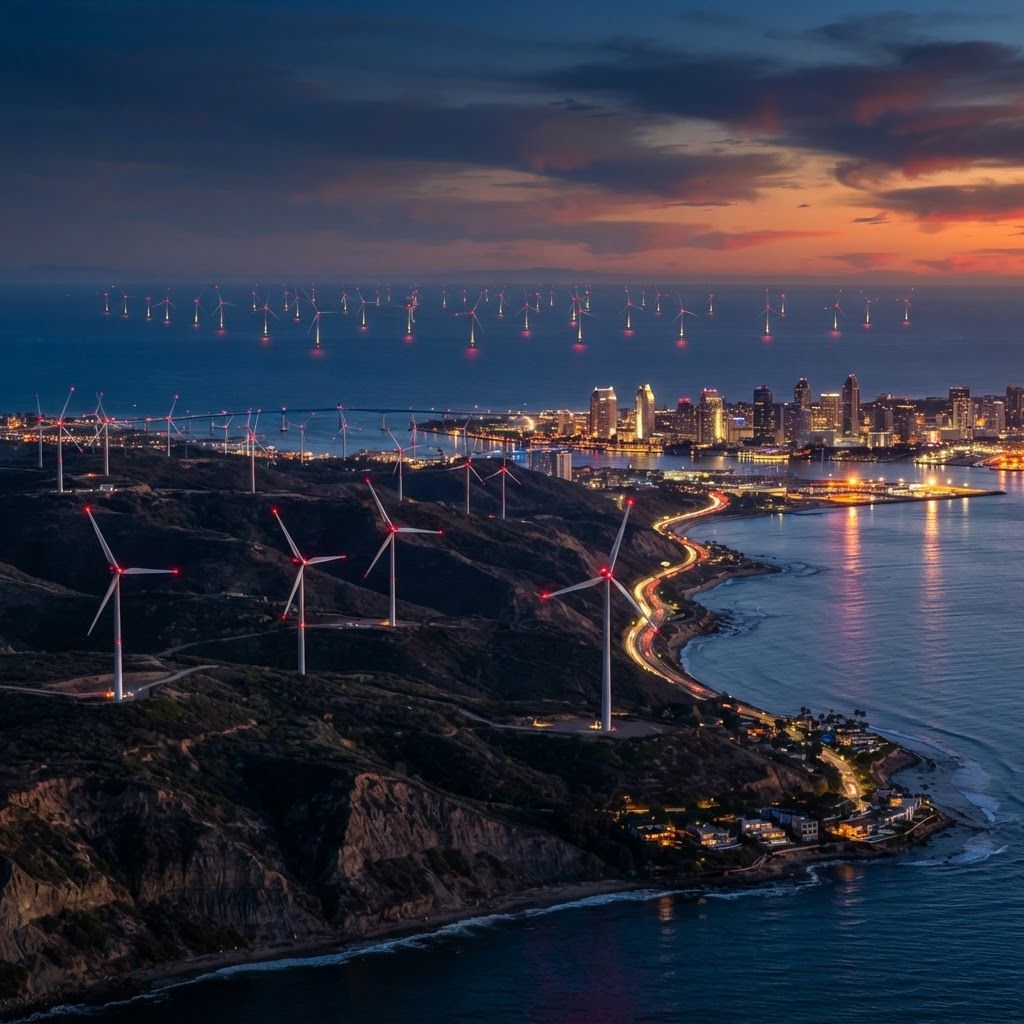
Wind Energy and the San Diego Market
San Diego is better known for solar than wind, yet wind power remains part of the region's clean-electricity portfolio and professional ecosystem. Local developers manage projects across North America, engineering firms support infrastructure, and turbine companies supply the broader California market. Offshore wind development elsewhere in California may also create opportunities for San Diego's port, maritime, defense, and research capabilities.
1. EDF Renewables North America
San Diego-headquartered EDF Renewables North America is the clearest local leader in wind development. The company develops, constructs, owns, and operates renewable projects, including onshore wind. Its capabilities cover site assessment, permitting, procurement, operations, maintenance, and asset management across a large portfolio.
2. Invenergy
Invenergy develops and operates wind, solar, storage, transmission, and other energy infrastructure. Although its headquarters are outside San Diego, its national project experience makes it relevant to California energy buyers and partners. The company is known for managing large projects through development and long-term operations.
3. NextEra Energy Resources
NextEra Energy Resources is one of North America's largest renewable generators and a major wind owner. Its scale, operational systems, and utility relationships shape the market supplying California. San Diego organizations evaluating renewable procurement may encounter its projects through power contracts and portfolio arrangements.
4. Pattern Energy
Pattern Energy develops and operates wind and transmission projects, with substantial experience in the western United States. It emphasizes large-scale infrastructure and long-term asset operation. Its work is relevant to California's need to move renewable electricity from high-resource areas to coastal demand centers.
5. Clearway Energy Group
Clearway develops and operates wind, solar, and storage projects across the country, including significant California assets. Corporate and utility buyers value experienced counterparties that can structure long-term clean-power agreements, manage construction risk, and maintain generation performance over decades.
6. Vestas
Vestas designs, manufactures, installs, and services wind turbines globally. Its relevance to San Diego lies in equipment supply, maintenance expertise, performance analytics, and the broader renewable supply chain. Project owners should evaluate turbine suitability, service strategy, parts availability, warranties, and long-term production assumptions.
7. GE Vernova
GE Vernova provides wind turbines and grid technologies that support renewable generation. Its portfolio spans onshore and offshore equipment as well as systems needed to transmit and manage electricity. This integrated perspective matters as California plans increasingly complex renewable and grid investments.
8. Siemens Gamesa
Siemens Gamesa is a global wind turbine manufacturer with extensive onshore and offshore experience. The company is particularly relevant to the technical evolution of offshore wind, larger turbines, service logistics, and industrial-scale manufacturing. California's future offshore market may draw on this global expertise.
9. DNV
DNV provides independent technical advisory, certification, due diligence, and risk-management services to renewable projects. Developers, lenders, and owners use specialists like DNV to evaluate energy yield, equipment, contracts, and performance. Independent analysis helps make large wind investments financeable and accountable.
10. Black & Veatch
Black & Veatch provides engineering, procurement, consulting, and construction services across power infrastructure, including renewable generation and transmission. Its expertise can support grid connections, substations, owner's engineering, and project integration, areas crucial to delivering wind energy reliably to Southern California.
Why Wind Development Is Different Here
Dense coastal development, military airspace, environmental resources, terrain, and limited nearby sites constrain large wind projects within San Diego County. Therefore, much of the wind energy consumed locally is generated elsewhere and delivered through regional transmission or contracted portfolios. The county's opportunity may center on engineering, software, maritime services, microgrids, and supply-chain expertise rather than dense turbine deployment.
How to Evaluate a Wind Partner
For project development, examine resource data, interconnection position, land rights, permitting strategy, wildlife studies, community engagement, turbine selection, construction capability, and financial strength. For energy procurement, assess contract duration, delivery point, shape, curtailment, credit, environmental attributes, and settlement risk. Long-term operations and decommissioning plans deserve as much attention as initial construction.
Future Outlook
California's offshore wind ambitions could stimulate port upgrades, vessel services, workforce training, transmission planning, and research. San Diego's maritime cluster is well placed to contribute, even if initial projects are farther north. Meanwhile, improved forecasting, repowering, storage, and regional transmission will increase the value of existing onshore wind.
Final Perspective
The best company depends on whether the need is development, equipment, engineering, advice, or clean-power procurement. San Diego businesses should look beyond headquarters and evaluate proven capability, local constraints, safety, community practices, and full-lifecycle performance.
Questions to Ask Before Making a Decision
Before selecting a provider, request a clear explanation of scope, responsibilities, timelines, pricing, and ongoing support. Ask for examples of comparable San Diego work and confirm which team members will remain involved after the initial consultation or sale. Independent references, current licenses or certifications, written warranties, and transparent contract terms provide stronger evidence than promotional claims alone. Consider how the organization handles delays, disputes, security, safety, regulatory change, and unexpected costs. A thoughtful comparison should account for total long-term value, not only the lowest starting price. Shortlist several candidates, document the same questions for each, and verify important claims directly. This disciplined process makes it easier to identify a capable partner whose expertise, capacity, communication style, and risk controls match the specific needs of the project.
