
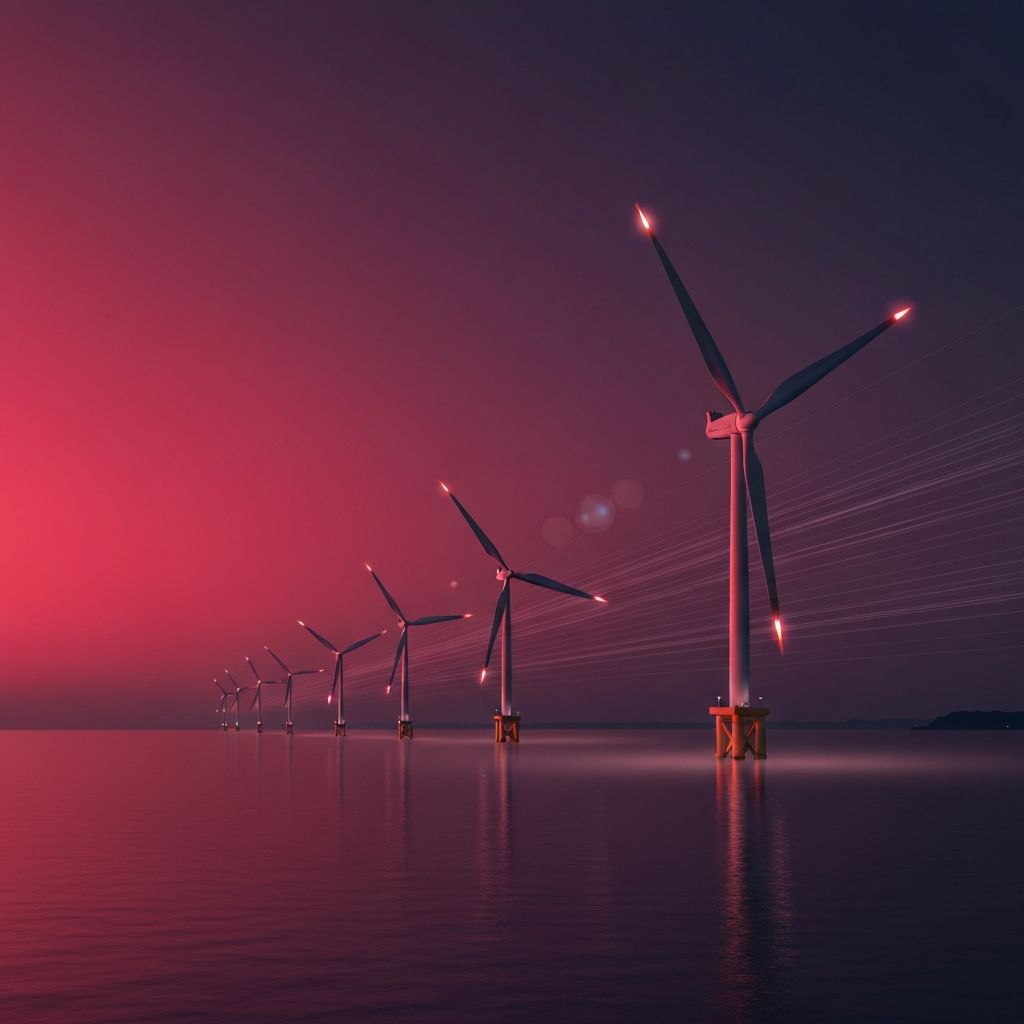
Wind Power: A Strategic Pillar for Japan's Future
With more than 35,000 kilometers of coastline and strong, consistent winds along several regions, Japan is positioning wind energy as a strategic pillar of its long-term energy mix. The government has set ambitious targets to install up to 45 gigawatts of offshore wind capacity by 2040, creating one of the most exciting growth markets in Asia. Onshore wind continues to expand as well, particularly in Hokkaido, Tohoku, and Kyushu, where wind resources are abundant.
This transformation is being led by a combination of dedicated wind developers, traditional power utilities, heavy industry conglomerates, and international partners. Here are the ten leading wind energy companies powering Japan's offshore and onshore wind revolution.
The Top 10 Wind Energy Companies in Japan
1. Eurus Energy Holdings
Eurus Energy Holdings is one of the largest wind power operators in Japan, with a portfolio that spans onshore and offshore projects. Backed by Toyota Tsusho and TEPCO, the company has decades of experience developing and operating wind farms across the country and overseas.
2. Japan Wind Development
Japan Wind Development is a pioneer in the domestic wind sector, developing and operating wind farms primarily in northern Japan. The company has expanded into battery-paired wind projects to address grid intermittency challenges.
3. J-Power (Electric Power Development Co.)
J-Power is one of Japan's most established power generators with a strong renewable portfolio. Its wind power business operates numerous farms across the country and is actively involved in next-generation offshore wind projects.
4. Mitsubishi Heavy Industries
Mitsubishi Heavy Industries is a key supplier of advanced wind turbine technology, including offshore platforms developed through its partnership with leading global turbine manufacturers. The company also provides engineering services for large-scale wind installations.
5. Toshiba Energy Systems and Solutions
Toshiba supplies wind turbine components, grid integration technologies, and engineering services for wind power projects. Its solutions support stable connection of variable wind output to Japan's transmission network.
6. Hitachi Energy Japan
Hitachi Energy provides transformers, switchgear, HVDC links, and digital grid solutions that are critical for offshore wind farm integration. Its technology enables remote wind assets to deliver power to densely populated urban centers.
7. Renova Inc.
Renova has expanded from biomass and solar into the wind sector, participating in major offshore wind auctions. The company is committed to large-scale renewable development as part of Japan's decarbonization roadmap.
8. Shizen Energy
Shizen Energy develops and operates wind power projects across Japan, with a focus on community-friendly designs and integrated renewable solutions. The company emphasizes long-term partnerships with local stakeholders.
9. ORIX Corporation
ORIX has invested in numerous wind projects as part of its diversified renewable portfolio. Its financial strength and project management capabilities make it a reliable partner for large-scale wind development.
10. TEPCO Renewable Power
TEPCO Renewable Power, a subsidiary of Tokyo Electric Power Company, focuses on developing and operating renewable assets, including significant investments in offshore wind. It plays a central role in TEPCO's transition toward cleaner generation.
Offshore Wind: Japan's Next Frontier
While onshore wind has grown steadily for two decades, offshore wind is widely viewed as the next major growth driver. Auctions for fixed-bottom offshore projects in regions such as Akita and Chiba have attracted intense competition, often led by consortia involving Japanese trading houses, utilities, and international turbine OEMs. Floating offshore wind is also being piloted off the coasts of Goto and Nagasaki, leveraging Japan's deep coastal waters and strong maritime engineering capabilities.
Challenges include grid expansion, port infrastructure upgrades, supply chain localization, and complex environmental assessments. Despite these hurdles, the momentum is strong, with several gigawatt-scale projects expected to come online in the second half of this decade.
Conclusion
Wind energy is set to play an increasingly significant role in Japan's clean power future. The ten companies highlighted here represent the leadership, expertise, and ambition required to scale wind power to meet national climate goals. From offshore mega-projects to community-based onshore wind farms, these organizations are helping reshape Japan's electricity system for a sustainable future.
