
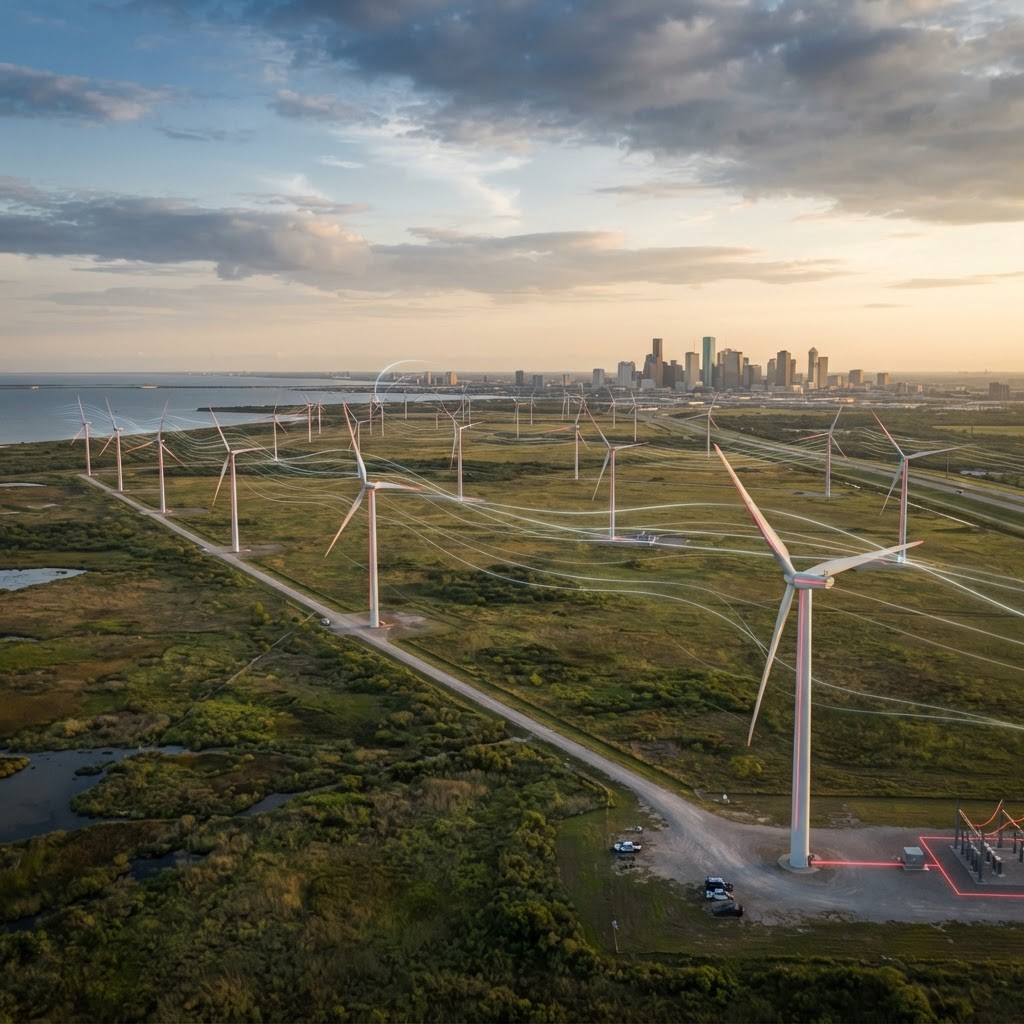
Houston’s Role in the Wind Industry
Many of Texas’s strongest wind resources lie far from Houston, but the city supplies crucial capital, engineering, trading, legal, and operational expertise. Developers based in or connected to Houston structure power contracts, manage construction, monitor fleets, and coordinate transmission. The Gulf Coast also gives the region a potential role in offshore wind and port-based supply chains.
This list highlights companies with strong Houston ties or major relevance to the local wind market. It covers developers and operators as well as technology providers, reflecting the full ecosystem required to turn moving air into dependable electricity.
1. EDP Renewables North America
EDP Renewables North America is headquartered in Houston and operates a large portfolio of wind projects. The company handles site development, power marketing, construction oversight, operations, and community relationships. Its long record in North American wind makes it a cornerstone of Houston’s renewable sector.
2. RWE
RWE maintains a substantial Houston presence and is a leading owner and operator of onshore wind assets. Global offshore experience also positions it to assess emerging coastal opportunities. Scale, technical expertise, and a broad renewables pipeline distinguish the company.
3. ENGIE North America
Houston-headquartered ENGIE develops and operates wind, solar, and storage projects while offering energy solutions to customers. Its commercial capabilities help connect wind farms with utilities and corporate buyers. An integrated portfolio can also support more flexible power products.
4. Pattern Energy
Pattern Energy develops and operates major renewable and transmission projects. The company is known for tackling large, complex developments that require extensive stakeholder engagement. Its transmission focus is particularly important because grid capacity determines whether remote wind resources can reach demand centers.
5. Clearway Energy Group
Clearway owns and develops wind projects across key United States markets, including Texas. Long-term operations and power-purchase experience are core capabilities. The company’s broader solar and storage activity allows it to participate in diversified renewable portfolios.
6. Leeward Renewable Energy
Leeward Renewable Energy owns and operates a substantial wind fleet and is actively expanding across renewable technologies. Its work includes repowering older assets with newer equipment, which can improve production at established sites. Asset optimization is becoming increasingly important as the first generation of Texas wind farms ages.
7. Ørsted
Ørsted is best known globally for offshore wind but also has onshore renewable operations in the United States and a Houston presence. Its project-development and marine-energy experience are relevant to Gulf Coast conversations. Offshore projects require careful evaluation of economics, ports, wildlife, fisheries, transmission, and storm design.
8. bp Wind Energy
bp has managed wind investments as part of its broader United States energy portfolio from its Houston base. The organization contributes trading, operations, and large-project capabilities. Its evolving strategy illustrates how integrated energy companies continue to reassess the role of renewables in their portfolios.
9. Siemens Gamesa
Siemens Gamesa supplies wind turbine technology and services globally. Although manufacturing and field operations extend far beyond Houston, its equipment and technical support are significant to developers operating Texas fleets. Turbine reliability, parts availability, digital monitoring, and long-term service economics are central buyer considerations.
10. Vestas
Vestas is another leading turbine manufacturer and service provider with extensive experience in the United States wind market. Its technology operates across Texas, supported by fleet monitoring and maintenance capabilities. Manufacturer financial strength and service depth matter because wind assets are expected to operate for decades.
What Defines a Strong Wind Company
Successful wind developers combine resource assessment, land agreements, environmental review, interconnection, power marketing, financing, construction, and operations. Community engagement is essential because projects affect landowners, roads, tax bases, and local views. Strong operators also prioritize technician safety and maintain clear plans for equipment removal or repowering at the end of project life.
Industry Trends
Repowering is replacing older turbines with more productive equipment at proven sites. Storage and improved forecasting are helping wind participate more effectively in volatile power markets. Transmission remains a major constraint, while supply-chain costs and interest rates influence new construction. In offshore wind, larger turbines offer scale but create new installation and maintenance challenges.
Houston’s greatest strength is coordination: the city brings together developers, manufacturers, financiers, traders, and engineering specialists. Companies that pair technical performance with responsible land stewardship and disciplined market strategy will be best positioned for the next phase of wind growth.
