
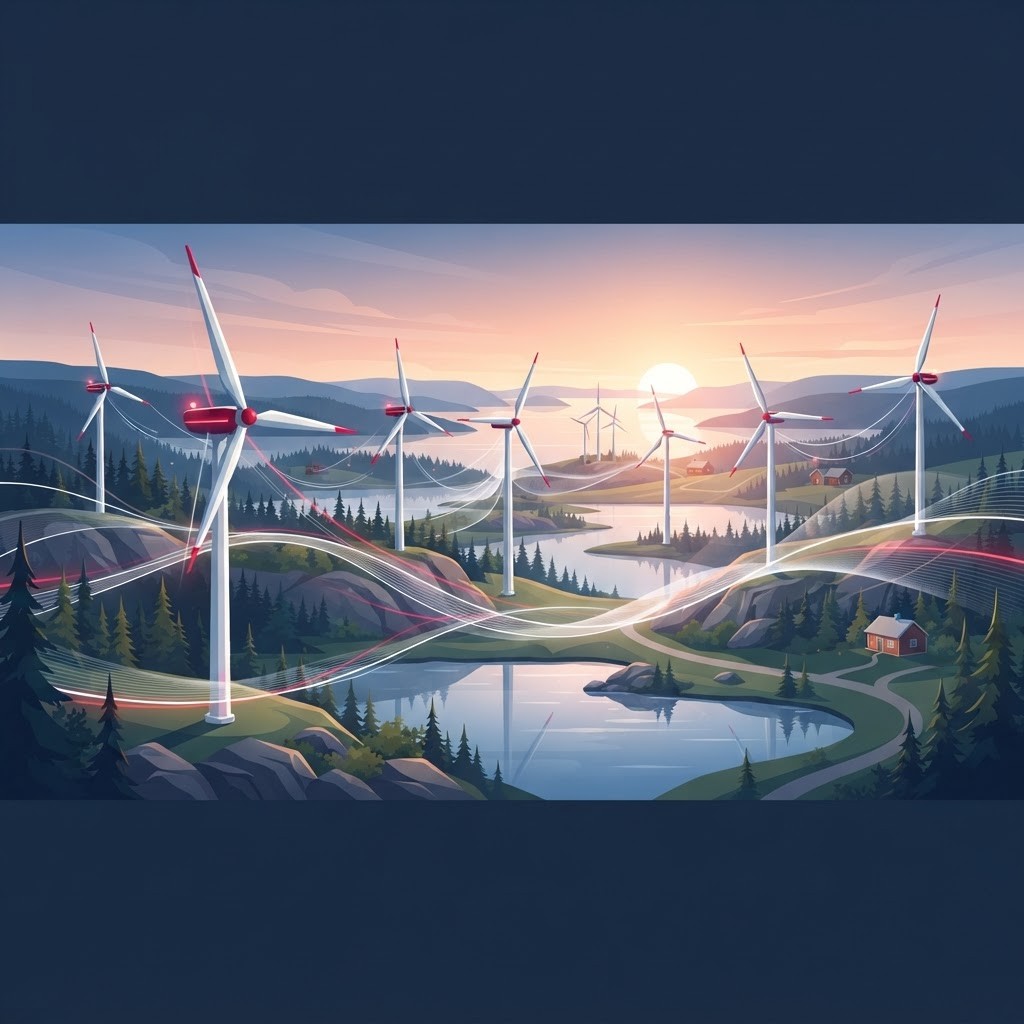
Finland's Wind Energy Landscape
Finland has quietly become one of the most dynamic wind energy markets in Europe. With a national commitment to carbon neutrality and a landscape rich in coastal, inland, and offshore wind resources, the country has attracted significant investment in turbine construction and grid modernization. Over the past decade, wind power has shifted from a marginal contributor to a central pillar of the Finnish electricity mix, and the companies driving this transformation are among the most innovative in the Nordic region.
The appeal of Finnish wind energy lies in a combination of strong policy support, a stable regulatory environment, and a highly skilled engineering workforce. Long winters and consistent wind patterns across Ostrobothnia and Lapland make many regions ideal for large-scale wind farms. As a result, both domestic firms and international developers have expanded their presence, creating a competitive and forward-looking industry.
What Makes a Leading Wind Energy Company
The best wind energy companies in Finland share several defining qualities. They demonstrate technical excellence in project development, from site assessment and permitting to turbine installation and long-term maintenance. They prioritize community engagement, working closely with municipalities and landowners to ensure projects are welcomed rather than resisted. Finally, they invest heavily in operational efficiency, using advanced monitoring systems and predictive maintenance to maximize output and reliability.
Reputation also matters. Companies that consistently deliver projects on schedule and within budget earn the trust of investors and utilities alike. Transparency around environmental impact and biodiversity protection has become a key differentiator in a market where sustainability is expected, not optional.
The Top Wind Energy Companies
Fortum stands as one of the most recognizable names in Finnish clean energy. With a broad portfolio spanning wind, hydro, and other renewables, Fortum combines financial strength with deep operational expertise. Its long-term vision for a low-carbon energy system has made it a benchmark for the industry.
TuuliWatti, a specialist wind developer, has built a strong reputation for constructing and operating some of the largest onshore wind farms in the country. The company is known for its disciplined project execution and its focus on high-yield sites.
wpd Finland brings international experience to the domestic market, developing and managing wind projects with a rigorous approach to planning and environmental responsibility. Its pipeline of projects reflects confidence in Finland's long-term wind potential.
Ilmatar Energy has grown rapidly by combining wind development with a broader clean energy strategy. The firm emphasizes locally rooted projects and has become a familiar partner for Finnish communities embracing renewable power.
OX2 is widely respected for developing large-scale wind farms across the Nordics, including significant Finnish assets. Its ability to manage complex projects from concept to completion has cemented its position among the leaders.
Neoen contributes international scale and financial backing, developing sizable wind installations that add meaningful capacity to the Finnish grid. The company is known for pairing wind with storage and other technologies.
ABO Energy focuses on responsible development, carefully balancing energy output with landscape and ecological considerations. Its methodical approach has earned it a solid standing among municipalities.
Puhuri has carved out a niche developing regional wind projects, often in northern Finland, where wind conditions are especially favorable. Its local knowledge is a genuine competitive advantage.
Prokon combines engineering discipline with a cooperative ownership philosophy, appealing to stakeholders who value community participation in renewable projects.
Helen, a major energy provider, has expanded its wind portfolio as part of a broader decarbonization strategy, integrating wind power into a diverse and reliable supply mix for consumers.
Industry Trends Shaping the Future
Several trends are defining the next phase of Finnish wind energy. Turbine technology continues to advance, with taller towers and larger rotors capturing more energy even in lower wind conditions. This has opened up new inland sites that were previously considered uneconomical. Offshore wind, while still developing in Finland, represents a significant long-term opportunity given the country's extensive coastline.
Corporate power purchase agreements have also become a major driver. Large industrial and technology companies are signing long-term contracts to secure clean electricity directly from wind developers, providing the financial certainty needed to build new capacity. This trend is accelerating investment and reshaping how projects are financed.
Grid integration and energy storage are increasingly important as wind's share of the electricity mix grows. Leading companies are exploring hybrid projects that combine wind generation with battery storage, helping to smooth output and support grid stability during periods of variable production.
Benefits for Finland and Beyond
The growth of wind energy delivers substantial benefits to Finland. It strengthens energy independence, reduces reliance on imported fuels, and supports the nation's climate commitments. Rural regions benefit from job creation, land lease income, and infrastructure investment, while consumers gain access to competitively priced clean electricity.
For businesses considering partnerships or investments, the Finnish wind sector offers a rare combination of stability, growth, and technical sophistication. The companies highlighted here represent the depth and quality of an industry that is helping to power a cleaner future.
Conclusion
Finland's wind energy sector is a compelling example of how policy, technology, and entrepreneurship can align to transform an entire energy system. The leading companies profiled above are not only building turbines but also shaping a sustainable economy. As the industry continues to mature, these firms are well positioned to remain at the forefront of the Nordic clean energy transition.
