
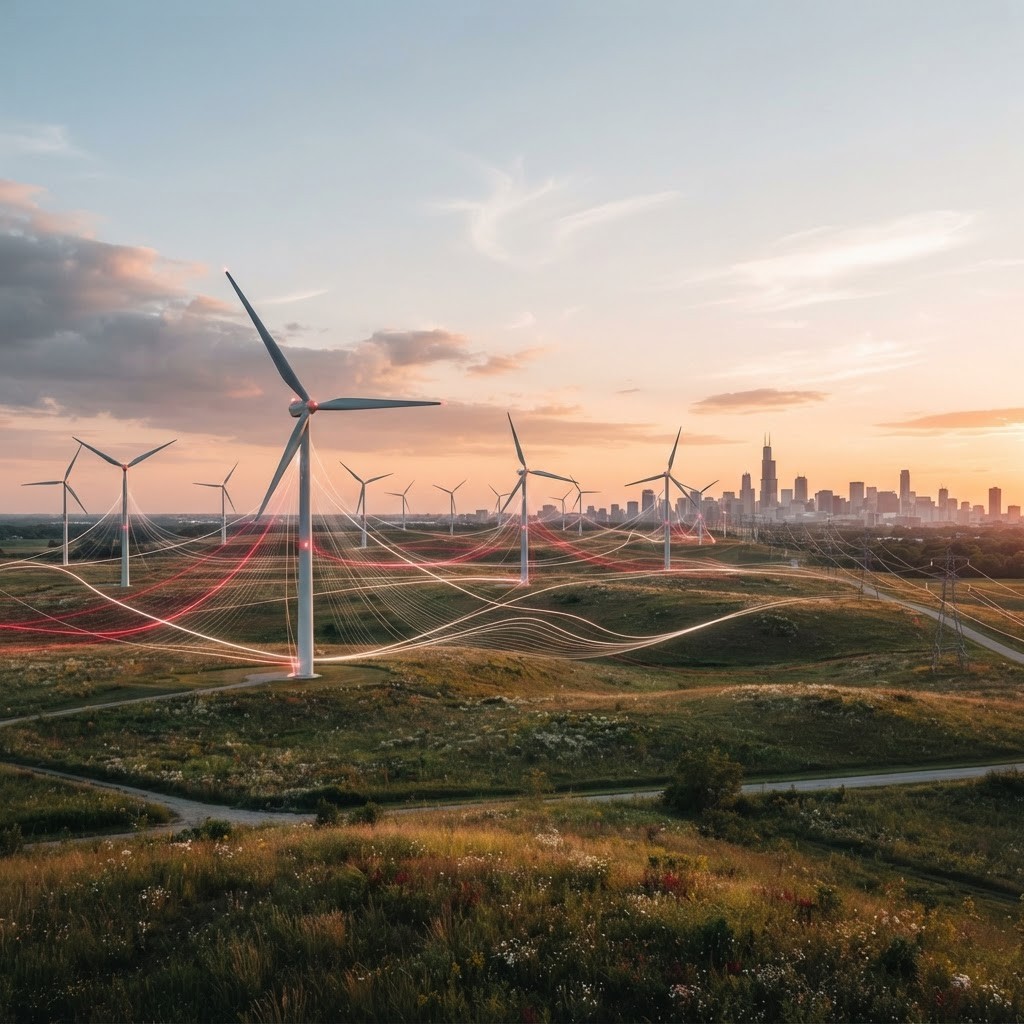
Chicago's Role in the Wind Economy
The strongest winds and largest projects may sit beyond the city limits, but Chicago is a command center for the commercial, engineering, legal, and financial work behind them. Proximity to Illinois and Great Plains resources, sophisticated capital markets, and regional transmission organizations makes the city an advantageous base. Leading companies coordinate years of land agreements, studies, permits, turbine procurement, construction, and power sales before a project begins operating.
1. Invenergy
Invenergy is a global wind leader headquartered in Chicago. It develops, owns, and operates energy infrastructure and has delivered a substantial fleet of wind projects. Its vertically integrated capabilities extend from early development and finance to asset operations. The company also works on transmission, storage, solar, and other infrastructure required for a more flexible power system.
2. RWE Clean Energy
RWE maintains a major Chicago presence and operates wind projects across the United States. The company benefits from global technical experience and a large renewable portfolio. Its teams handle development, construction, operations, market participation, and community relationships, providing the scale required to manage assets across diverse regions.
3. EDP Renewables North America
EDP Renewables North America has deep Midwest activity supported by Chicago operations. The company develops and operates onshore wind along with solar and storage. Its experience with rural communities, landowners, and long-duration project operations is especially important because wind farms become part of local economies for decades.
4. Leeward Renewable Energy
Leeward Renewable Energy has an established operating wind portfolio and a substantial Chicago office. The company manages existing assets while developing new wind, solar, and storage projects. Expertise in repowering is a meaningful strength as older wind farms evaluate new turbines, extended operations, and improved production.
5. Clearway Energy Group
Clearway develops and operates wind and other renewable assets with support from a Chicago team. Its national platform combines project origination, commercial contracts, construction management, and long-term operations. A diversified portfolio can help the company apply lessons across technologies and electricity markets.
6. Acciona Energía
Acciona Energía connects its Chicago presence to a global renewable business with extensive wind experience. The company develops, owns, and operates projects and serves commercial customers seeking clean energy. International scale, sustainability capabilities, and experience across project life cycles distinguish its market position.
7. Ørsted
Ørsted is best known globally for offshore wind, while its United States business also includes onshore renewable assets and maintains a Chicago presence. The company brings large-project expertise, supplier coordination, and a strong focus on the transition from conventional energy. Its capabilities are relevant as American wind expands across both land and coastal markets.
8. Apex Clean Energy
Apex Clean Energy maintains Chicago commercial connections while developing utility-scale wind, solar, and storage around the country. It is known for building a large pipeline and working with corporate and utility buyers. Strong resource assessment and early-stage development are central to converting prospective sites into financeable projects.
9. Scout Clean Energy
Scout Clean Energy develops and operates wind, solar, and storage assets and has activity tied to the greater Chicago energy community. Its portfolio includes operating wind farms and new developments. The company emphasizes project ownership and active asset management, aligning development decisions with long-term operational performance.
10. Pattern Energy
Pattern Energy is a major renewable developer and operator with strong relevance to Midwest energy markets and Chicago's commercial ecosystem. It works on wind generation and transmission projects designed to move renewable power toward demand centers. That combined perspective is increasingly valuable as grid constraints shape where new wind can be built.
Forces Shaping Wind Development
Transmission is now one of the industry's defining issues. Excellent wind resources have limited value if projects cannot interconnect or move output to customers. Developers also face longer equipment lead times, evolving tax rules, community concerns, and pressure to demonstrate local benefits. Meanwhile, repowering can increase production at established sites, and advanced forecasting helps operators participate more effectively in electricity markets.
Evaluating Companies and Projects
Landowners should review compensation, access, construction impacts, decommissioning security, and assignment provisions with independent advisers. Energy buyers should assess delivery location, congestion risk, settlement structure, renewable attributes, and the developer's ability to complete the project. Communities benefit from scrutinizing tax revenue, road agreements, emergency planning, setbacks, and local hiring commitments. Chicago's wind companies bring considerable expertise, but successful projects depend on transparent engagement, sound engineering, financial durability, and responsible operation throughout a multi-decade life.
