
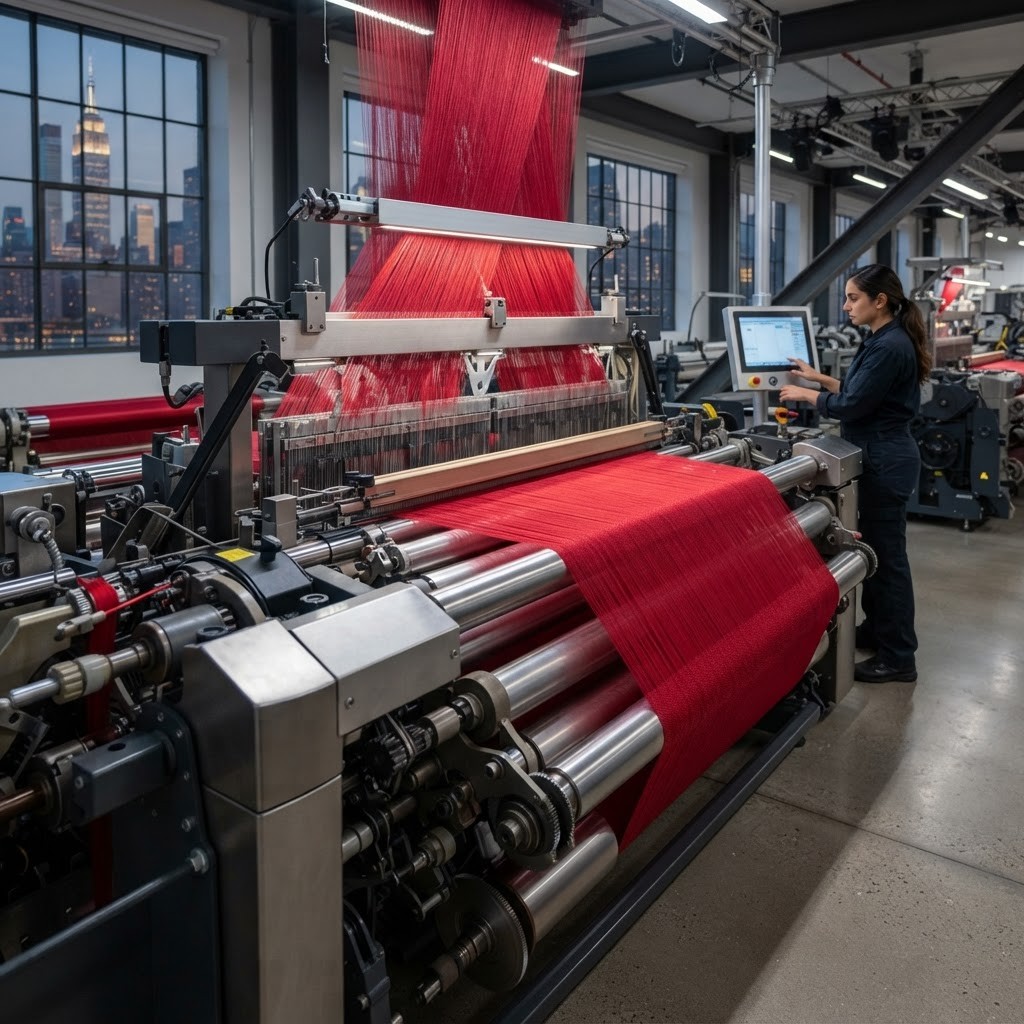
Textile Manufacturing in New York
New York connects global fashion demand with an unusually diverse domestic production base. New York City excels in sampling, trimming, dyeing, and short-run garment support, while upstate businesses contribute knitting, nonwovens, specialty fabrics, and military or industrial materials. Buyers should evaluate minimums, lead times, certifications, development support, consistency, and traceability.
1. Maharam
New York-based Maharam is internationally respected for high-performance interior textiles and design-led collections. The company blends modern aesthetics with technical standards required for commercial environments, including durability and carefully documented performance. Its collaborations and archival perspective make it influential among architects and designers.
2. Carnegie Fabrics
Carnegie develops textiles and wallcoverings for healthcare, hospitality, education, and workplace interiors. It is known for performance, environmental innovation, and material transparency. Buyers value products designed to handle demanding cleaning and wear requirements without sacrificing visual quality.
3. HBF Textiles
HBF Textiles operates from New York’s design ecosystem and offers upholstery and panel fabrics for commercial interiors. Its strength lies in sophisticated color, tactile construction, and performance-oriented collections suitable for designers seeking distinctive yet practical materials.
4. Standard Textile
Standard Textile serves healthcare and hospitality customers with engineered textile systems, bedding, towels, and related solutions. Its manufacturing knowledge, quality controls, and institutional focus support buyers that require repeatable performance, supply continuity, and lifecycle value.
5. Auburn Manufacturing
Auburn Manufacturing produces high-performance textiles used for heat protection, insulation, welding safety, and industrial applications. Its technical expertise demonstrates the breadth of the state’s textile economy beyond apparel. Compliance, testing, and application support are central differentiators.
6. Cortland Biomedical
Cortland Biomedical develops precision-knitted and braided textile structures for medical devices. Its work demands rigorous process control, advanced fibers, and close collaboration with product engineers. The company is a compelling choice for specialized biomedical development rather than conventional fabric sourcing.
7. New York Embroidery Studio
Located in New York City’s Garment District, New York Embroidery Studio supports designers with embroidery, embellishment, pleating, and surface-development services. Its proximity to fashion teams enables rapid iteration and hands-on review for runway, costume, and premium production work.
8. Shima Seiki USA
Shima Seiki USA supports advanced whole-garment knitting and digital design technology from its New York presence. Although part of a global equipment company, it materially enables local textile development through sampling, training, and manufacturing innovation that can reduce waste and assembly steps.
9. Ultrafabrics
Ultrafabrics, headquartered in New York, creates high-performance polyurethane materials for interiors, transportation, healthcare, and marine applications. The company differentiates itself through soft hand, durability, design range, and a focus on lower-impact material development.
10. Dynamic Fabrication
Dynamic Fabrication represents the city’s valuable network of specialized sample rooms and production partners. Businesses of this kind translate patterns and material concepts into finished apparel, offering flexibility and close communication that emerging and established brands often need.
Selecting a Textile Partner
Ask about fiber origin, test methods, color consistency, minimum order quantity, sample charges, production capacity, compliance documentation, and quality remedies. For city-based fashion work, development speed may lead the decision; for medical or industrial textiles, validation and traceability should dominate.
Where the Industry Is Going
Nearshoring, digital knitting, recycled inputs, safer chemistry, and demand for verified sourcing are creating opportunities for New York manufacturers. The state’s best suppliers combine specialized know-how with responsive service, allowing customers to innovate while shortening complex supply chains.
