
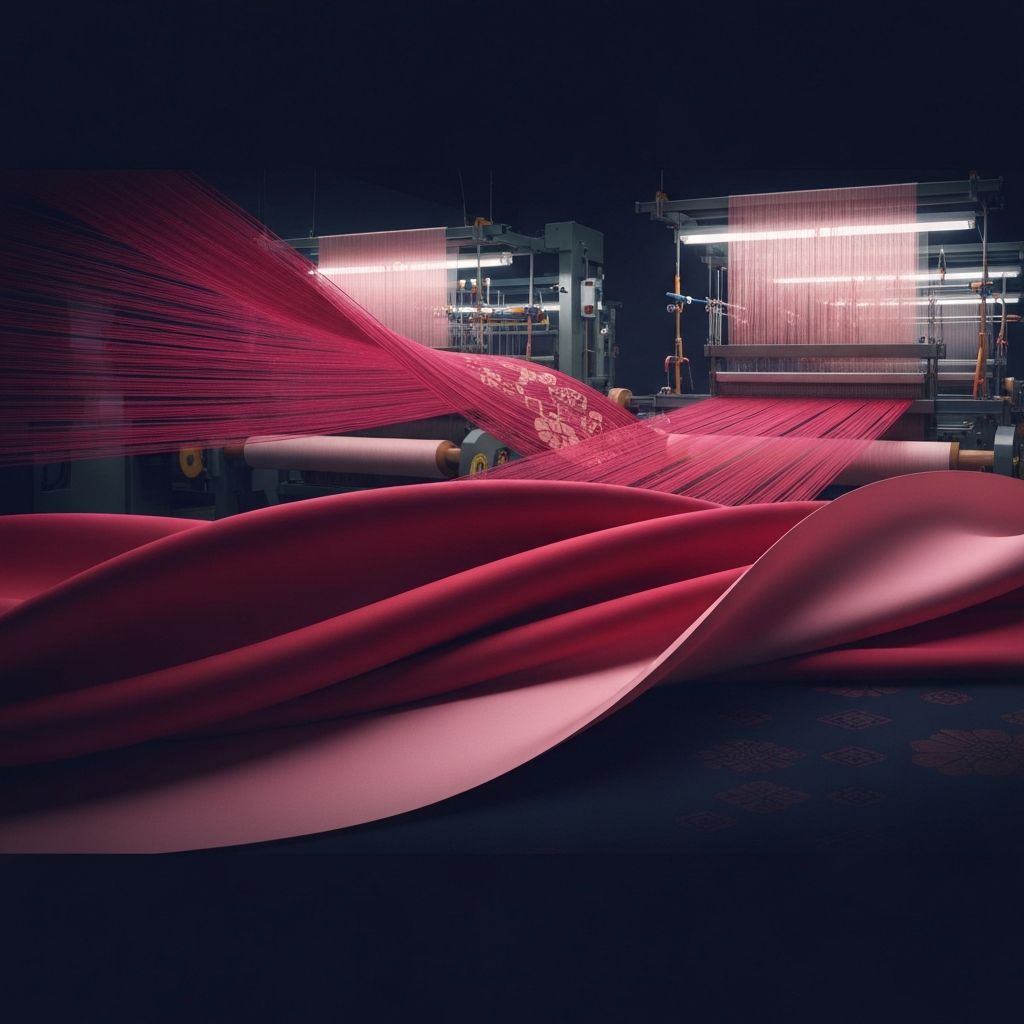
Japan's Textile Industry: A Legacy of Craft and Innovation
Japan's textile industry has a rich history that stretches back centuries, from the silk traditions of Kyoto to the indigo workshops of Tokushima. Today, that heritage has evolved into one of the world's most sophisticated textile and advanced materials industries. Japanese companies are recognized globally for engineering performance fibers used in everything from sportswear and automotive interiors to aerospace components and medical devices.
Modern Japanese textile manufacturers focus on functional fibers, sustainable materials, and high-tech composites such as carbon fiber and aramid. Below are ten of the most influential textile manufacturers shaping the industry's future.
The Top 10 Textile Manufacturers in Japan
1. Toray Industries
Toray Industries is a global leader in synthetic fibers, films, and advanced materials. The company is particularly famous for its carbon fiber composites used in aerospace, automotive, and sporting goods. Its functional textile portfolio includes ultra-fine microfibers and high-performance technical fabrics.
2. Teijin Limited
Teijin is a pioneer in high-performance fibers, including aramid (Twaron) and polyester, with strong positions in industrial textiles, automotive interiors, and protective clothing. The company also leads in sustainable polyester recycling technology.
3. Asahi Kasei
Asahi Kasei produces a wide range of fibers and textiles, including cupro, nylon, polyurethane elastomers, and nonwovens. Its Bemberg cupro fiber is renowned for its soft hand and biodegradable properties, making it popular for premium garments.
4. Kuraray Co., Ltd.
Kuraray is known for innovative materials such as polyvinyl alcohol fibers (Vectran), Clarino synthetic leather, and high-performance nonwovens. Its materials are widely used in industrial, automotive, and consumer applications.
5. Toyobo Co., Ltd.
Toyobo produces a diverse range of textiles, films, and functional materials, including high-tenacity fibers, membranes for water treatment, and advanced sportswear fabrics. Its bioscience and medical materials divisions add further breadth.
6. Unitika Ltd.
Unitika has a long history in fibers and textiles, manufacturing nylon, polyester, and nonwovens. The company also specializes in bio-based materials and functional textiles used in apparel and industrial applications.
7. Mitsubishi Chemical Group
Mitsubishi Chemical produces acrylic fibers, carbon fibers, and a range of advanced textile materials. Its fiber and composites business contributes significantly to high-performance apparel, industrial reinforcements, and structural materials.
8. Seiren Co., Ltd.
Seiren specializes in textiles for automotive interiors, electronic materials, and high-quality fabrics for fashion and industrial use. Its digital textile printing technology is widely recognized for high color fidelity and short production runs.
9. Gunze Limited
Gunze is a well-known name in Japanese textiles, producing innerwear, hosiery, and functional fabrics. The company has diversified into electronic materials, plastic films, and medical materials, leveraging its textile know-how.
10. Shikibo Ltd.
Shikibo combines traditional textile expertise with modern technologies, producing apparel fabrics, industrial textiles, and high-performance nonwovens used in filtration, automotive, and protective applications.
Innovation and Sustainability Trends
Japanese textile manufacturers are at the forefront of sustainability and circular economy initiatives. Many have invested heavily in chemical recycling of polyester, bio-based fibers from plant feedstocks, and water-saving dyeing technologies. Functional textiles with antibacterial, UV-blocking, moisture-wicking, and cooling properties have become standard offerings, supported by Japan's strong demand for premium apparel and industrial-grade materials.
Advanced composite materials such as carbon fiber reinforced polymers are another area where Japanese textile expertise is reshaping global industries. From lightweight automotive structures to aircraft components and wind turbine blades, Japanese fibers are integral to next-generation engineering.
Conclusion
From global giants like Toray and Teijin to specialized innovators like Seiren and Shikibo, Japan's textile industry is a powerful blend of tradition, science, and engineering. The ten companies highlighted here continue to push the boundaries of what textiles can do, contributing to fashion, sustainability, mobility, and advanced industrial applications around the world.
