
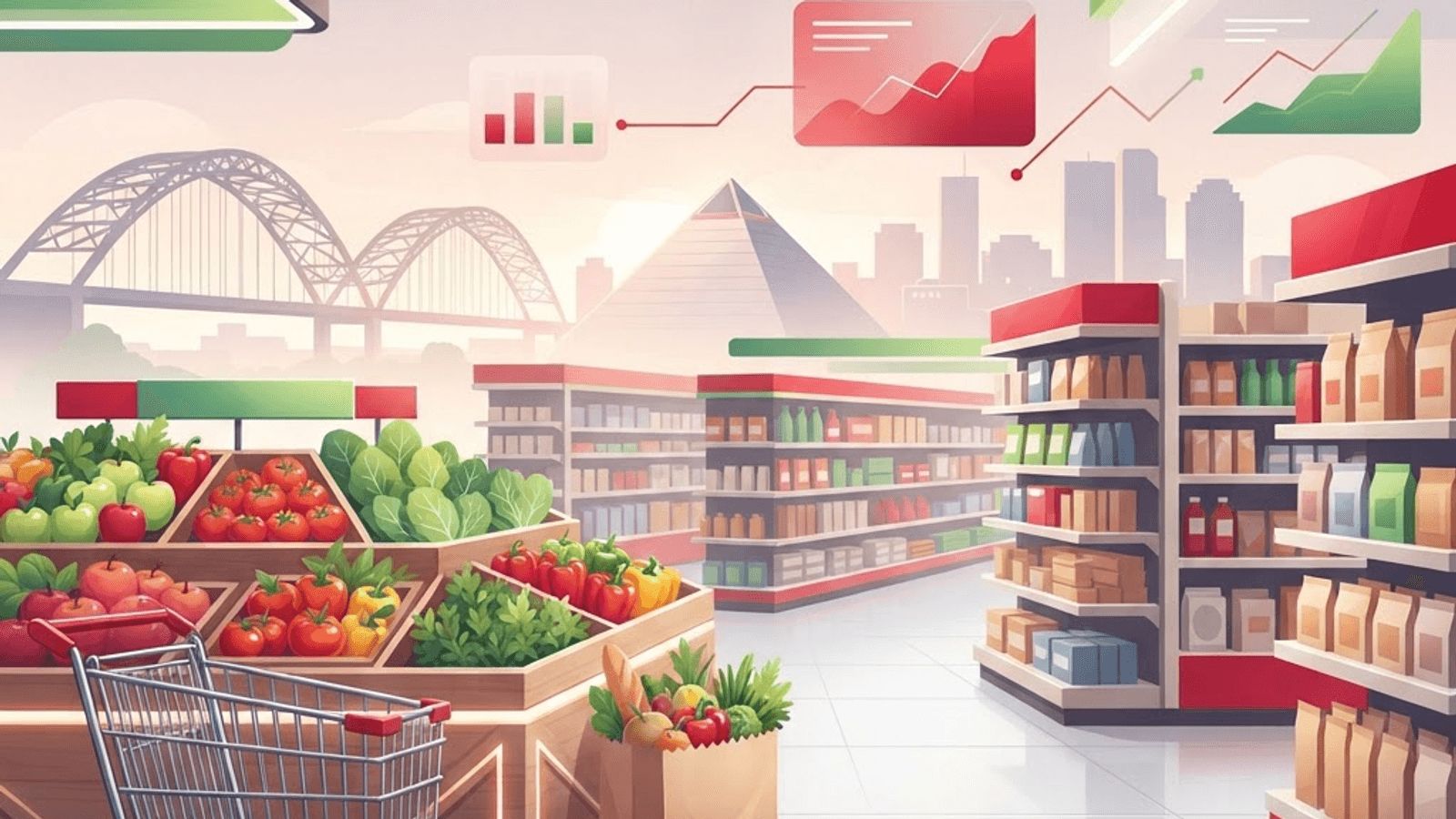
How Memphis Shops for Groceries
Memphis is a food city, and that shapes its grocery landscape. Barbecue culture drives serious demand for quality pork, rubs, and charcoal. A strong home-cooking tradition sustains full-service meat counters and deep pantry staples. And a growing interest in fresh, organic, and international ingredients has pulled specialty grocers into the market alongside legacy chains. Most local households end up shopping two or three stores in a given month, using one for the bulk of the list, another for produce or meat, and a third for specialty items.
Kroger
Kroger is the dominant supermarket chain across the Memphis metro, with locations covering nearly every neighborhood. Its scale enables competitive fuel points, a mature digital coupon system, robust private label tiers from value to premium, and widespread pickup and delivery. Larger marketplace-format stores add expanded natural foods, cheese, floral, and prepared meal sections. For most households, it is the practical backbone of the weekly list.
Superlo Foods
Superlo Foods is a locally owned Memphis operator with a devoted following, and its reputation rests largely on the meat department. Butchers cut to order, and the store is a go-to for ribs, Boston butts, and custom trims ahead of backyard cookouts. Shoppers also value the neighborhood-scale layout, community involvement, and staff who recognize regulars, which is increasingly rare in a consolidated industry.
Cash Saver
Cash Saver uses a cost-plus model in which shelf prices reflect wholesale cost and a percentage is added at checkout. For price-sensitive shoppers filling large carts, the savings on staples, canned goods, and meat can be substantial. The stores are widely credited with improving grocery access in parts of Memphis that were previously underserved, and the soul food and Southern staples selection is notably strong.
Whole Foods Market
Whole Foods serves the premium natural and organic segment, with strict sourcing standards on produce, meat, and packaged goods. Memphis shoppers use it for specialty diets, prepared foods, cheese and charcuterie, and hard-to-find pantry items. It is rarely the cheapest option, but its standards reduce label-reading effort for shoppers avoiding specific additives.
Sprouts Farmers Market
Sprouts occupies a middle position between conventional and premium natural grocery. The format centers on produce, with strong bulk bins, vitamins, and supplements, plus rotating weekly produce deals that are among the sharpest in the market. For plant-forward shoppers, it often beats both conventional and premium chains on effective cost.
Aldi
Aldi's efficiency-first model delivers consistently low prices through a compact, mostly private label assortment. Memphis shoppers use it as a supplement for dairy, eggs, produce, snacks, and rotating specialty finds. Smaller stores mean faster trips, though brand loyalists may need a second stop for specific national labels.
Trader Joe's
Serving the Memphis area from the eastern suburbs, Trader Joe's differentiates on curated private label products rather than breadth. Frozen items, sauces, snacks, and seasonal releases drive fierce loyalty. It is best treated as a specialty supplement rather than a full-list solution, since staples selection is intentionally narrow.
The Fresh Market
The Fresh Market positions itself as a specialty grocer with an emphasis on prepared meals, bakery, butcher-cut meats, and seafood. Its appeal in Memphis is convenience for entertaining, with ready-to-cook and ready-to-heat options that hold up for guests. Curated wine and cheese pairings support that occasion-driven shopping pattern.
Costco Wholesale
Costco's grocery operation focuses on bulk value and unusually high quality in meat, produce, and its private label line. Memphis families and small food businesses use it for pantry loading, proteins, and paper goods. Membership costs are typically recovered quickly by households of three or more, especially when fuel and pharmacy savings are included.
Sam's Club
Sam's Club competes in the same warehouse tier with strong regional coverage and a well-developed scan-and-go app that removes checkout friction. Bulk proteins, beverages, and snacks are the strongest categories, and business memberships make it a common choice for restaurants, churches, and event organizers across the metro.
Trends Shaping Memphis Grocery
Four shifts stand out. Online ordering with curbside pickup has become permanent, and store selection increasingly depends on app quality rather than aisle layout. Private label has moved upmarket, with store brands now competing on quality rather than only price. Prepared food has expanded aggressively as supermarkets compete directly with restaurants for dinner occasions. And local sourcing has become a marketing priority, with Mid-South produce and regional brands given prominent shelf placement.
How to Build a Smart Grocery Strategy
Split your list by category strength rather than trying to optimize one store. Use a large conventional chain for breadth and promotions, a local butcher-driven grocer for meat, a warehouse club for bulk staples, and a natural grocer for specialty items. Shop midweek mornings when restocking is fresh and aisles are clear. Track unit prices rather than package prices, and be skeptical of bulk buying on perishables unless you have freezer capacity. Loyalty programs matter more than they appear, particularly where fuel discounts and personalized offers compound over a year.
Final Thoughts
Memphis grocery shoppers have real choice, from cost-plus value operators to premium natural grocers and beloved family-run stores. The best outcomes come from matching each store to what it genuinely does well rather than expecting one to do everything. Done thoughtfully, a two-store rotation can improve quality and cut costs at the same time.
