
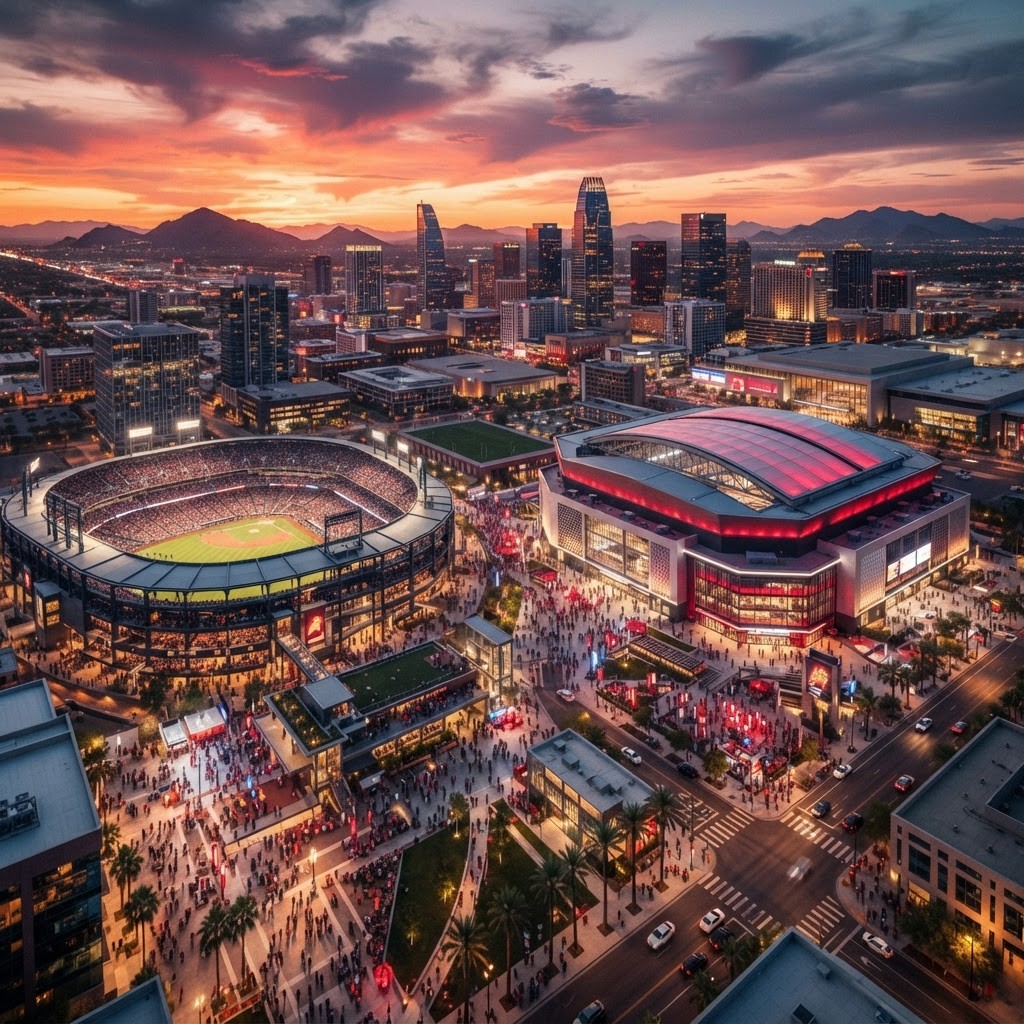
Finding the Best Stadiums in Phoenix
Metro Phoenix is one of America's most varied sports destinations. Within a broad Valley footprint, fans can experience retractable-roof baseball, climate-controlled football, downtown basketball, motorsports, college athletics, and an unmatched concentration of spring training parks. This list includes venues in Phoenix and nearby cities that form the region's connected event landscape.
Top Phoenix Choices
1. Chase Field
Chase Field anchors downtown Phoenix and hosts the Arizona Diamondbacks. Its retractable roof and cooling system make summer baseball possible, while central transit access and surrounding restaurants support a complete game-day experience.
2. State Farm Stadium
State Farm Stadium in Glendale is home to the Arizona Cardinals and a frequent host of major national events. Its retractable roof, roll-out natural-grass field, bold exterior, and flexible event configuration make it an engineering landmark.
3. Footprint Center
Footprint Center is the downtown home of the Phoenix Suns and Phoenix Mercury. Renovated fan spaces, intimate basketball sightlines, modern hospitality, and convenient access to the city's entertainment district create strong event energy.
4. Phoenix Raceway
Phoenix Raceway in Avondale delivers major stock-car racing on a distinctive one-mile oval. The venue's desert setting, broad sightlines, fan zones, and championship events offer a completely different atmosphere from traditional ballparks and arenas.
5. Mountain America Stadium
Mountain America Stadium in Tempe hosts Arizona State football and sits between dramatic desert landforms and the urban core. Its collegiate traditions, outdoor setting, and views give games a recognizable sense of place.
6. Sloan Park
Sloan Park in Mesa is the spring training home of the Chicago Cubs. Generous lawns, shaded areas, a lively outfield scene, and design references to the club's historic home make it among the Cactus League's most popular parks.
7. Salt River Fields at Talking Stick
Salt River Fields serves the Arizona Diamondbacks and Colorado Rockies during spring training. Integrated into the Salt River Pima-Maricopa Indian Community, it is admired for mountain views, landscaped grounds, practice-field access, and thoughtful design.
8. Camelback Ranch
Camelback Ranch in Glendale hosts spring training for the Los Angeles Dodgers and Chicago White Sox. Its walking paths, water features, open practice areas, and relaxed campus layout reward visitors who arrive early and explore.
9. Peoria Sports Complex
Peoria Sports Complex is the spring home of the Seattle Mariners and San Diego Padres. As a pioneering two-team facility, it combines a central stadium with extensive practice grounds and a family-friendly Cactus League atmosphere.
10. American Family Fields of Phoenix
American Family Fields of Phoenix hosts Milwaukee Brewers spring training within the city. Renovations improved fan amenities while preserving the close, casual relationship between spectators, practice activity, and ballpark action that defines spring baseball.
Industry Trends and Phoenix Considerations
Phoenix venues increasingly emphasize shade, efficient cooling, mobile entry, diverse food, premium social spaces, and flexible year-round programming. Retractable systems are essential to the region's identity, while spring training parks use open concourses and practice access to create intimacy. Sustainability efforts around water, energy, transportation, and waste will become more important as attendance and climate pressures grow.
How to Choose the Right Provider
Choose a venue based on both the event and the experience you want. Downtown locations are convenient for rail and pregame dining, while West Valley venues generally require more driving preparation. For outdoor events, check shade and sun orientation, hydrate, and follow venue bag rules. Arrive early for spring training practices, allow extra time for major events, and use official parking instructions.
Questions Worth Asking Before You Decide
Good comparisons begin with specific questions rather than a general request for the lowest price. When evaluating stadiums, ask what is included, who will perform the work, how changes are approved, and what happens if the original plan cannot be followed. Request plain-language explanations of exclusions, warranties, scheduling, and any recurring obligation. References are most useful when they involve a project, property, or visit similar to yours. Recent reviews can reveal patterns in communication and follow-through, but individual comments should be weighed alongside licensing records, documented experience, and the quality of the written proposal.
Phoenix is a large, fast-growing metropolitan area, so service zones and travel conditions can affect timing and cost. Confirm that the company regularly works in your neighborhood and understands local access, community rules, seasonal demand, and climate constraints. Share accurate details at the beginning instead of waiting until arrival. Photographs, dimensions, model information, desired outcomes, and known complications help a professional provide a more useful recommendation. Keep copies of estimates and messages so expectations remain clear for everyone.
Balancing Price, Quality, and Long-Term Value
The cheapest initial option is not automatically the most economical. With stadiums, long-term value often comes from appropriate materials, trained labor, dependable support, and work that avoids repeat visits or premature replacement. Compare proposals line by line and identify assumptions that make one total appear lower. A higher quote may include preparation, protection, cleanup, upgraded components, or a stronger warranty that another estimate omits.
At the same time, premium branding does not guarantee the best fit. Look for evidence that the provider listened carefully, explained tradeoffs without pressure, and proposed a solution proportionate to the need. Establish a primary contact, understand payment milestones, and avoid making a decision based solely on urgency. Phoenix consumers have many credible choices; taking time to verify details is one of the simplest ways to improve satisfaction.
Final Thoughts
No single option is ideal for every household, property, or visitor. Use this list as a focused starting point, then compare current offerings, recent customer feedback, availability, and fit for your exact priorities. Careful research and clearly documented expectations usually produce the best result.
