
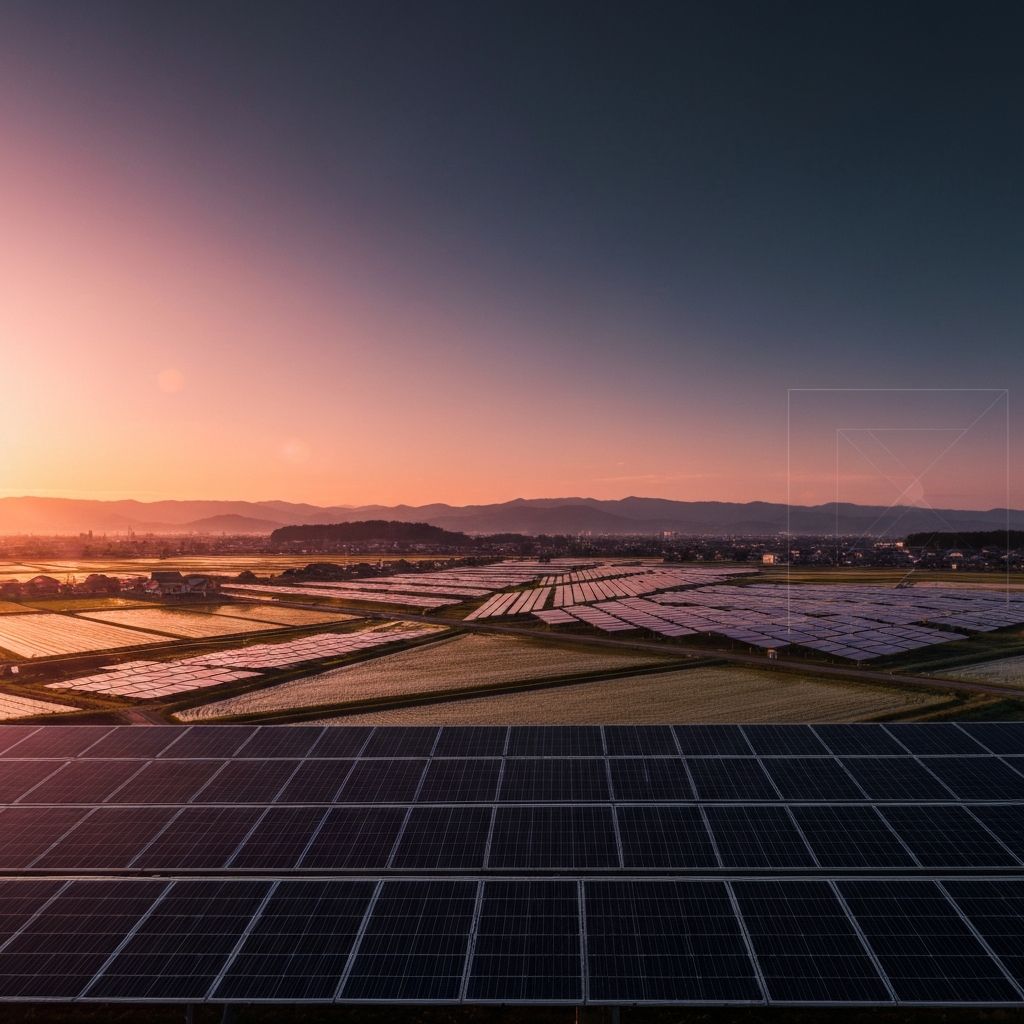
Solar Power at the Heart of Japan's Energy Strategy
Solar power has emerged as the backbone of Japan's renewable energy strategy. After the 2011 Fukushima nuclear incident, the country rapidly accelerated solar installations through generous feed-in tariffs, and today Japan ranks among the global leaders in installed photovoltaic capacity. With rooftop solar on millions of homes and large-scale utility solar farms across Kyushu, Tohoku, and Hokkaido, photovoltaic technology has become essential to Japan's path toward carbon neutrality.
Domestic companies have led much of the innovation, from high-efficiency cell research to floating solar plants on irrigation reservoirs. Here are the ten leading solar energy companies driving Japan's photovoltaic ecosystem.
The Top 10 Solar Energy Companies in Japan
1. Sharp Corporation
Sharp is widely recognized as a pioneer of solar cell technology, with a research history dating back to the 1950s. The company manufactures high-efficiency monocrystalline and polycrystalline modules, residential storage solutions, and commercial PV systems used across Japan and abroad.
2. Kyocera Corporation
Kyocera is a global leader in solar cell production and module assembly. Known for its long-lasting polycrystalline panels and integrated home energy systems, the company has supplied PV solutions to residential, commercial, and utility-scale projects for decades.
3. Panasonic Corporation
Panasonic produces premium-grade HIT solar cells originally developed by Sanyo, combining high efficiency with strong temperature performance. Its solar division also delivers energy storage batteries and integrated home energy management systems.
4. Solar Frontier
Solar Frontier specializes in CIS (copper indium selenium) thin-film modules, which perform exceptionally well in high-temperature and partially shaded conditions. The company has supplied panels to landmark utility-scale and rooftop projects across Japan.
5. Mitsubishi Electric
Mitsubishi Electric offers a wide range of solar modules, power conditioners, and storage batteries, complemented by smart home energy management systems. Its solutions emphasize reliability and integration with existing electrical infrastructure.
6. Kaneka Corporation
Kaneka is renowned for developing some of the world's highest-efficiency crystalline silicon solar cells. The company supplies advanced PV modules for both residential rooftops and innovative applications such as building-integrated photovoltaics.
7. Choshu Industry
Choshu Industry, based in Yamaguchi Prefecture, produces residential solar panels, storage batteries, and home appliances. Its strong domestic distribution network has made it a popular choice for Japanese homeowners seeking locally manufactured PV systems.
8. Toshiba Energy Systems and Solutions
Toshiba's energy division provides large-scale PV plant engineering, advanced inverters, and grid-stabilizing storage solutions. Its expertise helps integrate utility-scale solar installations into Japan's complex grid environment.
9. Looop Inc.
Looop has built a reputation through its DIY-friendly solar kits, large-scale PV development, and innovative renewable retail electricity plans. The company connects households directly to solar-generated power through unique pricing structures.
10. Renova Inc.
Renova develops and operates large utility-scale solar power stations across Japan, with projects ranging from greenfield mega-solar plants to repowering older sites. Its diversified renewable portfolio makes it a respected name in the solar sector.
Solar Trends and Innovations in Japan
The Japanese solar market is evolving beyond simple rooftop installations. Floating solar farms on agricultural reservoirs, agrivoltaic projects that combine farming with PV generation, and perovskite tandem cells developed by Japanese research labs are reshaping the industry. Storage-paired solar systems are becoming standard for both residential and commercial customers, supported by time-of-use tariffs and resilience needs after natural disasters.
Corporate sustainability commitments have created a robust market for solar power purchase agreements. Major manufacturers, retailers, and data center operators in Japan increasingly source solar energy directly from developers, providing long-term revenue certainty and accelerating new project development.
Conclusion
From globally recognized brands like Sharp, Kyocera, and Panasonic to specialized developers such as Renova and Looop, Japan's solar industry combines a strong manufacturing legacy with forward-looking innovation. As technology advances and decarbonization pressures rise, these ten companies will remain at the forefront of Japan's photovoltaic revolution and contribute significantly to a cleaner, energy-independent future.
