
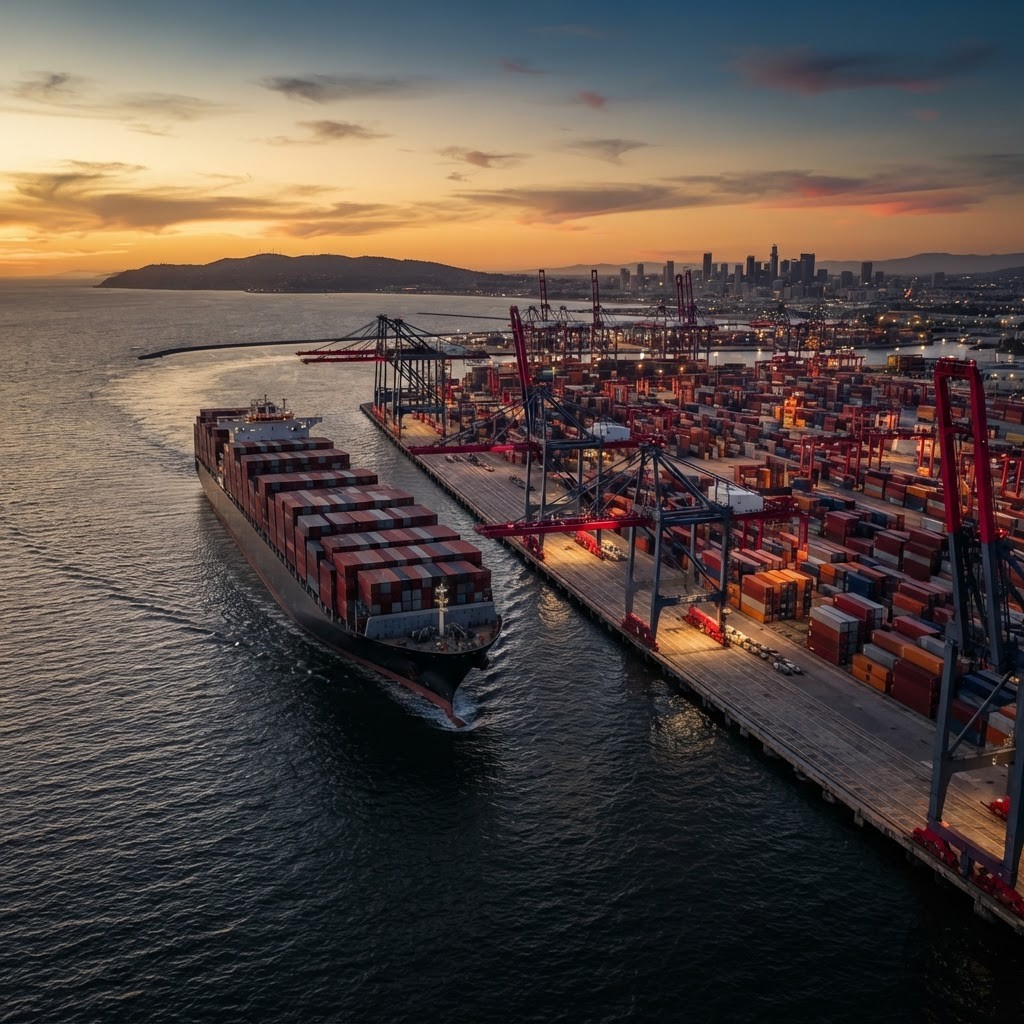
Ocean Shipping Through Los Angeles
The San Pedro Bay port complex is a primary gateway for trade between the United States and Asia, while also supporting routes to Latin America, Europe, and other regions. Selecting an ocean carrier involves more than finding the lowest container rate. Schedule reliability, equipment availability, terminal choice, inland connections, digital visibility, customer support, and detention terms can determine the real cost. The following carriers are prominent participants in global container shipping and serve the Los Angeles market.
1. Maersk
Maersk is one of the world’s largest container carriers and has developed an integrated logistics portfolio spanning ocean, customs, warehousing, and inland transportation. Its broad network and end-to-end options appeal to large importers seeking fewer handoffs. Digital booking and tracking tools support visibility. Maersk is particularly strong for businesses that want global consistency, though shippers should compare bundled logistics pricing with specialist providers to ensure each segment remains competitive.
2. Mediterranean Shipping Company
Mediterranean Shipping Company, commonly known as MSC, operates a vast global fleet and extensive port network. Its scale provides numerous routing possibilities and capacity across major trade lanes serving Southern California. MSC handles a wide range of dry and refrigerated cargo. The carrier is a strong consideration for high-volume importers and exporters, while contract terms, free time, and destination support should be reviewed carefully for each route.
3. CMA CGM
CMA CGM is a major global shipping group offering container services, logistics, and specialized cargo solutions. It serves key transpacific and international routes through the Los Angeles area. The company has invested in alternative-fuel vessels and digital customer tools, making it relevant to shippers with sustainability and visibility goals. Its diverse equipment and global agency network can support both standard consumer goods and more specialized shipping requirements.
4. COSCO Shipping Lines
COSCO Shipping Lines is a significant carrier on Asia–North America trade routes, which are central to the Port of Los Angeles. Its network is particularly useful for businesses sourcing from major Chinese and Asian manufacturing centers. Capacity and direct-service options are key strengths. Importers should assess origin support, sailing frequency, terminal arrangements, and communication during disruptions, as these factors can outweigh small differences in base ocean rates.
5. Evergreen Marine
Evergreen Marine is a long-established container line with strong transpacific coverage and recognizable service in Southern California. It carries dry, refrigerated, and special-equipment cargo across an extensive international network. The company is a practical option for importers seeking established Asia routes and consistent container products. As with all carriers, actual performance should be evaluated by the specific service string rather than relying only on global brand reputation.
6. Ocean Network Express
Ocean Network Express, or ONE, combines the container-shipping heritage of three Japanese companies and is known for a substantial global network. Its transpacific services connect Los Angeles with important Asian ports. ONE offers dry and refrigerated equipment and digital shipment-management features. The carrier often appeals to shippers seeking a focused container-line operator with strong Asia expertise, clear schedules, and modern customer tools.
7. Hapag-Lloyd
Hapag-Lloyd is a leading international container carrier with broad trade coverage and a reputation for structured service and specialized equipment. It supports cargo moving through Southern California on transpacific and other global lanes. Reefer expertise and options for unusual dimensions are notable strengths. Businesses that value detailed documentation and established account management may find it attractive, particularly for higher-value or operationally sensitive shipments.
8. Yang Ming Marine Transport
Yang Ming is a Taiwan-based ocean carrier with meaningful transpacific operations. It connects major Asian origins with the Los Angeles gateway and supports standard containerized trade. The carrier can offer competitive alternatives in markets where capacity and pricing shift quickly. Shippers should consider schedule frequency, alliance arrangements, terminal location, and equipment supply at origin when comparing Yang Ming with larger global competitors.
9. ZIM Integrated Shipping Services
ZIM is known for an agile commercial approach and targeted trade-lane services, including expedited and transpacific products at various times. Technology, customer focus, and differentiated service design are central to its market identity. Los Angeles importers may consider ZIM when transit speed or an alternative sailing pattern is important. Service availability and pricing can change with market conditions, making current lane analysis essential.
10. Matson
Matson has deep Pacific expertise and is especially recognized for premium services connecting the continental United States with Hawaii, Alaska, Guam, and parts of Asia. Its Southern California operations are valuable for businesses prioritizing reliable Pacific schedules and specialized regional knowledge. Matson may command a premium on certain services, but customers often evaluate that cost against transit time, cargo availability, and supply-chain predictability.
How to Select an Ocean Carrier
Begin with origin, destination, cargo type, annual volume, and acceptable transit range. Compare direct sailings with transshipment routes, historical schedule reliability, container availability, terminal congestion, and inland delivery options. Review demurrage and detention rules, free-time allowances, documentation cutoffs, insurance responsibilities, and the handling of rolled bookings. Sustainability reporting is increasingly important, but claims should be backed by measurable fleet and fuel initiatives. Many businesses use a freight forwarder to diversify carrier access and manage exceptions. The best shipping company for Los Angeles cargo is the one that provides dependable capacity and transparent execution on the exact trade lane your supply chain relies upon.
