
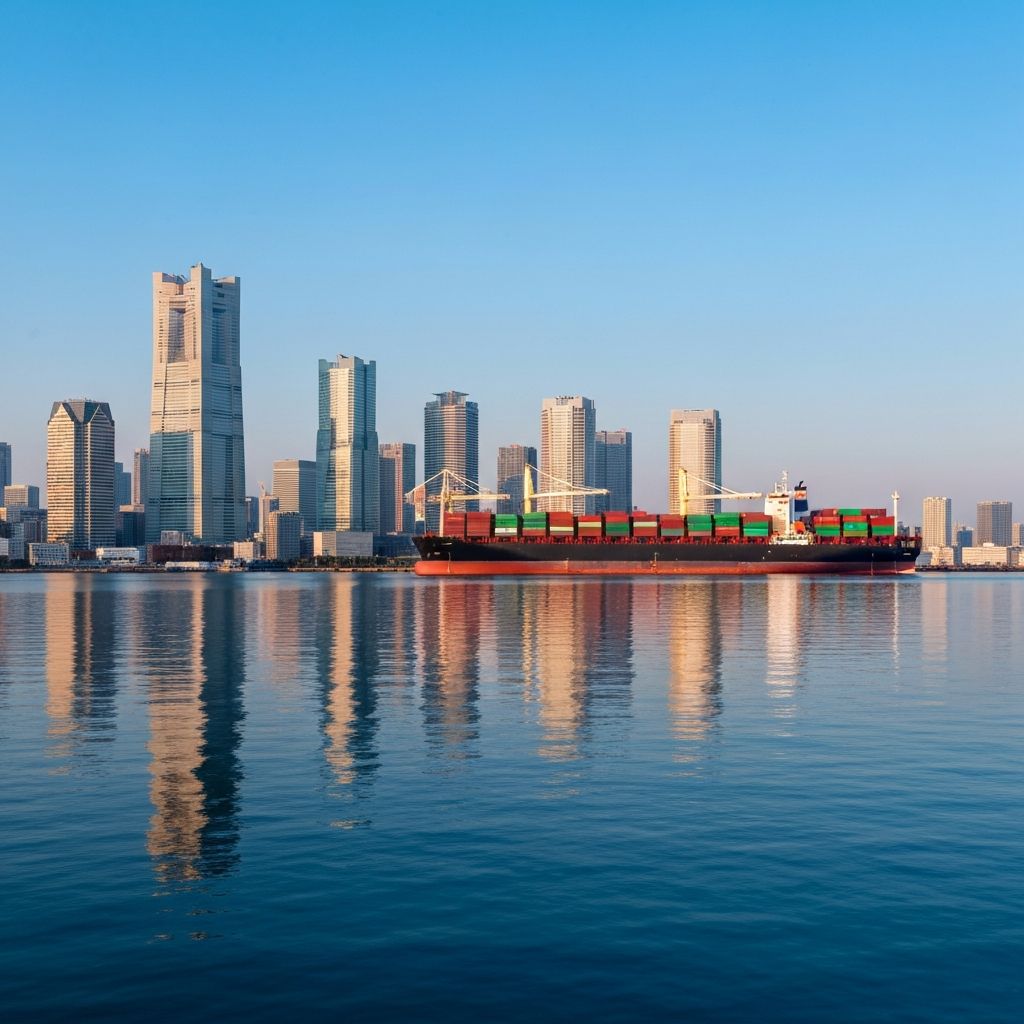
Japan's Maritime Legacy
As an island nation deeply integrated with global trade, Japan has long been a leader in maritime shipping. Its shipping companies operate some of the largest and most technologically advanced fleets in the world, moving containers, automobiles, LNG, crude oil, and dry bulk across every major trade lane. Decades of engineering excellence have earned Japanese carriers a reputation for safety, precision, and innovation.
Today, the industry is undergoing rapid transformation. Decarbonization, automation, and digitalization are reshaping how cargo moves across oceans. Japan's leading shipping companies are pioneering ammonia and hydrogen-fueled vessels, autonomous ships, and advanced fleet management platforms.
Nippon Yusen Kaisha (NYK Line)
NYK Line, founded in 1885, is one of the world's oldest and most respected shipping companies. Its diversified business includes containers, car carriers, LNG, dry bulk, and logistics through Yusen Logistics. NYK is also at the forefront of zero-emission shipping, with major investments in ammonia-fueled vessels.
Mitsui O.S.K. Lines (MOL)
Mitsui O.S.K. Lines operates a globally extensive fleet across multiple segments, with particular strength in LNG carriers and car shipping. The company has been an early adopter of wind-assisted propulsion and is heavily invested in sustainable maritime fuels.
Kawasaki Kisen Kaisha (K Line)
K Line is a major Japanese carrier with strong expertise in dry bulk, car carrier, and energy shipping. Together with NYK and MOL, it co-owns Ocean Network Express, one of the world's largest container shipping consortiums. Its commitment to environmental performance and crew welfare is widely recognized.
Ocean Network Express (ONE)
Ocean Network Express, headquartered in Singapore but rooted in Japan, was formed by the merger of the container divisions of NYK, MOL, and K Line. Its iconic magenta-colored containers have become a familiar sight on global trade routes, and ONE is now among the world's largest container shipping lines.
NS United Kaiun Kaisha
NS United Kaiun Kaisha specializes in dry bulk shipping, particularly for steel raw materials such as iron ore and coal. As a key partner for the Nippon Steel Group, the company plays an essential role in supplying Japan's industrial backbone.
Iino Kaiun Kaisha
Iino Kaiun, also known as Iino Lines, operates a diverse fleet across chemical tankers, LPG carriers, and dry bulk vessels. Its specialized chemical tanker operations are widely respected for safety and compliance in handling sensitive cargo.
Asahi Tanker
Asahi Tanker is a leader in coastal tanker shipping in Japan and a pioneer of electric tanker vessels. Its zero-emission EV tankers represent a major step forward in decarbonizing inland and coastal maritime transport.
Toko Kaiun Kaisha
Toko Kaiun Kaisha focuses on bulk shipping, including grain, ore, and other industrial commodities. Its long-term partnerships with global charterers and emphasis on operational efficiency make it a reliable player in dry bulk markets.
Doun Kisen
Doun Kisen specializes in domestic coastal shipping in Japan, transporting petroleum products and chemicals between refineries and consumption centers. Its expertise in navigating Japan's complex coastal routes is highly valued in the energy sector.
Meiji Shipping
Meiji Shipping is an established operator in dry bulk and coastal shipping. The company emphasizes long-term charter relationships, fleet modernization, and crew training, supporting both domestic industrial logistics and international trade flows.
Innovation and Sustainability
Japanese shipping companies are leading global efforts to decarbonize maritime transport. Investments in ammonia-fueled engines, hydrogen-powered ferries, wind-assisted propulsion, and battery-electric vessels are accelerating. Digital tools such as predictive maintenance and route optimization further reduce emissions and operating costs.
Why Japan's Shipping Industry Stands Out
Japan's shipping sector combines a deep maritime heritage with relentless innovation. From global container giants to specialized chemical and energy carriers, the country's leading shipping companies are vital to international trade. Their focus on safety, technology, and sustainability ensures that Japan will remain at the heart of global maritime logistics for decades to come.
