
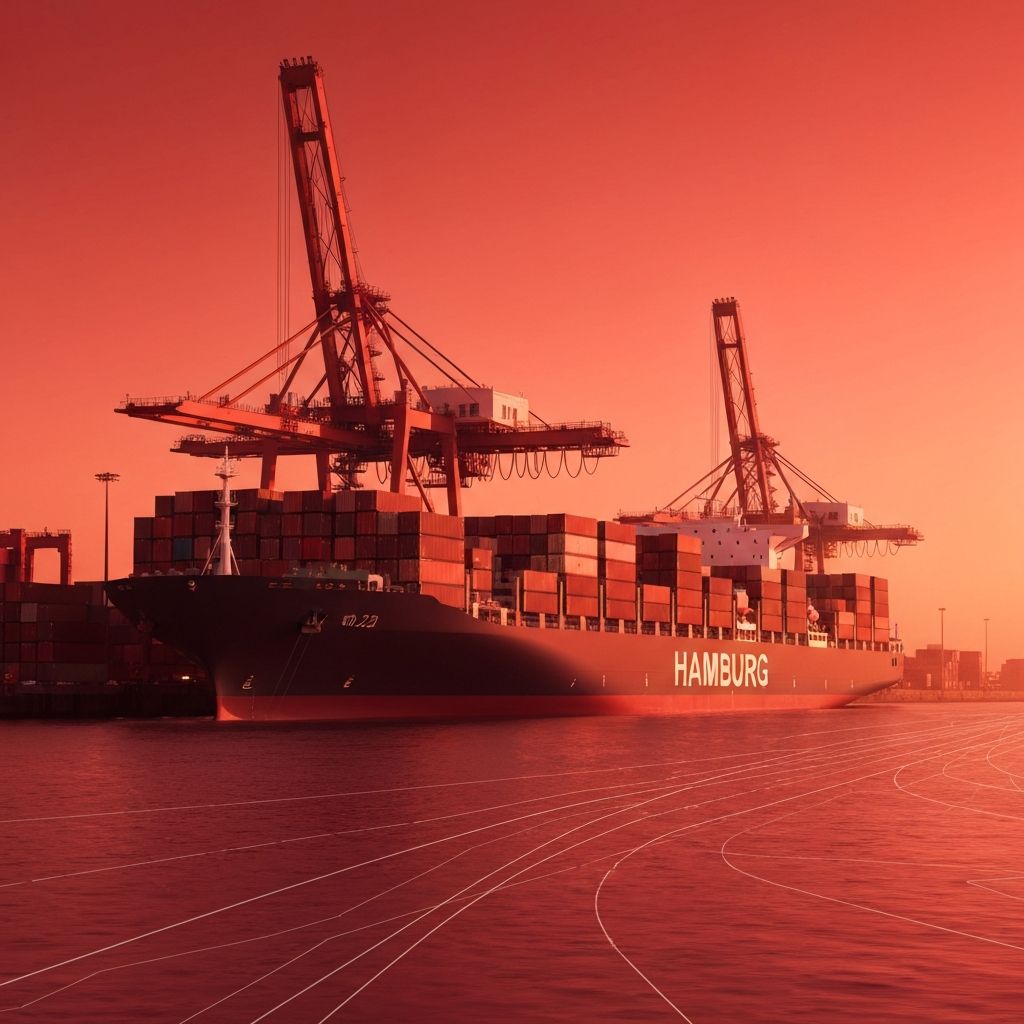
Germany's Role in Global Shipping
Germany is one of the most important maritime nations in Europe. With major ports in Hamburg, Bremerhaven, Wilhelmshaven, and Rostock, the country serves as a critical gateway for international trade. German shipping companies operate vast fleets of container vessels, bulk carriers, tankers, and specialized ships, transporting everything from automobiles and electronics to chemicals and energy supplies. The industry plays an essential role in supporting Germany's export-driven economy and Europe's broader supply chains.
Leading Shipping Companies in Germany
Hapag-Lloyd is Germany's flagship container shipping company and one of the largest in the world. Headquartered in Hamburg, it operates a global network of liner services with hundreds of modern vessels, connecting more than 600 ports across all continents.
Hamburg Süd, now part of Maersk, has long been known for its expertise in north–south trade routes, particularly between Europe, Latin America, and Oceania. The brand remains highly regarded for reliability and customer service.
Reederei Claus-Peter Offen is one of the largest container ship owners in Germany, providing chartered vessels to global shipping lines. The Hamburg-based company is known for its modern, fuel-efficient fleet.
Bernhard Schulte Shipmanagement offers ship management services for container vessels, tankers, and gas carriers, supporting global shipping clients with crewing, technical, and commercial management.
Peter Döhle Schiffahrts-KG is a prominent ship-owning company based in Hamburg, managing a large international fleet across multiple shipping segments.
Specialized Shipping Companies
Briese Schiffahrt, based in Leer, specializes in project cargo and heavy-lift shipping, supporting industries like wind energy and oil and gas with custom maritime solutions.
Reederei Norden-Frisia operates passenger and freight services to the East Frisian Islands, connecting communities and supporting tourism along the North Sea coast.
Oldendorff Carriers, headquartered in Lübeck, is a major bulk carrier operator, transporting commodities like iron ore, coal, and grain across global routes with one of the most modern bulker fleets in the world.
NSB Group provides comprehensive ship management services and has expanded its expertise into digital maritime solutions, supporting fleet optimization and operational efficiency.
Reederei F. Laeisz has a long maritime history dating back to the 19th century. Today, it operates container ships, gas carriers, and research vessels, contributing to both commercial and scientific maritime endeavors.
Major Ports Supporting the Industry
The Port of Hamburg is Germany's largest and one of Europe's top container ports, handling millions of TEU annually. Bremerhaven specializes in automobile exports and is one of the largest automotive ports in the world. Wilhelmshaven operates the JadeWeserPort, Germany's only deep-water container terminal. Rostock and Kiel serve as major Baltic Sea hubs, particularly for ferry services to Scandinavia.
Innovation and Sustainability
Sustainability has become a defining theme in the German shipping industry. Companies are investing in LNG-powered vessels, ammonia and methanol fuel research, wind-assisted propulsion, and energy-efficient hull designs. Digitalization is also transforming operations, with predictive maintenance, blockchain-based documentation, and AI-powered route optimization improving efficiency and reducing emissions.
Challenges and Opportunities
The shipping industry faces global challenges including fluctuating fuel prices, regulatory changes related to emissions, geopolitical tensions, and supply chain disruptions. However, German shipping companies have demonstrated resilience by investing in modern fleets, diversifying services, and embracing innovation. The growth of e-commerce, renewable energy projects, and intra-European trade also presents significant opportunities.
Choosing the Right Shipping Partner
Businesses selecting a shipping partner should consider route coverage, vessel availability, transit times, pricing structures, and digital integration. Reliability, claims handling, and sustainability commitments are increasingly important factors. Established carriers with global networks offer broad coverage, while specialized providers may deliver better service for unique cargo needs.
Final Thoughts
Germany's shipping industry is a cornerstone of global trade. With world-class companies, modern ports, and a strong commitment to innovation and sustainability, the country continues to shape the future of maritime transport. Whether moving containers across oceans or specialized cargo to remote destinations, German shipping companies deliver excellence on every voyage.
