
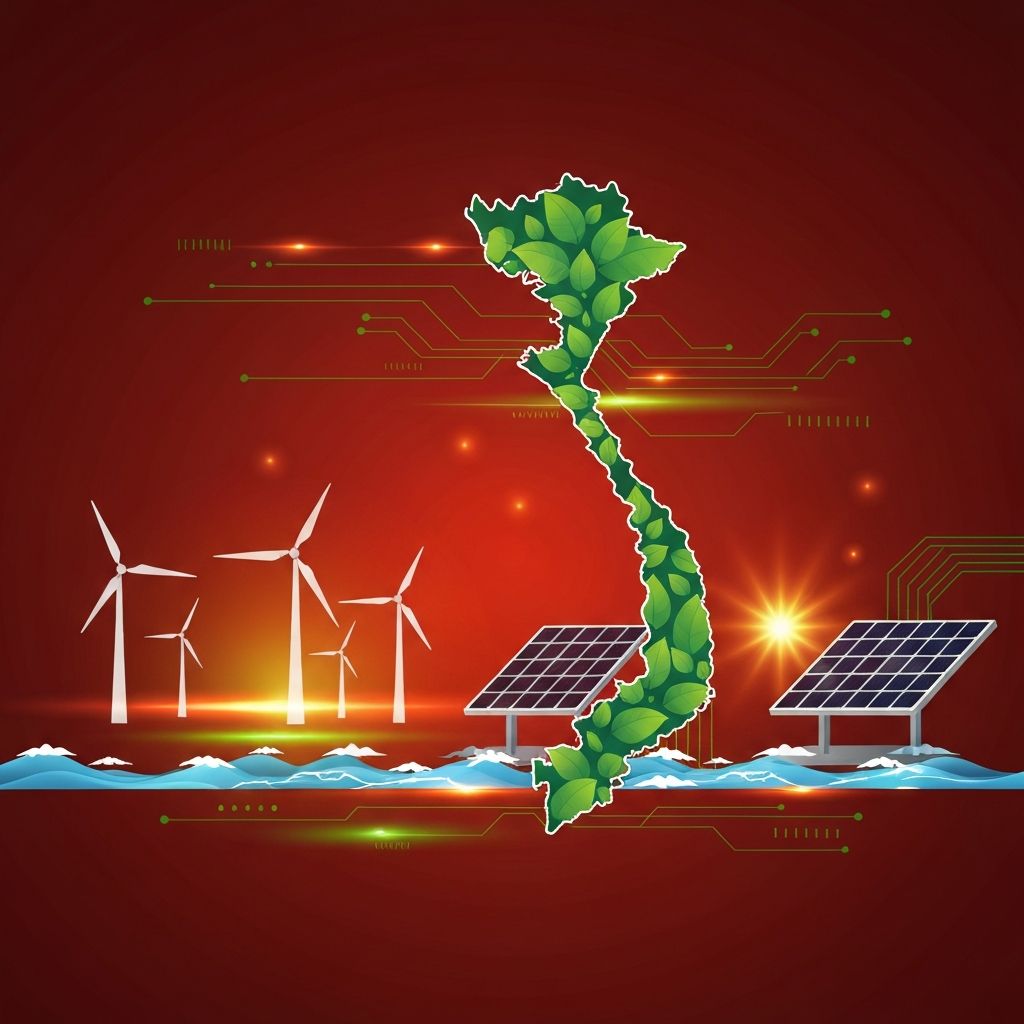
Vietnam's Renewable Energy Boom
Vietnam has emerged as one of Southeast Asia's most exciting renewable energy markets. Strong solar irradiation, extensive coastline for wind power, and ambitious government targets including net zero emissions by 2050 have attracted billions of dollars in clean energy investment. The country has developed gigawatts of solar and wind capacity in just a few years, transforming its electricity mix.
Renewable energy companies in Vietnam combine project development, financing, engineering, and operations expertise to deliver clean power at scale. The market includes both domestic champions and international energy majors.
Leading Renewable Energy Companies
Trung Nam Group is one of Vietnam's largest renewable energy developers, with substantial solar and wind capacity across the country. Their flagship projects in Ninh Thuan combine solar farms with transmission infrastructure to address grid challenges.
BCG Energy, part of Bamboo Capital Group, has built a diverse portfolio of solar, wind, and rooftop projects. The company has expanded internationally while maintaining a strong domestic presence.
T&T Group's energy arm develops large-scale renewable projects including solar power plants, wind farms, and LNG-to-power facilities, positioning the conglomerate as a major energy player.
Xuan Cau Group has invested heavily in solar power, including the massive Dau Tieng solar complex which ranks among Southeast Asia's largest solar facilities.
International Players in Vietnamese Renewables
EDF Renewables has partnered on wind power projects in Vietnam, bringing global expertise in development and operations. Their joint ventures support Vietnam's wind capacity expansion.
Enterprize Energy is developing the ambitious Thang Long offshore wind project, with potential gigawatts of capacity off Vietnam's southern coast.
ACWA Power from Saudi Arabia has entered Vietnam with significant solar and wind investments, contributing to the country's renewable capacity targets.
Specialists in Specific Renewable Technologies
Solar BK has been a pioneer in Vietnamese solar energy, manufacturing solar panels and developing rooftop solar systems for residential, commercial, and industrial customers.
GreenYellow Vietnam focuses on commercial and industrial rooftop solar with innovative power purchase agreement structures, allowing businesses to access solar power without upfront investment.
Pacifico Energy rounds out the leading developers with major solar and wind projects, particularly in central and southern Vietnam where solar resources are strongest.
Vietnam's Renewable Energy Policy Framework
Vietnam's renewable energy growth has been driven by supportive policies including feed-in tariffs that attracted early solar and wind investment. The recent transition to competitive auctions and the Direct Power Purchase Agreement (DPPA) mechanism is reshaping the market. The Power Development Plan 8 sets ambitious targets for renewable capacity expansion through 2030 with extensions to 2045.
Recent updates include detailed rules on rooftop solar self-consumption, offshore wind project development, and energy storage integration. The regulatory environment continues to evolve as Vietnam balances energy security, affordability, and decarbonization goals.
Solar Power Development
Solar has been the fastest-growing renewable segment in Vietnam, with both utility-scale and rooftop installations expanding rapidly. The southern and central regions enjoy excellent solar irradiation. Challenges include grid congestion in renewable-heavy areas, requiring transmission upgrades and energy storage solutions.
Floating solar projects on reservoirs and lakes have gained interest as land-based sites become more competitive. Agrivoltaics combining solar with agriculture offers new opportunities for rural development.
Wind Energy Expansion
Onshore wind projects have grown significantly, particularly in coastal regions of central and southern Vietnam. The country has tremendous potential for offshore wind given its long coastline and shallow continental shelf. Several gigawatt-scale offshore wind projects are in development, attracting major international developers and financiers.
Wind project development requires careful environmental and social impact assessment, particularly in fishing communities and ecologically sensitive areas. Top developers integrate community engagement and biodiversity considerations into project planning.
Other Renewable Technologies
Biomass and waste-to-energy projects address agricultural residues and urban waste while providing baseload renewable power. Hydroelectric power, both large and small-scale, remains a significant part of Vietnam's renewable mix. Emerging technologies including green hydrogen and floating offshore wind are attracting research and pilot investment.
Investment and Financing Trends
Vietnamese renewable energy projects have attracted financing from development banks including the World Bank, Asian Development Bank, and bilateral lenders. Green bonds, climate finance facilities, and private equity have all contributed capital. The Just Energy Transition Partnership announced in 2022 provides significant funding for Vietnam's clean energy transition.
Challenges and Opportunities
Despite remarkable progress, challenges remain including grid infrastructure constraints, regulatory uncertainty in some areas, and the need for skilled workforce development. Energy storage, smart grids, and demand response will be critical to maximizing renewable integration.
The Direct Power Purchase Agreement mechanism opens new opportunities for corporate renewable procurement, allowing multinational manufacturers to source clean energy directly. This supports their global ESG commitments while accelerating Vietnam's clean energy deployment.
Conclusion
Vietnam's renewable energy sector represents one of the most exciting clean energy stories in Asia. The companies above lead this transformation, combining capital, technology, and execution capability. Their continued investment will shape Vietnam's energy future and contribute to global climate goals.
