
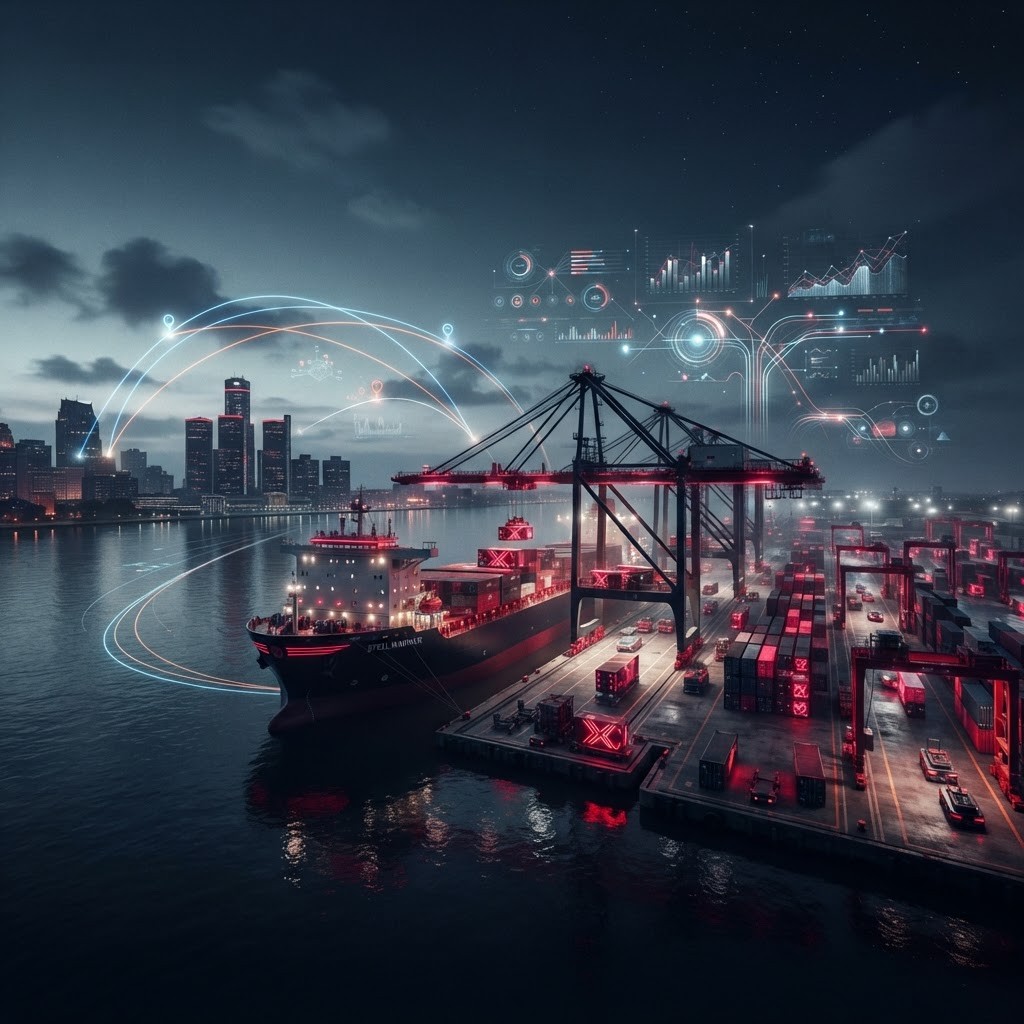
Detroit's Maritime Advantage
Detroit is a port city, a fact sometimes overlooked in a region better known for automobiles. The Detroit River connects Lake Huron and Lake Erie, forming part of the Great Lakes and St. Lawrence Seaway system that links the industrial heartland of North America to the Atlantic Ocean. Vessels moving through this corridor carry iron ore, coal, limestone, cement, salt, steel, grain, petroleum products and project cargo, commodities that underpin manufacturing, construction and energy production throughout Michigan.
Maritime shipping offers advantages no other mode can match for bulk freight. A single Great Lakes freighter can carry tonnage that would require thousands of truckloads, at a fraction of the fuel consumption and emissions per ton-mile. For heavy or oversized project cargo, water transport often provides the only practical route. The result is a specialized ecosystem of vessel operators, terminal companies, stevedores, tug and barge providers and freight forwarders operating along Detroit's waterfront.
How to Evaluate Marine Shipping Partners
Shippers should assess fleet capability first, including vessel classes, self-unloading capacity and draft limitations relevant to specific docks. Terminal access matters equally, since dock space, storage capacity, material handling equipment and rail or truck connections determine total cost. Seasonality is a defining consideration on the Great Lakes, where the winter closure of the Soo Locks and ice conditions compress the shipping season and require careful inventory planning. Finally, safety culture, environmental compliance and experience with specific commodities distinguish the strongest operators.
1. Interlake Steamship Company
Interlake operates one of the most respected privately held fleets on the Great Lakes, moving iron ore, coal, limestone, salt and grain for industrial customers. Its self-unloading vessels allow efficient discharge without shoreside equipment, and the company has invested notably in emissions reduction and vessel modernization, an increasingly important consideration for industrial buyers with sustainability targets.
2. American Steamship Company
With a long history serving Great Lakes industry, American Steamship Company specializes in dry bulk transportation for steel producers, power generators and construction materials suppliers. Its large self-unloaders deliver high-volume efficiency on core ore and stone routes, and its scheduling expertise helps customers manage seasonal stockpiling requirements.
3. Grand River Navigation
Grand River Navigation operates versatile vessels well suited to smaller ports and shallower harbors that larger freighters cannot serve. This flexibility makes it a valuable partner for regional aggregate, cement and specialty bulk shippers throughout Michigan and the broader Great Lakes basin.
4. Andrie LLC
Andrie specializes in liquid and dry bulk marine transportation using tug and barge units, serving petroleum products, asphalt, cement and industrial commodity customers. Tug and barge configurations offer operational flexibility, allowing service to terminals where conventional freighters are impractical and supporting year-round work where conditions permit.
5. Fednav
Fednav is a leading operator in the Seaway trade, connecting Great Lakes ports including Detroit with overseas markets. Its ocean-going vessels handle steel imports, project cargo, grain exports and breakbulk shipments, giving Michigan shippers direct international access without transloading at coastal ports.
6. Nicholson Terminal and Dock Company
Terminal operators are essential to maritime logistics, and Nicholson Terminal and Dock provides docking, stevedoring, warehousing and heavy-lift handling along the Detroit River. Its rail and truck connections allow seamless mode transitions, and its experience with steel, breakbulk and oversized cargo supports manufacturers importing large components.
7. Detroit Bulk Storage
Detroit Bulk Storage handles dock operations and bulk material storage for aggregates, salt, cement and industrial commodities. Storage capacity at the waterfront is a strategic asset in a seasonal shipping environment, letting customers receive large deliveries during navigation season and draw down inventory through winter.
8. Federal Marine Terminals
Federal Marine Terminals operates facilities across the Great Lakes offering stevedoring, terminal handling and warehousing for breakbulk, project and bulk cargo. Its network approach helps shippers coordinate multi-port movements, and its heavy-lift experience supports energy, construction and industrial equipment shipments.
9. Port of Detroit
The Detroit-Wayne County Port Authority coordinates port development, promotes maritime commerce and supports terminal infrastructure investment. While not a vessel operator, the port authority plays a central role in connecting shippers with terminal capacity, advancing dredging and infrastructure projects, and advocating for the regional maritime economy.
10. Rand Logistics and Lower Lakes Towing
Rounding out the list, Rand Logistics and its Lower Lakes Towing operations provide bulk shipping with vessels sized for both major and secondary ports, supported by cross-border capability between United States and Canadian docks. That combination suits customers with distributed facilities around the lakes and variable seasonal volumes.
Trends in Great Lakes Shipping
Environmental performance is a leading focus, with operators adopting cleaner engines, exhaust treatment, ballast water management and fuel efficiency programs. Infrastructure investment in locks, dredging and dock modernization is improving reliability and capacity. Climate variability has affected water levels and ice conditions, influencing loading decisions and season length. Digitalization is bringing better vessel tracking, cargo documentation and terminal scheduling. And renewed interest in domestic manufacturing has increased demand for steel, cement and aggregate, the core cargoes of the lakes fleet.
Building a Marine Shipping Strategy
Companies considering water transport should begin by mapping commodity volumes, origin and destination points, and seasonal patterns, then evaluate whether direct dock access or a terminal transload model fits best. Working with an experienced forwarder or terminal operator early helps clarify draft constraints, handling equipment needs and total landed cost compared with rail or truck alternatives. For heavy and high-volume freight, Detroit's maritime capabilities remain one of the region's most cost-effective and underutilized logistics assets.
