
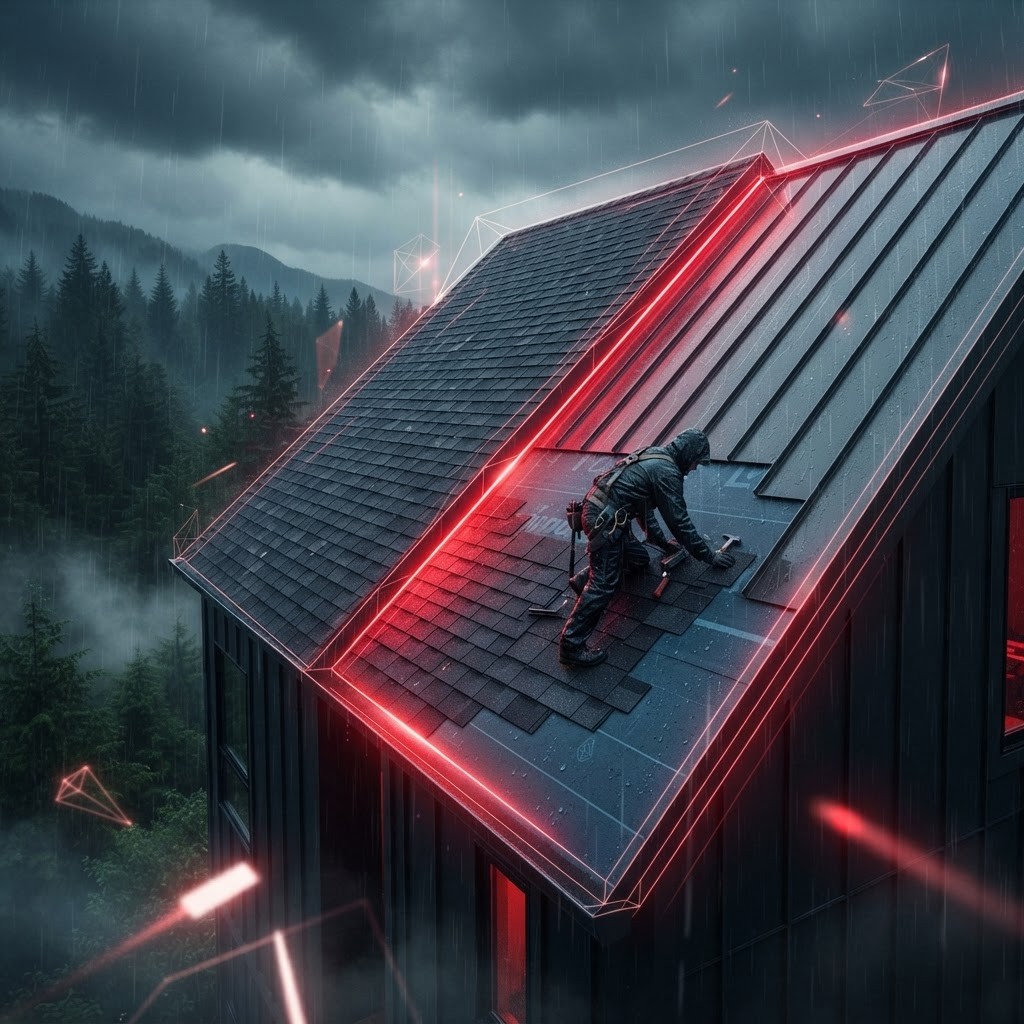
Why Roofing Matters More in Washington Than Almost Anywhere Else
Roofing in Washington is a specialty discipline shaped by climate. West of the Cascades, prolonged wet seasons, persistent shade and high humidity encourage moss and algae growth, shorten the practical life of asphalt shingles and punish any assembly with imperfect flashing. Wind events off the coast and through the Strait of Juan de Fuca test fastening patterns and edge details. East of the mountains, the challenges invert: intense summer ultraviolet exposure, wide temperature swings, snow loads and ice damming in the mountain communities of Chelan, Kittitas and Spokane counties.
Because of this, the difference between a competent roof and a poor one often has nothing to do with the shingle brand. It comes down to underlayment selection, ice and water shield placement at eaves and valleys, step flashing at walls, properly integrated pipe and chimney penetrations, continuous intake and exhaust ventilation, and correct nailing. A roof installed with premium materials but sloppy flashing will fail long before a mid-grade roof installed with discipline. The best roofing contractors in Washington understand that the roof is a system, not a product.
Ten Roofing Contractors With Strong Reputations
1. Three Tree Roofing
Serving the greater Seattle area, Three Tree Roofing has built a strong following for thorough inspections, clear documentation and clean installations. The company is frequently recognized for educating homeowners about assembly details rather than simply quoting a price per square.
2. Guardian Roofing
Guardian Roofing operates across the Puget Sound region with a focus on residential replacement, repair and attic ventilation improvements. Its structured diagnostic process and emphasis on customer communication have made it one of the more visible names in the market.
3. Patriot Roofing
Based in the South Sound, Patriot Roofing handles asphalt, metal and low-slope systems for residential and light commercial clients. The company has developed a reputation for straightforward estimating and dependable warranty support.
4. Chase Construction North West
Chase Construction North West is known for expertise across a wide range of roofing types, including torch-down and single-ply membranes for flat roofs, an area where many residential contractors lack depth. That range makes it a useful partner for homes with mixed roof geometry.
5. Pinnacle Roofing Professionals
Pinnacle Roofing Professionals serves King and Snohomish counties with residential and commercial roofing, gutters and skylight work. The firm is often praised for detailed proposals and for correcting ventilation deficiencies during replacement.
6. Snyder Roofing of Washington
A long-established commercial and institutional roofing contractor, Snyder Roofing works on schools, public facilities and large commercial buildings. Its capabilities include roof asset management, preventive maintenance programs and complex low-slope systems.
7. Larry Haight Residential Roofing
Operating from the Eastside, this firm has decades of experience with steep-slope residential roofing in Bellevue, Redmond and surrounding communities. It is well regarded for craftsmanship on architecturally complex roofs with multiple valleys and dormers.
8. Sound Roofing
Sound Roofing focuses on residential replacement and repair throughout the central Puget Sound region. The company emphasizes moisture assessment and correcting the root causes of leaks rather than applying surface patches.
9. Northwest Roof Service
Northwest Roof Service handles both maintenance and full replacement, with particular strength in diagnosing chronic leaks on older homes. Its repair-first approach can extend the life of roofs that do not yet require replacement.
10. Sunrise Roofing
Sunrise Roofing serves communities in central and eastern Washington, where snow load, ice damming and high summer heat drive different material and detailing decisions than in the marine climate. The company works across asphalt, metal and specialty systems.
Choosing the Right Roofing System
Architectural asphalt shingles remain the most common choice statewide because of cost and availability, and algae-resistant products are worth the modest premium in the wet western counties. Standing seam and metal shingle systems cost more initially but offer long service life, excellent shedding of debris and strong performance under snow. Synthetic composite shingles have gained popularity as a durable alternative to cedar in fire-conscious areas. Cedar shakes still appeal aesthetically but demand maintenance and careful ventilation. For flat and low-slope sections, single-ply membranes such as TPO and PVC dominate new work, while torch-applied modified bitumen remains common in repairs.
Ventilation deserves as much attention as the covering. Balanced intake at soffits and exhaust at the ridge keeps attic temperatures and moisture in check, reducing condensation, mold risk and premature shingle aging. Many chronic problems attributed to materials are actually ventilation failures.
Warning Signs and Maintenance Practices
Homeowners should watch for granule loss in gutters, curling or cupping shingles, dark staining that signals moss retention, damp insulation or staining at attic sheathing, and daylight visible at penetrations. Preventive maintenance matters: keep gutters and valleys clear of needles and leaves, trim overhanging branches to reduce shade and debris, remove moss with appropriate treatments rather than pressure washing, and inspect flashing after major wind events. Annual or biannual inspections are inexpensive compared with the cost of repairing water-damaged sheathing and framing.
Hiring a Roofer With Confidence
Confirm active Washington contractor registration, bonding, general liability coverage and workers compensation for every crew member on your roof. Insist on a written scope that specifies underlayment type, ice and water shield coverage, flashing replacement rather than reuse, ventilation work, deck repair allowances and debris disposal. Ask whether crews are employees or subcontracted labor, and who provides warranty service. Understand the difference between the manufacturer material warranty and the contractor workmanship warranty, since the latter is where most real-world claims originate.
Finally, be cautious with unusually low bids and with high-pressure sales after storms. In Washington climate, a roof installed correctly the first time protects everything beneath it, and the modest premium for careful workmanship is repaid many times over in avoided water damage.
