
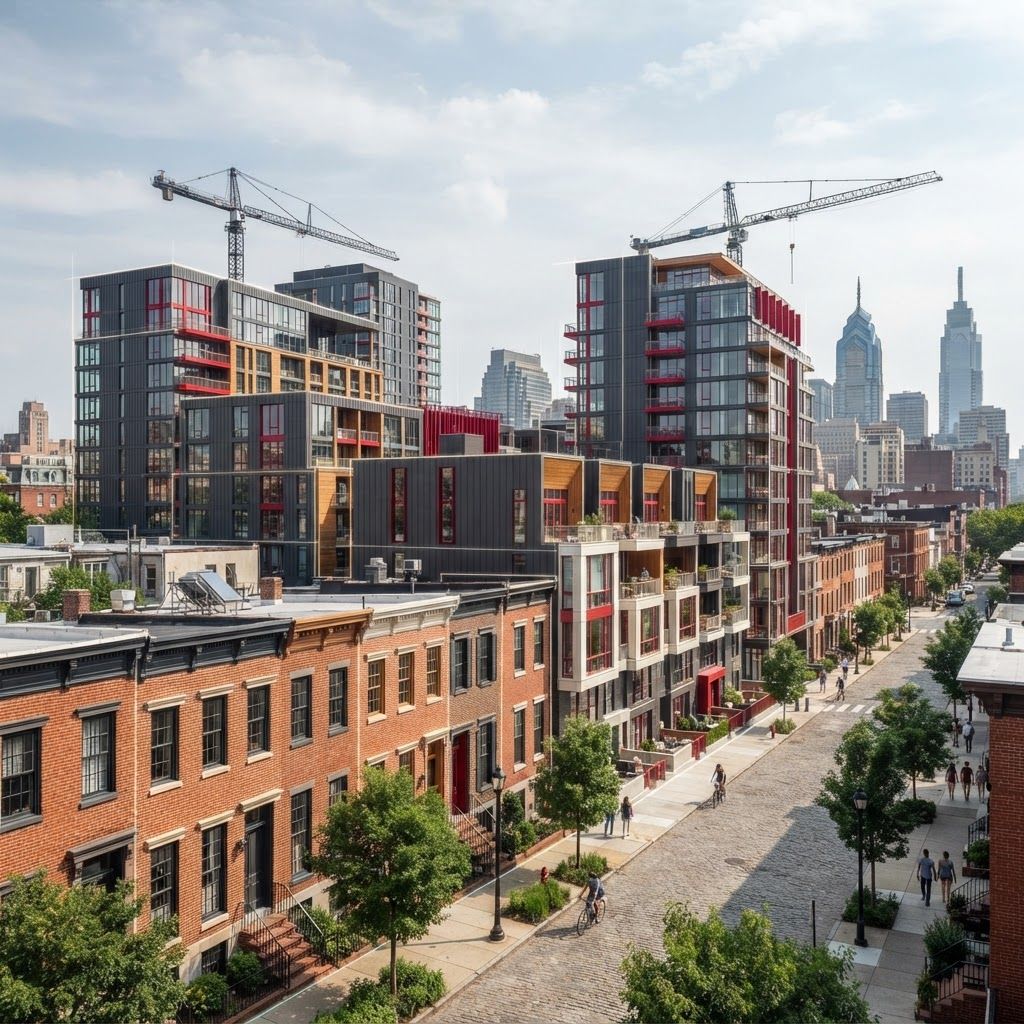
Philadelphia's Evolving Residential Market
Philadelphia development is defined by contrast: historic rowhouses sit beside new mid-rise apartments, former factories become lofts, and large riverfront parcels create entirely new neighborhoods. Strong developers must navigate zoning, community engagement, preservation, construction costs, and the city's block-by-block market differences. This list presents ten prominent firms with meaningful residential work in Philadelphia, selected for scale, local knowledge, design influence, or a distinctive development strategy.
1. National Real Estate Development
National Real Estate Development is closely associated with East Market, a major mixed-use transformation in Center City. Its work blends apartments, retail, offices, public space, and hospitality into a connected urban district. The company stands out for place-making at a scale that goes beyond a single building, with residences positioned as part of a walkable everyday experience.
2. Post Brothers
Post Brothers has become one of Philadelphia's most visible multifamily developers through ambitious conversions and new construction. Projects such as Presidential City and Piazza Alta reflect an emphasis on amenities, bold interiors, and large residential communities. The firm is particularly known for repositioning underused properties and introducing a hospitality-influenced approach to apartment living.
3. Southern Land Company
Southern Land Company has delivered high-profile residential towers in central Philadelphia, including luxury projects that emphasize architecture, service, and amenity-rich living. The company's developments often target residents seeking a polished high-rise experience near employment, dining, and cultural destinations. Its work demonstrates continued demand for premium urban housing in carefully selected locations.
4. PMC Property Group
PMC Property Group has extensive experience adapting commercial and historic buildings for residential use. Its Philadelphia portfolio illustrates how obsolete office or industrial space can gain a productive second life as apartments. Adaptive reuse can preserve architectural character, reduce demolition, and bring residents to established districts, although it requires sophisticated planning around existing structures.
5. Alterra Property Group
Alterra Property Group is a Philadelphia-based investor and developer active across multifamily and mixed-use real estate. Its local familiarity helps it identify opportunities in changing neighborhoods and execute projects at varying scales. The firm is known for disciplined investment thinking paired with practical development capabilities, an important combination in a market with highly localized demand.
6. MMPartners
MMPartners has played a notable role in the revitalization of Brewerytown and surrounding areas. The company focuses on neighborhood-scale mixed-use and residential projects, often restoring older buildings while adding contemporary housing. Its portfolio shows how coordinated investments along commercial corridors can support both new residences and the businesses that make a community more walkable.
7. Riverwards Group
Riverwards Group develops infill homes and multifamily properties in Philadelphia neighborhoods, particularly in the River Wards. Its work responds to demand for modern housing within the city's established street grid. Infill development can strengthen blocks and use existing infrastructure efficiently, but success depends on architecture that respects context and construction practices suited to tight urban sites.
8. PRDC Properties
PRDC Properties pursues residential and mixed-use development with projects ranging from renovations to larger new communities. The firm's work reflects Philadelphia's broad opportunity set, where value may come from a historic structure, an overlooked parcel, or a transit-accessible location. Its development approach combines acquisition insight with project execution across multiple property types.
9. OCF Realty
OCF Realty combines development activity with brokerage and property management, giving it a broad view of neighborhood demand. The company is strongly associated with South Philadelphia and has completed numerous infill and mixed-use projects. Its integrated model can provide direct feedback about what renters, buyers, and local commercial tenants are seeking.
10. HOW Properties
HOW Properties has developed and restored residential properties across Philadelphia, with particular experience in university-adjacent and emerging neighborhoods. The company works across multifamily and mixed-use opportunities and has participated in the reuse of existing buildings. Its portfolio highlights the importance of understanding tenant demand around institutions and transit connections.
What Distinguishes a Strong Developer
Prospective buyers, renters, and investment partners should look beyond finishes. Evaluate construction quality, delivery history, warranty responsiveness, management practices, and how a project relates to its block. For condominiums, review association documents, reserves, and developer obligations. For rentals, assess operations, sound control, energy performance, package handling, maintenance, and the durability of shared spaces.
Current Philadelphia trends include office-to-residential conversion, demand for flexible amenity areas, energy-efficient systems, and continued development near transit. Affordability and neighborhood impact remain central public concerns. The best residential projects balance financial feasibility with durable design and meaningful engagement. Because portfolios and project status change, readers should treat this guide as a starting point and conduct project-specific due diligence before making a housing or investment decision.
Making a Confident Final Choice
Before making a decision, compare at least three suitable options using the same written criteria. Recent reviews can reveal patterns, but context matters more than a single enthusiastic or critical comment. Ask direct questions about availability, pricing, scope, policies, and who will be responsible for the work or service after the initial conversation. Request important promises in writing and read all agreements before committing. Philadelphia is a highly local market, so relevant experience in the specific neighborhood, property type, or customer situation can be more useful than broad name recognition alone. Finally, consider responsiveness and transparency: reliable professionals explain limitations as clearly as strengths and do not pressure customers into a rushed choice. A disciplined comparison may take additional effort, but it greatly improves the likelihood of selecting an organization that delivers appropriate value, dependable support, and an experience aligned with real priorities.
