
The Memphis Residential Development Landscape
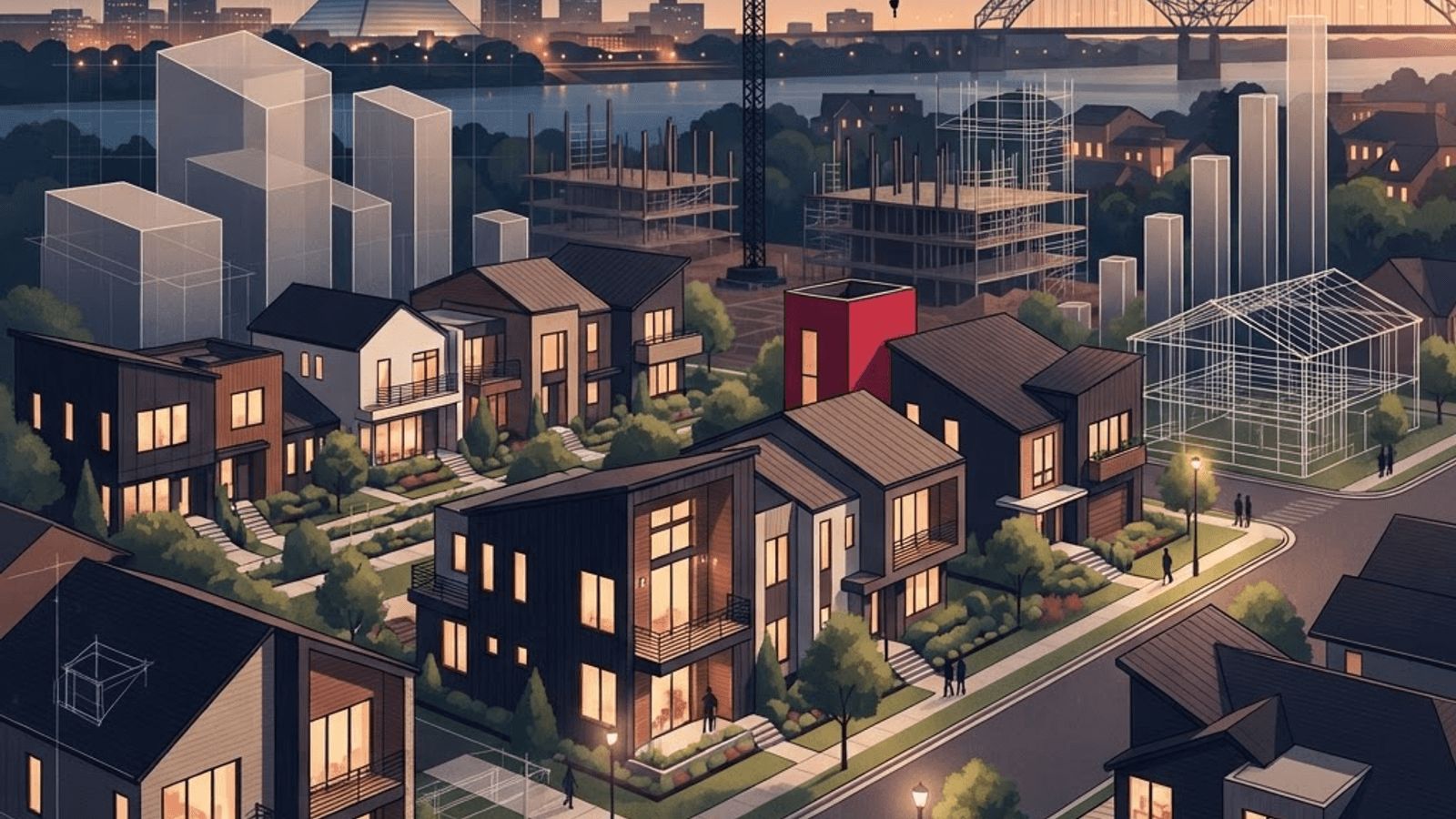
Memphis has one of the more interesting residential development markets in the South, largely because it is not a single market. The metro contains several distinct development environments operating simultaneously. On the eastern and southeastern edges, in Collierville, Germantown, Arlington, and Lakeland, developers build master-planned subdivisions on greenfield land with predictable suburban product. Inside the loop, in Midtown, Cooper-Young, Binghampton, and the South Main district, development is primarily infill and adaptive reuse, converting warehouses into lofts and filling vacant lots with contextual housing. And across historically disinvested neighborhoods, nonprofit and mission-driven developers pursue mixed-income revitalization with an emphasis on affordability and displacement prevention.
Affordability remains a genuine competitive advantage for the metro. Memphis housing costs sit well below national medians, which has attracted both relocating households and substantial single-family rental investment. That investor interest has been a mixed blessing, adding capital to neighborhoods that needed it while also competing with first-time buyers. Meanwhile, elevated construction costs and interest rates have pushed developers toward smaller lot sizes, attached product, and phased delivery to manage risk. The developers below have navigated those conditions with different strategies.
The 10 Best Residential Real Estate Developers in Memphis
1. Regency Homebuilders
Among the most recognizable residential builders in the Memphis metro, Regency Homebuilders develops master-planned communities across the eastern suburbs with a focus on move-up and luxury single-family product. Its strength is community-level planning: amenities, green space, and lot layout are considered together rather than treated as afterthoughts. Buyers benefit from established design center processes and predictable construction timelines.
2. Grant and Company
A Memphis-based developer known for well-located neighborhoods and consistent construction quality in the middle and upper-middle segments. The firm has built a reputation on responsiveness during the warranty period, which is a meaningful differentiator in a market where post-closing service varies widely. Its communities tend to emphasize walkability and thoughtful streetscapes.
3. Magnolia Homes
Magnolia Homes concentrates on attainable new construction across the greater Memphis area, delivering efficient floor plans at accessible price points. Its model relies on standardized plans and disciplined cost control, which allows it to serve first-time buyers who are otherwise priced out of new construction entirely. Energy efficiency features are increasingly standard across its product line.
4. Henry Turley Company
Few developers have shaped modern Memphis more visibly. The Henry Turley Company is closely associated with the revitalization of downtown and the riverfront, including mixed-income neighborhood development that became a national reference point. Its distinguishing philosophy is urban placemaking, treating neighborhoods as social systems rather than collections of housing units. Projects typically integrate multiple price points deliberately.
5. Community LIFT and River City Capital
Operating in the mission-driven segment, these affiliated organizations finance and support residential redevelopment in Memphis neighborhoods that conventional capital has bypassed. Their work includes single-family rehabilitation, small-scale infill, and support for local developers who lack access to traditional construction lending. The impact is measured in neighborhood stabilization as much as in unit count.
6. Belz Enterprises
A multigenerational Memphis development company with a portfolio spanning residential, hospitality, and commercial assets. Its residential work includes significant downtown adaptive reuse, converting historic commercial buildings into residential units. That capability requires specialized expertise in historic tax credits, structural retrofitting, and preservation review that most builders do not possess.
7. Loeb Properties
Best known for transformative work in Overton Square and along Broad Avenue, Loeb Properties develops mixed-use projects where residential units sit above active retail and restaurant space. This product serves renters and buyers who prioritize walkability over lot size. The firm's tenant curation strengthens the residential value proposition by ensuring ground-floor activity is genuinely desirable.
8. Makowsky Ringel Greenberg
A long-established Memphis firm active in multifamily development and management alongside commercial work. Its residential portfolio includes apartment communities across the metro, and its integrated management capability means the firm operates what it builds. That alignment tends to produce more durable design and material choices, since the developer absorbs long-term maintenance costs.
9. Hearthstone Development
Focused on infill development in established Memphis neighborhoods, Hearthstone builds contextually appropriate homes on vacant and underutilized lots. This is technically demanding work requiring careful attention to setbacks, scale, and architectural compatibility with surrounding historic housing. The result strengthens existing neighborhoods rather than extending sprawl.
10. Mid-South Home Builders Group
Serving suburban and exurban submarkets, this developer delivers single-family communities with an emphasis on lot value and floor plan flexibility. It has been active in the growth corridors north and east of the city where land economics still permit larger lots. Its buyer base includes families relocating from higher-cost metros seeking space and value.
Trends in Memphis Residential Development
Several forces are reshaping the market. Build-to-rent communities have emerged as a distinct product category, with entire subdivisions constructed for professional rental operation rather than individual sale. Missing middle housing, meaning duplexes, triplexes, and cottage courts, is receiving renewed policy attention as a way to add density without dramatic neighborhood change. Adaptive reuse continues downtown, driven by an inventory of substantial older buildings and available historic tax credits. Energy performance has moved from marketing feature to buyer expectation, with better envelopes, high-efficiency HVAC, and increasingly solar readiness. Finally, infrastructure-led development is gaining traction, with projects clustering around greenline extensions and transit corridors.
How to Evaluate a Residential Developer
Visit completed communities that are at least five years old rather than only new model homes, because that is where construction quality and community management actually reveal themselves. Talk to existing residents about warranty responsiveness and homeowners association function. Review the warranty document in detail, distinguishing structural coverage from systems and cosmetic coverage. Confirm licensing and check for a pattern of complaints or litigation. Ask about the specific subcontractors used for framing, plumbing, and electrical work, and whether third-party inspections are performed. Understand the contract mechanics: allowances, change order pricing, escalation clauses, and delay remedies. For investors, examine absorption pace in the specific submarket and the developer's track record of completing later phases, since unfinished amenities are a common source of value loss.
Final Thoughts
Memphis residential development offers unusual breadth, from suburban master-planned communities to downtown loft conversions and mission-driven neighborhood revitalization. That range means buyers can choose not just a house but a development philosophy. The strongest developers in this market share a common trait: they think past the closing date, building homes and neighborhoods designed to hold value for the people who will live in them for decades.
